Tank Universal
🎮Game Details
💬What Players Say
"Play cool tank game with dad when you were 6 Love the cool sound effects, and the colors. time goes on; loose access to game."
📝Editorial Analysis
The hum of the tank’s reactor—low, resonant, almost alive—fills your ears as you pivot across a neon-lit grid-plane under a vault of shifting vector skies. You’re six years old, perched on your dad’s lap, his hand guiding yours over the controller while Tron-esque light-trails streak past your turret. The colors don’t just glow—they pulse, electric and warm, like cathode-ray memories bleeding into real time. Then silence. Years later, you type “Tank Universal” into a search bar with trembling fingers—not for nostalgia’s sake, but because something in that sound, that geometry, that shared stillness between firefights has never left you. You find it. You boot it up. And for three seconds, before the first enemy AI lights up on your HUD, you’re back in his living room, smelling old carpet and microwave popcorn, hearing his laugh vibrate through the plastic shell of the controller.
What makes Tank Universal ache isn’t its tanks or its dictators—it’s the melancholic exploration. Not exploration as conquest, but as quiet return: to a world built from memory’s architecture, where every corridor of light-grid terrain feels both alien and intimately familiar. It’s not about winning; it’s about re-entering. The official description calls it a “rich virtual sci-fi 3D world”—but richness here isn’t density of content. It’s emotional residue. The player review doesn’t mention kill counts or upgrades—it mentions sound effects, colors, time passing, loss, reliving. That’s the atmosphere: a luminous, geometric limbo where joy and grief orbit the same center, slowly, silently. You move forward in combat, yes—but what lingers is the pause between shots, the way your AI allies hold formation not out of programming, but presence, like ghosts who remember your name.
That exact resonance—the way wonder and sorrow fold into each other without explanation—is why Hunter x Hunter (2011) fits so precisely. Its Nen system isn’t just power—it’s emotional grammar, where strength emerges from grief, restraint, and unspoken vows. Like the player remembering his dad mid-battle, Gon’s journey through Greed Island or the Dark Continent isn’t about escalation—it’s about returning to questions he can’t answer, walking corridors of meaning lit only by flickering personal truth. Both Tank Universal and Hunter x Hunter (2011) treat scale not as spectacle, but as solitude: vast arenas filled with quiet companionship, danger that hums rather than roars.
Then there’s Death Parade, where the neon-lit void isn’t a battlefield but a bar—and yet the feeling is identical. You’re placed inside a clean, stylized, emotionally charged space where rules are known but consequences aren’t. Every match feels like a ritual, every decision weighted by what came before and what won’t come after. The shared dimension isn’t violence—it’s melancholic exploration: moving through a constructed reality that reflects inner states more honestly than any realism could. Like lining up a shot in Tank Universal, watching your reticle hover over an enemy silhouette against a starfield of static, Death Parade asks you to hold tension without release—to sit inside the before and after, not the explosion.
Even Frieren: Beyond Journey’s End shares this pulse. Its pacing isn’t slow—it’s attentive. A single frame of Frieren watching snow fall on a grave carries the same weight as the player reviewing Tank Universal’s HUD, noticing how the light bounces off their own tank’s hull at dusk. Both understand that time isn’t linear—it’s layered. What’s fought for isn’t territory, but continuity. What’s mourned isn’t just loss, but the texture of what was held. That’s why the score matches: 82, same dimensions—melancholic exploration, emotional narrative—not as themes, but as breathing rhythms.
This isn’t for players who want mastery. Or viewers who crave resolution. It’s for the ones who keep the controller in the drawer just in case, who rewatch episode 47 of SPY x FAMILY Cour 2 not for the spy gags, but for the five-second cutaway of Anya staring out a train window, her reflection fractured across the glass—because she, too, is learning how love lives in the gaps between what’s said and what’s remembered. It’s for people whose strongest memories aren’t loud, but luminous: a father’s hand over theirs, a vector sky bending gently overhead, the soft, insistent hum that means you’re home—even when home is gone.
→238 Anime That Match the Vibe

A quiet, wandering spirit — these works find meaning in silence and empty spaces.

A quiet, wandering spirit — these works find meaning in silence and empty spaces.
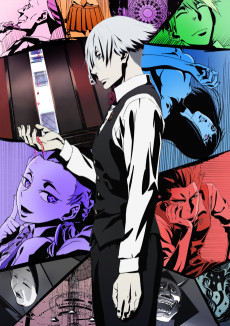
A quiet clink of glass in the Quindecim bar echoes the hollow metallic scrape of tank treads across “Tank Universal”’s desolate, rain-slicked battlefields—both spaces hold breath before violence erupts. This shared 🌿 Melancholic Exploration isn’t just mood; it’s structural: Deca’s silent judgment and the player’s solitary command post mirror each other as sites where memory, guilt, and consequence crystallize under unbearable stillness. What’s striking is how both refuse catharsis—Chiyuki’s final ascent and the player’s 100th unexplained mission land with the same aching, unresolved weight.
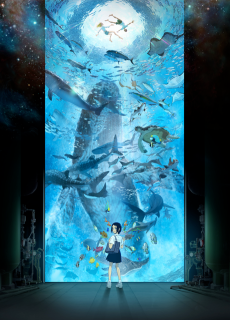
Both *Tank Universal* and *Children of the Sea* breathe the same hushed, liquid melancholy—where vast, indifferent cosmos and deep ocean alike become mirrors for fragile human consciousness. The slow drift of Tank’s derelict station through starfields echoes Ruka’s weightless descent into the sea’s bioluminescent abyss; both frame solitude not as emptiness but as luminous, trembling presence. T...
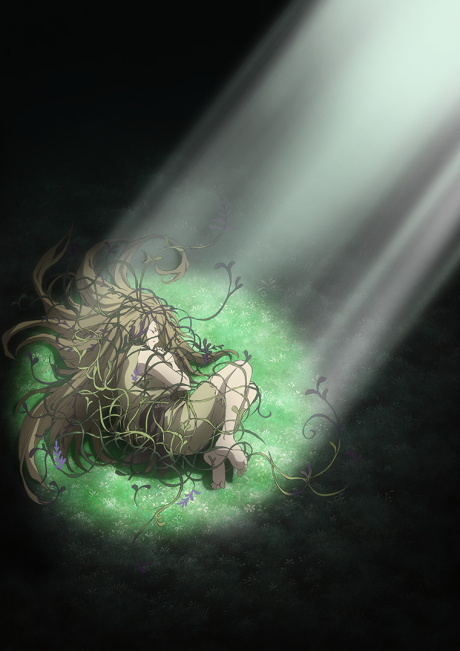
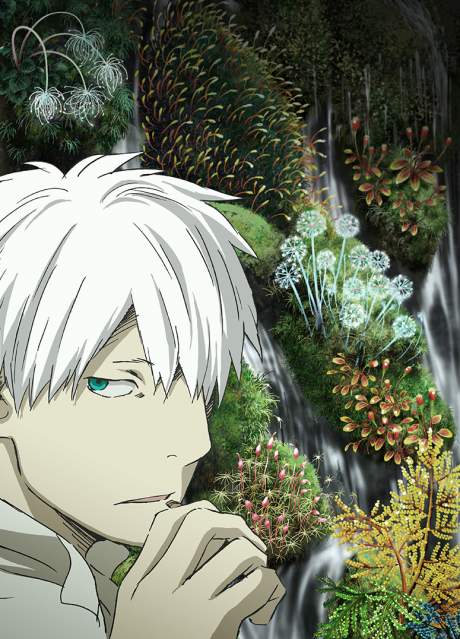
Ginko’s quiet dread as he watches leaves unfurl from the girl’s skin mirrors Tank Universal’s corroded tank hull slowly sprouting rust-bloomed lichen in the abandoned factory. This shared 🌿 Melancholic Exploration transforms decay into sacred stillness—neither work rushes healing, yet both find fragile grace in bodies and machines surrendering to nature’s slow reclamation. Surprisingly, their darkness feels tender, not despairing: vulnerability becomes the only language for coexistence.
A quiet, wandering spirit — these works find meaning in silence and empty spaces.

Melancholic exploration pulses through Gon’s silent walk across the crumbling Heavens’ Arena floor—just as it does in Tank Universal’s rain-slicked, abandoned industrial zones where treads echo into hollow hangars. 💔 Emotional narrative binds them: Kurapika’s restrained fury mirrors the game’s wordless soldier staring at a cracked photo amid ruined tanks. Unlike most action franchises, this 2011 Hunter x Hunter adaptation leans into quiet devastation—not just between battles, but *within* them—making Tank Universal’s atmospheric weight feel like a natural extension of its world’s unspoken grief.

Both *Tank Universal* and *Cowboy Bebop* breathe the same weary, star-dusted air—neon-lit rain on retro-futuristic cityscapes, jazz-saturated silence between drifting spacecraft, the hollow clink of a glass in an empty bar at 3 a.m. Spike’s cigarette ash falling beside Viper’s slow-motion reload; Faye’s haunted eyes mirroring Kira’s quiet stare into the void beyond the cockpit viewport. They sh...

Connected through 3 aesthetic dimensions.

Tohru’s quiet panic when her draconic form threatens to shatter Kobayashi’s apartment mirrors Tank Universal’s crumbling tank cockpit—both frame vulnerability as structural failure. 🌿 That melancholic exploration isn’t just mood; it’s baked into their mechanics: Tohru’s suppressed loneliness echoes the game’s silent, first-person dread of systems collapsing mid-battle. Surprisingly, neither flinches from adult exhaustion—dragon maid or diesel engine, care is labor you can *feel* in your shoulders.





















































![Tokyo Ghoul: [JACK]](https://s4.anilist.co/file/anilistcdn/media/anime/cover/medium/bx21132-nY3Ifx1GYQ6f.jpg)















![Fate/stay night [Heaven’s Feel] III. spring song](https://s4.anilist.co/file/anilistcdn/media/anime/cover/large/bx21719-MSdTlkno0Z0u.jpg)



















![Fate/stay night [Heaven's Feel] II. lost butterfly](https://s4.anilist.co/file/anilistcdn/media/anime/cover/large/bx21718-Hjj26Sapx1bd.jpg)










Match Dimensions Explained
❓Frequently Asked Questions
Why does Hunter x Hunter (2011) match Tank Universal when it’s not about tanks or sci-fi?
Great question — it’s not about the surface stuff! Tank Universal’s melancholic exploration of vast, lonely digital landscapes and its emotionally layered narrative (like that gut-punch scene where your AI allies hesitate before sacrificing themselves in the Neon Wastes) mirrors Gon’s quiet, aching journey across unknown territories and his deep bonds with flawed, loyal companions. Both lean hard into emotional weight beneath flashy action — think Killua’s silent breakdown after the Heavens Arena arc, or Tank Universal’s haunting radio chatter as you drive alone through the static-laced ruins.
Is there an anime adaptation of Tank Universal?
Nope — Tank Universal is a standalone indie FPS game with no anime adaptation (yet!). But fans often say SPY x FAMILY Cour 2 hits that same vibe: the high-stakes tension of covert operations, the warm-but-worn emotional core (like Anya’s quiet fear during the Eden College infiltration), and those sudden, beautifully composed wide shots of sprawling, slightly surreal environments — very much like scanning the fractured neon skyline from your tank’s cockpit.
How does Frieren: Beyond Journey’s End compare to Tank Universal in terms of mood?
They’re shockingly aligned — both are slow-burn, visually serene but emotionally heavy journeys through vast, hauntingly empty spaces. Remember Frieren pausing on that windswept cliff at sunset, reflecting on time lost? That’s the exact same melancholic exploration you feel driving solo through Tank Universal’s abandoned data-farms, radio humming with fragmented memories — and just like Frieren’s quiet bond with Stark, your AI squadmates develop subtle, wordless loyalty over missions, making their losses hit *hard*.
What if I love Tank Universal’s lonely, reflective combat vibe but want something more lighthearted?
Then Miss Kobayashi’s Dragon Maid is your perfect pivot — it shares that same 'Adult & Dark Seinen' layer and emotional narrative depth (watch Tohru’s bittersweet flashbacks to her dragon clan), but wraps it in warmth and humor. The way Kobayashi’s apartment becomes a soft, safe hub between chaotic outside incursions? That’s like returning to your tank’s garage bay after a tense skirmish — same sense of earned peace, same tender attention to small, human (or draconic) moments amid the bigger world.