
Mobile Suit Gundam
What would you do if you suddenly found yourself in the middle of a war? Teenager Amuro Ray sees his life shattered when war comes to his home. During the chaos, Amuro finds himself inside the mobile suit Gundam, the Earth Federation's new secret weapon, and he somehow gets it to work. Amuro and the other refugees flee their homeland on the warship White Base. This group of children and inexperienced soldiers will change the outcome of the war.
(Source: Sunrise)
📺Anime Details
📝Editorial Analysis
The smell of burnt insulation and ozone hangs in the air of the White Base’s hangar bay—not clean metal, not sterile tech, but something human: sweat, fear, the acrid tang of a teenager’s trembling hands gripping cold controls for the first time. Amuro Ray isn’t shouting a battle cry. He’s gasping, eyes wide, fingers slipping on the Gundam’s console as the ship lurches under fire—his home colony, Side 7, already bleeding light and atmosphere into the black. That moment isn’t about victory. It’s about weight: the sudden, crushing weight of a weapon in your lap, a war you didn’t choose, and the quiet horror of realizing your childhood just got vaporized along with the colony’s observation dome.
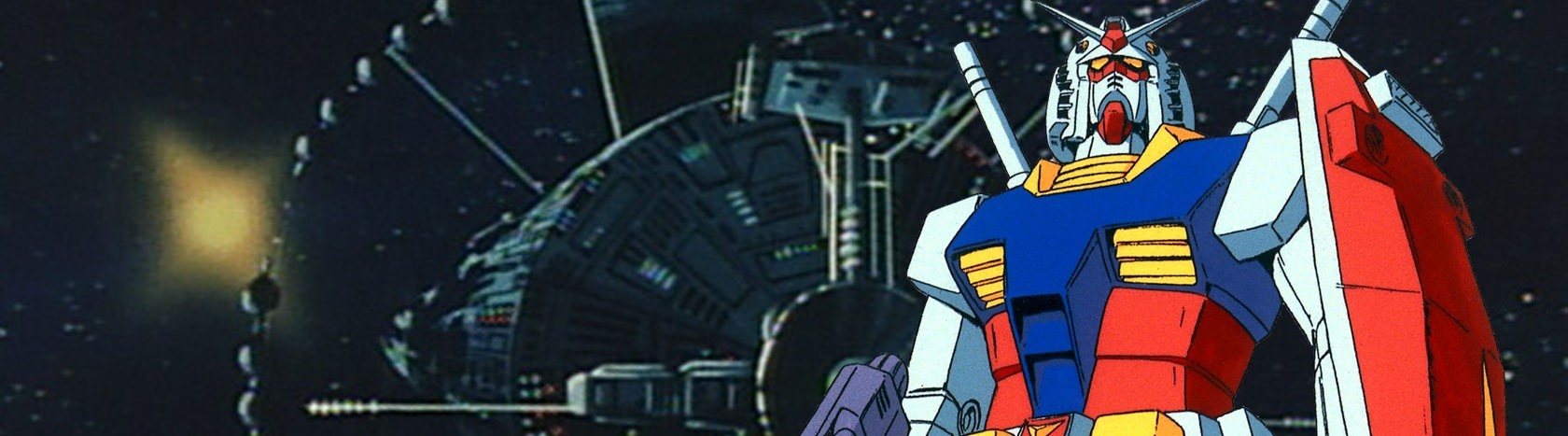
What makes Mobile Suit Gundam ache like no other mecha story isn’t its scale or its politics—it’s how relentlessly small it feels inside the enormity. This is war seen through a cracked visor: cramped cockpits, flickering monitors, radio static swallowing goodbyes, the way Amuro’s voice cracks not from adrenaline but exhaustion after three days without sleep. It doesn’t glorify conflict—it makes you taste its grit, feel the vibration of distant explosions through deck plating, hear the hollow echo of footsteps in an empty corridor where someone used to laugh. It’s melancholic exploration—not of stars or ruins, but of self, fractured by duty, loyalty, and loss. You don’t walk away thinking “cool robots.” You walk away thinking about the silence after a comms channel goes dead.
That same resonance hums in Tank Universal, not because it’s about mobile suits, but because its melancholic exploration and emotional narrative land with the same quiet gravity. The player review doesn’t talk about kill counts or upgrades—it talks about playing with dad at age six, about cool sound effects and colors, then about losing access, and finally, dad passing away. That arc—innocence, connection, rupture, memory—is pure Gundam DNA. Like Amuro piloting the Gundam before he understands what war is, this game isn’t remembered for mechanics, but for how its world held space for something tender and fragile, then let that space grow heavier with time.
EVE Online taps into the same emotional frequency—not through personal tragedy, but through scale-as-sorrow. Its description promises “a massive living universe of danger and opportunity,” and the player review confirms it: decades of flying Navy Megathrons, navigating planetary industry, surviving in a cosmos that doesn’t care if you live or die. That’s the space opera of Mobile Suit Gundam, stripped of narrative hand-holding: no heroic music swells when the White Base jumps to warp—just the groan of stressed engines and the cold arithmetic of fuel reserves. EVE’s universe breathes the same tactical warfare and sci-fi & space air—where every jump gate is a gamble, every alliance a temporary shelter, and every loss feels like a colony drifting, unmoored, into the void.
And then there are the Tomb Raider games—Legend, Anniversary, Underworld—all sharing melancholic exploration and tactical warfare as core dimensions. Their descriptions emphasize Lara’s solitary journey across remote, exotic locales, her pursuit of artifacts tied to mysterious pasts, and environments built with incredible attention to history and decay. The player reviews don’t praise combat—they praise platforming, puzzling, the feeling of discovery, the quiet reverence for ancient spaces. That mirrors Amuro’s arc: not just fighting, but traversing—through wreckage, through grief, through the slow, painful process of becoming someone who can hold both a rifle and a memory without breaking. Lara doesn’t shout. She listens—to wind in forgotten temples, to echoes in caverns. Amuro doesn’t boast. He stares out the White Base’s viewport, watching stars blur, wondering what’s left of the boy who loved model kits.
This pairing isn’t for fans of spectacle or power fantasies. It’s for the ones who pause mid-battle to watch rain hit a broken window in a ruined city, who remember the exact shade of blue on their first controller, who feel the weight of silence more than the roar of engines. It’s for people who understand that the most devastating moment in Mobile Suit Gundam isn’t a beam saber clash—it’s Amuro sitting alone in the dark, helmet off, tracing a scratch on the Gundam’s knee joint, thinking of his father’s workshop. If that hits you in the chest—if you’ve ever played a game not to win, but to witness, to remember, to hold space for something fragile—that’s who this is for.
🎮7 Games That Match the Vibe

Match Dimensions Explained
❓Frequently Asked Questions
Why does Tank Universal feel so emotionally heavy compared to other Gundam-like games?
Tank Universal hits that melancholic, introspective vibe—like watching Amuro brood in the White Base cockpit—thanks to its lonely sci-fi exploration and haunting sound design. Unlike flashy mecha brawlers, it leans into quiet tension: you’re piloting a tank alone across vast, eerie digital wastelands inspired by Tron and Battlezone, with AI allies who feel distant and fragile—mirroring Gundam’s themes of isolation and loss. One player even linked it to childhood memories of playing with their dad, then losing him—exactly the kind of emotional weight that echoes Char’s soliloquies or Sayla’s quiet grief.
Is there a mobile game adaptation of Mobile Suit Gundam that captures the tactical depth of the anime?
No official mobile Gundam title appears in this match list—but EVE Online comes surprisingly close in spirit, despite being PC-only. Its 20+ years of player-driven space warfare—think fleet coordination, intel gathering, and high-stakes ambushes around asteroid belts—echoes the strategic gravity of Zeon vs. Federation engagements. You’ll find yourself weighing risk like Bright Noa deciding whether to commit the White Base’s last missile salvo, not just mashing buttons.
How does Tomb Raider: Anniversary compare to Tank Universal for fans who love Gundam’s blend of exploration and quiet intensity?
Both lean hard into ‘Melancholic Exploration’—but in totally different ways. Tank Universal drops you into a surreal, neon-drenched tank cockpit navigating silent voids (Tron meets Char’s Newtype loneliness), while Anniversary puts you as Lara Croft retracing her origin story through rain-slicked ruins and ancient tombs, with every jump and puzzle echoing the weight of legacy—like Amuro confronting his own past in Zeta. Neither has mobile suits, but both make solitude feel cinematic and consequential.
What’s the best Gundam-like game if I’m in the mood for slow-burn mystery and atmospheric dread—not nonstop action?
Tank Universal is your pick—it’s the only one here built around lingering, immersive melancholy rather than spectacle. You’ll crawl through desolate virtual landscapes with your AI squad, hearing distorted radio chatter and watching light refract off warped geometry—very much like watching the GP02A’s nuclear launch sequence unfold in agonizing real time. Even the player review mentions how the colors and sound effects stick with you long after, just like the silence before a beam saber ignites.