EVE Online
🎮Game Details
💬What Players Say
"Let me preface that I've played Eve before +- 13 years ago. I've flown T2 Navy Megathrons, T2 Raven Navy Issues, tried out the planetary industrial part of the game, as well as the hacking 'minigame', scanning/probing, enjoyed drone warfare, skilled into T2 Exploration ships, massively enjoyed the exploration and thrill that came with it back then. It felt great!..."
"Microsoft Excel in space. Honestly, if you are good enough at this game to get rich, just use those skills to get rich in real life. It has the most realistic economy in a game ever."
"I have over 2,000 hours in EVE Online just through Steam, and somehow I still feel like I’m learning the game. EVE is not really a “space game” in the normal sense. It is a long-term economic war simulator wearing a spaceship costume...."
📝Editorial Analysis
The silence before the jump. Not empty silence—charged, thick with the hum of capacitor banks and the low thrum of a Titan’s engines cycling down. You’re piloting a T2 Navy Megathron, hull scarred from three fleet engagements in Delve, your cargo hold stuffed with refined tritanium from a planetary industrial chain you built over six months—only to watch it collapse when a rival alliance flipped sovereignty in a single, unannounced war declaration. That’s EVE Online: not lasers flashing in vacuum, but waiting, calculating, double-checking the spreadsheet tab labeled “Fuel Costs vs. Jump Range” while your comms channel crackles with tense, clipped voice lines about cyno placement and intel leaks. It’s 2,000 hours deep, and you still don’t know half the modules on your own ship’s fitting screen.


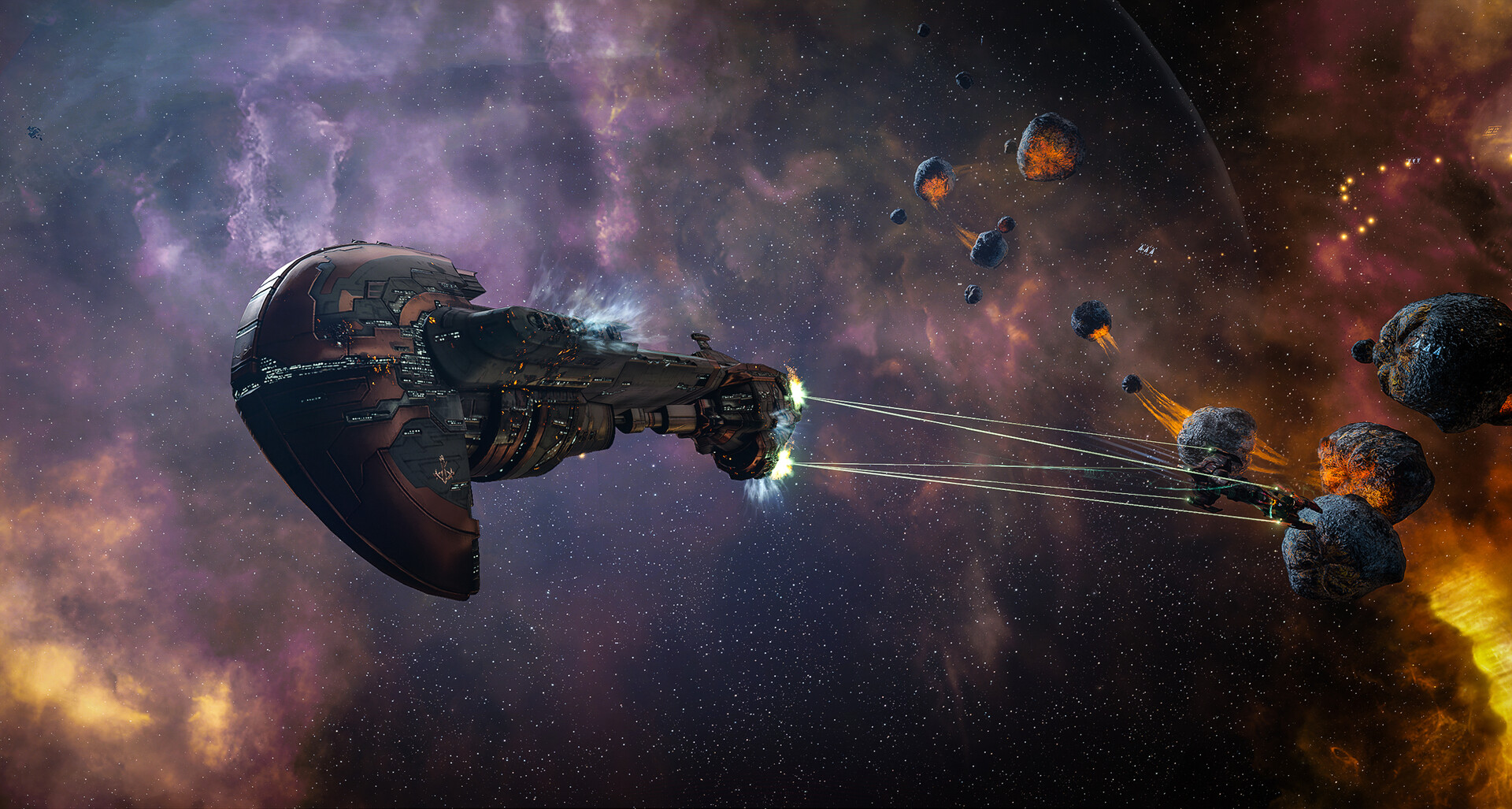
What makes EVE’s atmosphere singular isn’t its scale—it’s the weight of consequence, stretched across time and human coordination. This isn’t a universe that reacts; it remembers. A betrayal echoes in market prices for weeks. A lost capital ship doesn’t respawn—it reshapes alliances, triggers insurance claims filed in Excel-style forms, forces players to retrain skills for months. The economy isn’t simulated—it’s lived: real-world supply chains mirrored in Jita buy orders, inflation spikes tied to player-driven mining booms, entire regions destabilized by one corporation’s failed moon ratting operation. You don’t just fly ships—you negotiate treaties in Discord, draft NDAs for corp mergers, audit balance sheets mid-fleet. It feels less like playing a game and more like being drafted into a slow-burning, interstellar bureaucracy where every decision carries melancholic exploration—the quiet ache of knowing how much you don’t know, how long it takes to build something, and how easily it unravels.
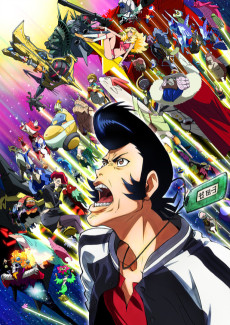
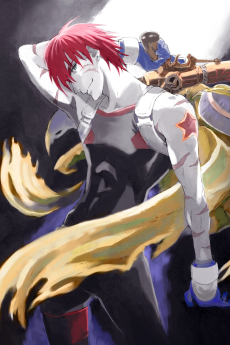
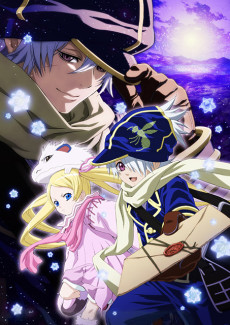
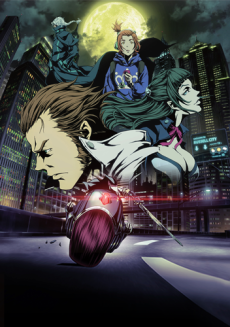
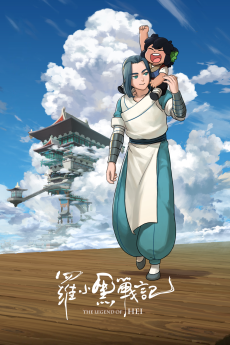
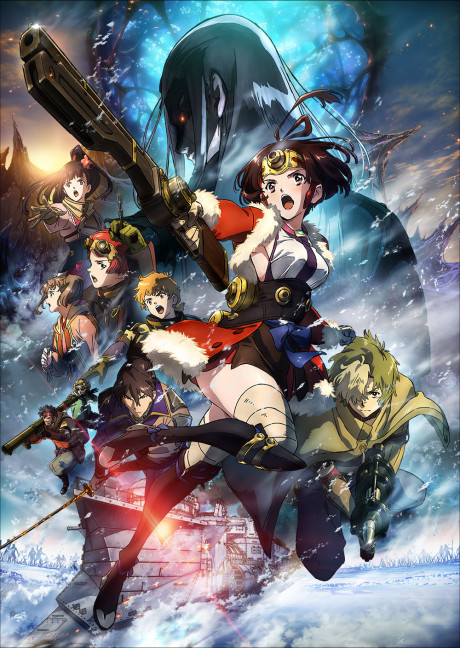
That same resonance pulses through Blood Blockade Battlefront & Beyond, where the city of Liberta floats in fractured spacetime—not as spectacle, but as infrastructure: bridges stitched from collapsed dimensions, districts governed by arcane trade pacts, heroes moving through crowds that hum with unseen economic and metaphysical debt. Its sci-fi isn’t flashy—it’s worn, layered with history and quiet exhaustion, mirroring EVE’s sense of space as contested terrain shaped by decades of human friction. Then there’s Children of the Sea, where the ocean isn’t a setting but a sentient, indifferent system—vast, ancient, humming with rhythms no single character controls. Like EVE’s null-sec, it demands humility: characters drift, observe, adapt—not conquer. Their melancholy isn’t despair, but recognition: they’re small nodes in a living, breathing, incomprehensibly large whole. Even Beyblade, at first glance a battle anime, shares this DNA—not in its tournaments, but in its competitive spirit rooted in patience, iteration, and loss as pedagogy. Each spin, each gear adjustment, each shattered blade echoes EVE’s 2,000-hour learning curve: mastery isn’t earned in climaxes, but in the thousand tiny recalibrations between them.
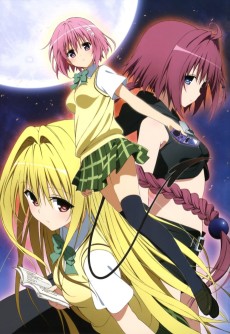
This pairing speaks to someone who finds beauty in systems that outlive them—who watches a fleet warp off-screen and feels not disappointment, but reverence for the invisible labor behind it. Someone who reads a market chart and sees poetry, who pauses mid-battle to admire how sunlight catches dust motes in a derelict station’s observation blister, who understands that melancholic exploration isn’t sadness—it’s the quiet thrill of standing at the edge of something too vast to map, and choosing to learn its grammar anyway. They’re the ones who’ll rewatch To LOVE-Ru Darkness OVA’s silent shots of orbital stations not for fanservice, but for the way light bends over hull plating—like staring at an EVE stargate’s shimmering ring, knowing thousands of pilots passed through it today, each carrying their own spreadsheet, their own grudge, their own fragile hope. They don’t want to win. They want to endure, meaningfully, among others doing the same.
→79 Anime That Match the Vibe
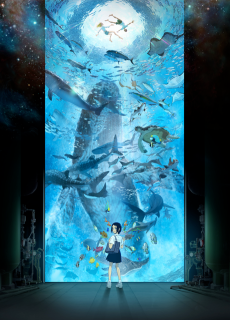
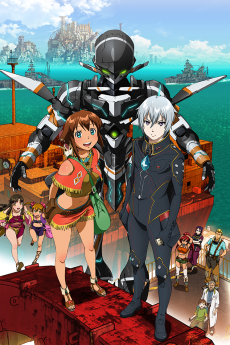
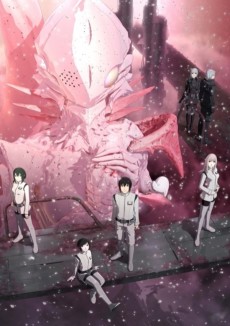
Umi and Sora’s weightless, silent dives into the ocean’s abyss mirror EVE Online’s vast, lonely void—where players drift between stars, unmoored from gravity or nation. 🌿 Melancholic Exploration binds them: Ruka’s summer longing echoes a capsuleer’s quiet awe before a nebula, both confronting scale that shrinks human certainty. Unlike most space or sea stories, neither offers rescue—only immersion in mystery that deepens with distance.
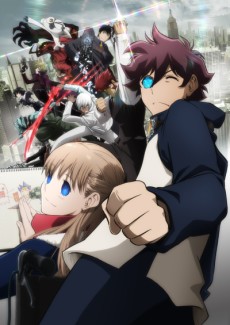
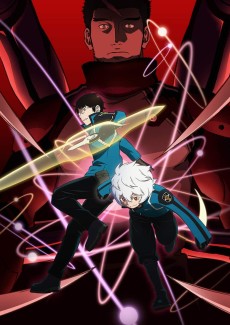
That hollow, star-dusted silence after a Titan’s collapse in EVE mirrors the quiet dread beneath Libra’s café chatter in *Blood Blockade Battlefront & Beyond*’s Season 2—where New York’s restored skyline glitters with the same fragile, melancholic exploration that defines null-sec wormhole systems. Unlike most action anime, this season lingers on bureaucratic exhaustion and cosmic scale, echoing EVE’s player-driven geopolitics amid indifferent vastness. The resonance isn’t just sci-fi spectacle—it’s how both weaponize stillness to make infinity feel intimate, and lonely.

Connected through 2 aesthetic dimensions.
Connected through 3 aesthetic dimensions.

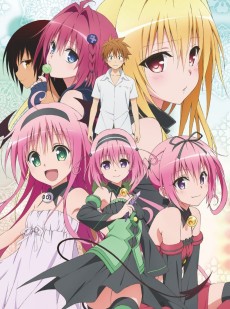
Melancholic exploration hums through the silent void between EVE Online’s abandoned stations and To LOVE-Ru Darkness OVA’s unspoken tensions—like Mio’s quiet hesitation before a confession amid floating orbital ruins in Episode 4. Where EVE frames loneliness as scale—billions of light-seconds between pilots—Darkness OVA compresses it into breathless, near-miss intimacy aboard alien ships. This resonance isn’t about plot, but how both use sci-fi space to hold fragile human yearning: vast yet tender, empty yet charged.

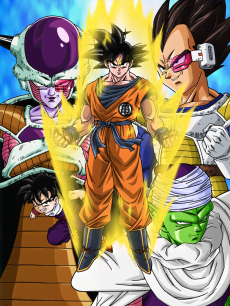
Goku’s first flight—barefoot over misty mountains, chasing a glowing Dragon Ball—mirrors EVE Online’s silent, awe-drenched warp jumps across desolate starfields. 🌿 Melancholic Exploration binds them: Bulma’s lonely quest through unknown terrain echoes a capsuleer’s solitary navigation of New Eden’s abandoned stations and derelict freighters. Unlike most sci-fi adventures, neither offers easy answers—just vast, quiet spaces where wonder and isolation orbit each other.

Vash’s quiet grief over the ruined city of July—where his pacifism shatters into desperate, precise gunplay—echoes EVE Online’s melancholic exploration of vast, indifferent space where empires rise and fall in silent, brutal calculus. Unlike most sci-fi action, TRIGUN STAMPEDE grounds tactical warfare in moral exhaustion, just as EVE forces players to weigh loyalty against betrayal across light-years of empty sky. That shared weight—of choice echoing across cosmic scale—is what makes their resonance so unexpectedly profound.
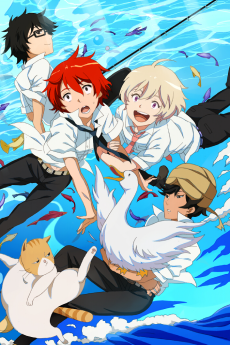
Connected through 2 aesthetic dimensions.
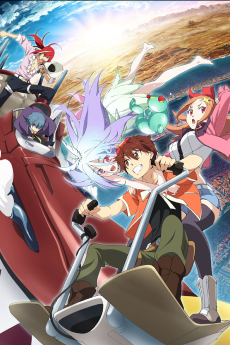
Connected through 3 aesthetic dimensions.

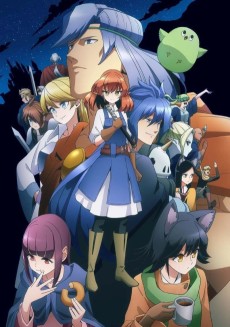
Hibiki’s first wobbly squat—face flushed, thighs trembling—mirrors a rookie EVE pilot’s first solo jump into low-sec: equal parts vulnerability and defiant hope. 🌿 Melancholic Exploration pulses beneath both: the anime lingers on quiet post-workout exhaustion and half-eaten desserts; EVE frames empire-building against cosmic indifference and player-driven loss. Unlike most sports comedies or space MMOs, neither offers easy triumph—just stubborn, communal persistence amid gentle decay.





















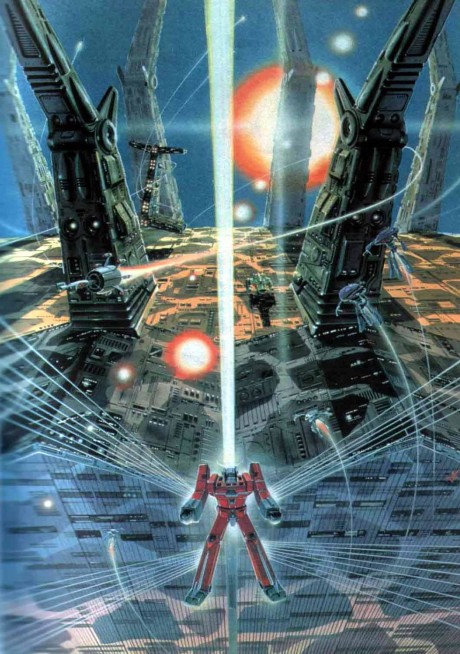


Match Dimensions Explained
❓Frequently Asked Questions
What anime is most like EVE Online?
Based on our matching, Blood Blockade Battlefront & Beyond shares the strongest aesthetic connection with EVE Online.
How many anime match EVE Online?
We found 55 anime that share aesthetic dimensions with EVE Online.
What makes these recommendations accurate?
Our algorithm matches on emotional tone, atmosphere, and thematic depth — not just genre overlap.
Is there an anime adaptation of EVE Online?
While EVE Online may not have a direct anime adaptation, these recommendations capture its core spirit.