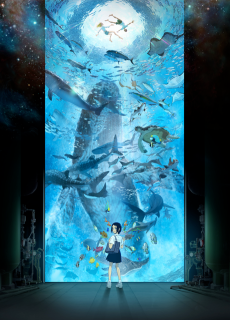
Children of the Sea
One summer vacation, Ruka meets two boys, "Umi" and "Sora," whose upbringing contains strange and wonderful secrets. Drawn to their beautiful swimming, almost more like flying, Ruka and the adults who know them are intertwined in a complex mesh...
Meanwhile, an unexplained anomaly is occurring all over the world: fish are disappearing. Thus begins a marine adventure of boys and girls to captivate all the senses!
📺Anime Details
📝Editorial Analysis
The salt hangs in the air—not just as taste or sting, but as presence. Ruka stands at the edge of the pier at dusk, bare feet gripping warm, weathered wood, watching Umi and Sora dive—not down, but out, arms slicing water like wings parting silk, bodies arcing with impossible buoyancy, trailing silver light as if they’re not swimming through ocean but through time itself. Their motion isn’t athletic; it’s liturgical. And beneath that surface, something else stirs: a slow, silent vanishing—fish gone from nets, from tide pools, from sonar ghosts. Not with fanfare, but with the quiet dread of a breath held too long.
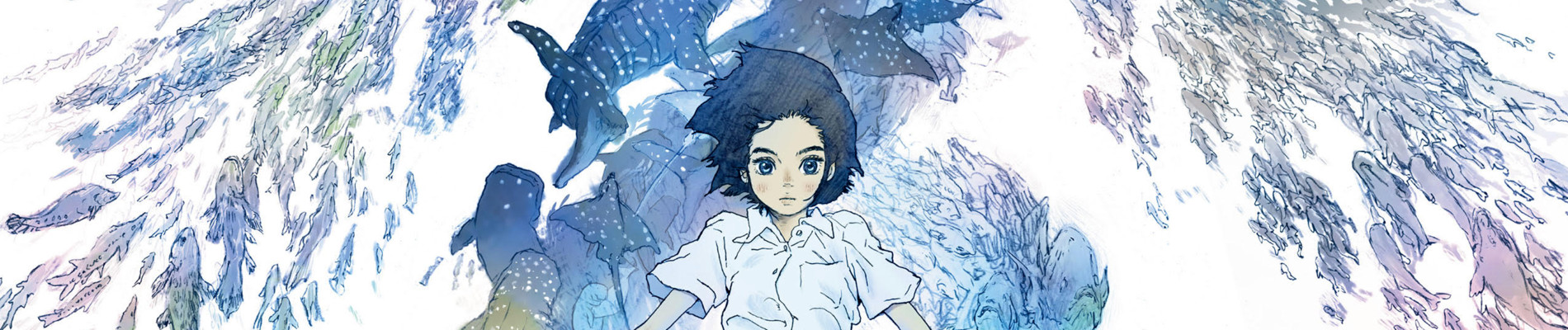
That’s the core feeling of Children of the Sea: melancholic wonder. Not sadness dressed up as beauty, but wonder infused with loss—the kind that hums in your molars when you stare into deep water and realize how little you know of what lives there, how briefly you belong. It’s coastal, yes—but not postcard-coastal. It’s the coast as threshold: where land surrenders, where myth leaks in like bioluminescent plankton, where childhood isn’t innocence but perception unfiltered, raw enough to sense the universe’s ancient pulse in a school’s sudden dispersal. The cosmic horror here isn’t tentacles or madness—it’s scale, silence, and the slow unraveling of human certainty. You don’t fear the sea in this anime. You fear how familiar it feels—and how utterly alien it remains.
Which is why EVE Online resonates so deeply—not because of spaceships, but because of scale-as-sensation. Its description calls it “a massive living universe of danger and opportunity,” and that phrase lands like a stone in still water: living, massive, danger and opportunity—all coiled together, just like the ocean in Children of the Sea. The player review mentions flying “T2 Navy Megathrons” after 13 years, not as triumph, but as ritual—a return to something vast and indifferent that remembers you only as a flicker in its chronology. That’s the same ache Ruka feels watching Umi vanish beneath waves: awe edged with displacement, belonging without ownership.
Then there’s Tank Universal, whose description evokes “a rich virtual sci-fi 3D world” inspired by Tron and Battlezone—but the real resonance lives in the player’s memory: “Play cool tank game with dad when you were 6… Love the cool sound effects, and the colors. time goes on; loose access to game. Grew up dad passes away…” That line isn’t about tanks. It’s about texture-as-time-travel: how light, sound, and movement embed themselves in childhood nerve endings, then resurface decades later as grief and grace entwined. Like Ruka remembering the exact weight of seawater on her eyelashes the first time she tried to keep up with Sora—not as competition, but as communion.
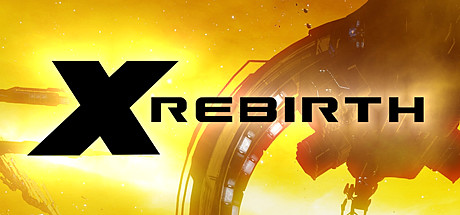
And the X-Universe games—X2: The Threat, X3: Reunion, X3: Terran Conflict—all share that same dimensional gravity. Their descriptions emphasize “vast universe,” “epic space saga,” “clash of diverse races, cultures and life”—but it’s the player review that cracks it open: “Egosoft is 12 german dudes in a trenchcoat who love space as a concept first and design games as a distant afterthought. Lots of ‘vibes’ here. Cool ba…” That reverence for vibe over mechanics, for atmosphere as narrative architecture—that’s pure Children of the Sea. These games don’t hand you lore; they drop you into stellar cartography and let loneliness and curiosity do the teaching. Just as Ruka doesn’t learn Umi and Sora’s origins through exposition, but through the way light bends around their shoulders underwater, through the hush before a tide turns.
This pairing sings for the quiet observer—the one who watches clouds for twenty minutes, who lingers at aquarium glass not to name species but to track how light fractures through moving water, who feels nostalgia not as warmth but as pressure, like depth. It’s for players who replay old save files not for achievements, but to re-enter a particular starfield at midnight local time; for viewers who pause Children of the Sea not to analyze symbolism, but to hold their breath until the next ripple fades. They don’t seek answers. They seek resonance—that shiver when the world reminds you, softly and without warning, that you are small, temporary, and profoundly connected to everything that breathes, swims, drifts, or burns across the dark.
🎮31 Games That Match the Vibe
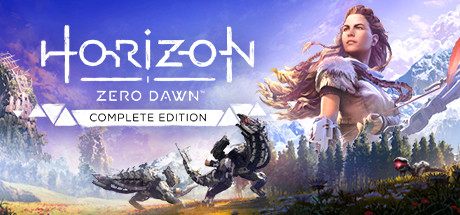
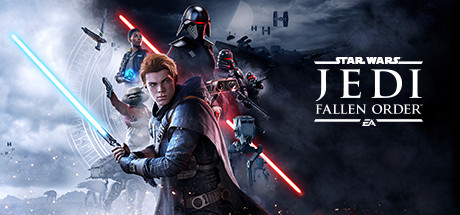



Match Dimensions Explained
❓Frequently Asked Questions
Why does EVE Online keep coming up when people search for games like Children of the Sea?
Because both lean hard into that haunting, awe-struck solitude of vast, indifferent space—like floating alone near a derelict station in EVE’s low-sec belts, watching a distant fleet warp out while your comms crackle with static. It’s not about action-packed set pieces; it’s the melancholic exploration dimension (shared with Tank Universal and all three X games) that mirrors Children of the Sea’s quiet, oceanic scale and emotional weight.
Is there a Children of the Sea anime or movie adaptation?
No official adaptation exists—but fans often reach for Tank Universal when they want that same blend of luminous sci-fi atmosphere and personal loss, like piloting your neon-traced tank through silent, geometric voids while remembering your dad’s voice from childhood play sessions (just like that heartfelt player review mentions). The vibe isn’t literal adaptation—it’s emotional resonance.
How does X3: Terran Conflict compare to X2: The Threat for Children of the Sea fans?
Both deliver that slow-burn, melancholic exploration feel—think drifting through the X-Universe’s asteroid fields at dawn-cycle, listening to Julian Gardna’s quiet narration in X2, or navigating the tense Earth–X diplomacy in Terran Conflict’s 2938 setting—but Terran Conflict adds richer cultural friction (like the sorrowful first contact scenes) that echoes Children of the Sea’s themes of fragile connection across divides. X2 feels more intimate; Terran Conflict feels more elegiac.
What’s the best game like Children of the Sea if I just want that lonely, beautiful space wandering vibe?
Tank Universal is your best bet—it’s got that Tron-meets-Battlezone visual poetry: glowing grids, deep silence between tank treads, and wide empty arenas where you’re just one small vessel in a vast, humming simulation. It nails the ‘melancholic exploration’ dimension *exactly* like Children of the Sea does underwater, but in chrome and neon—and that player review about playing it with their dad then losing access? That ache is part of the mood too.