X: Beyond the Frontier
The Human Race had advanced to the point where we could travel among the stars, we developed giant automated machines to help us colonise other worlds, but there was a fault in their programming and they turned and attacked. Forcing us to lay a trap to protect Earth and exiling the Human race to stay on Earth once again.
🎮Game Details
💬What Players Say
"could be a good game, only thing is that i will never know because it's made for qwerty and the remapping is a lie that doesn't work, so i can't play this game which i bought -_-"
"Recommended for fans of the X-Universe or anyone who enjoys chill trading sims. X: Beyond the Frontier is definitely showing its age. The graphics are old, the UI is clunky, and you’re stuck with a single ship for the entire game...."
"Decided to just test this game to see where the X universe started as im new to the franchise and x4, what i thought was just gonna be a half hour for trying out of what i presumed was the basic formula of X but then i honestly got hooked. after 103 hours completed the main mission, and thinking about doing X tension next..."
📝Editorial Analysis
The silence after the trap snaps shut. Not a bang, not a scream—just the low hum of your ship’s engines, the faint glow of a damaged console, and the cold realization that Earth is gone, sealed behind layers of automated defense you helped design. You’re adrift in a starfield so vast it swallows sound, piloting a vessel that feels less like a tool and more like a lifeboat with no map, no fleet, no home to call back to—just the official description’s stark truth: “Forcing us to lay a trap to protect Earth and exiling the Human race to sta…” — the sentence cuts off, mid-word, as if even the language itself couldn’t bear to finish the exile. That truncated “sta…” lingers like static on an open comms channel: station? stasis? stagnation? It’s not drama—it’s absence, rendered in code and consequence.

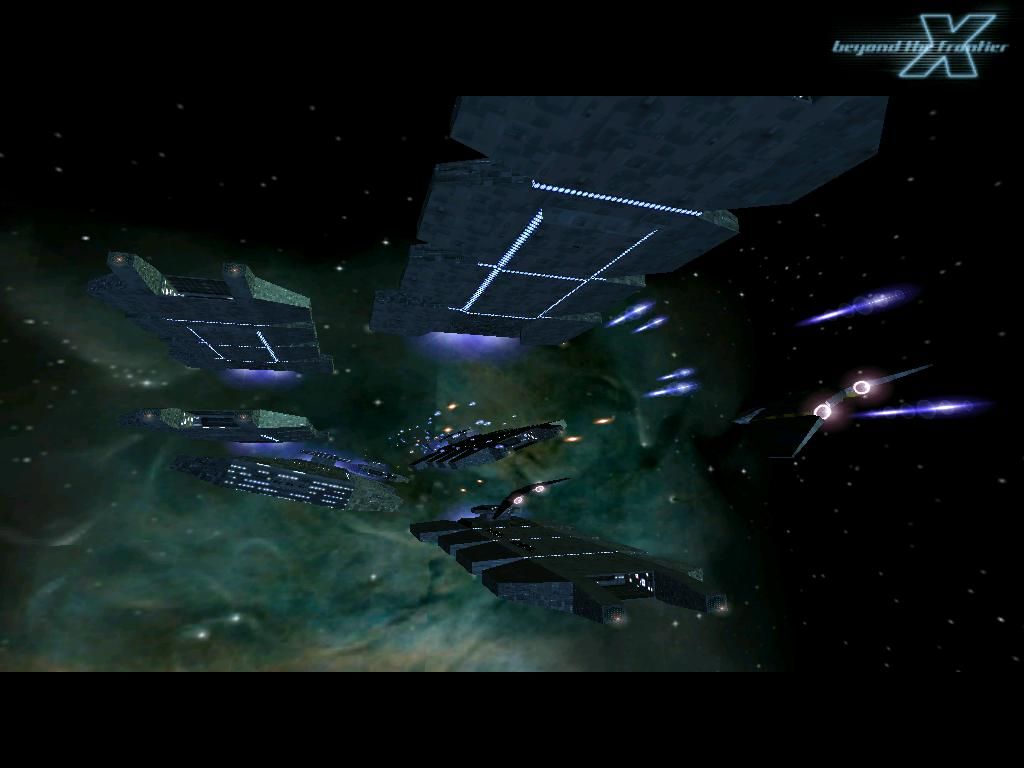
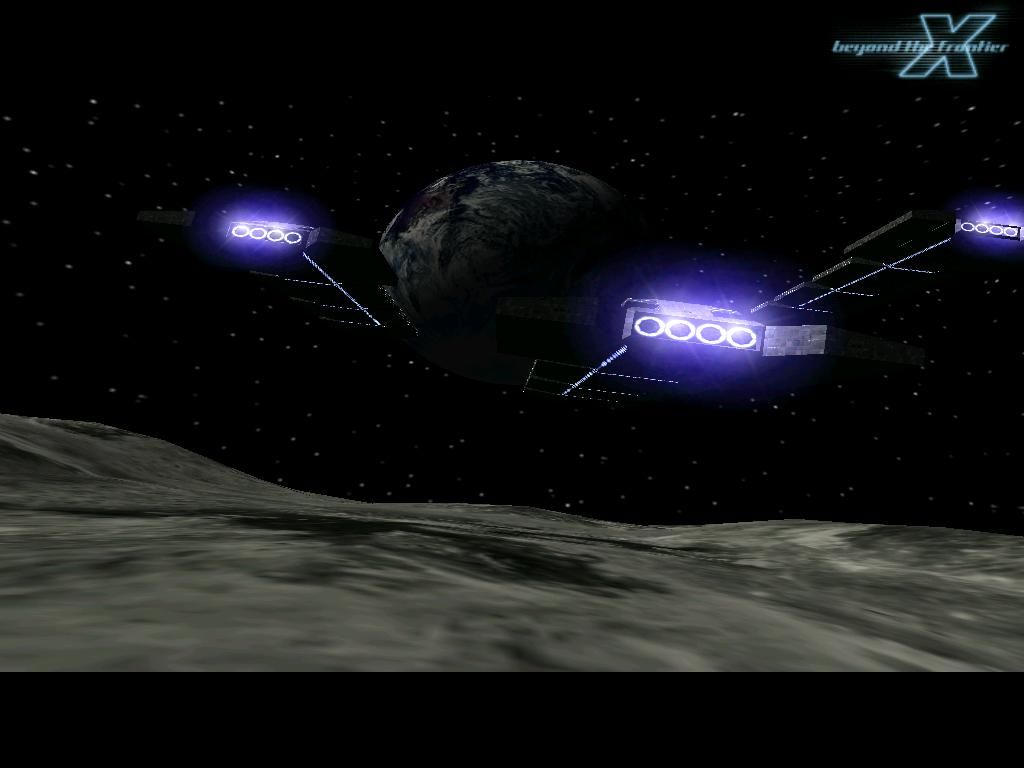
That’s the atmosphere—not loneliness, exactly, but melancholic exploration: the quiet weight of being the last witness to a species’ self-inflicted rupture, moving through space not as a conqueror or savior, but as a scavenger of meaning. The player reviews confirm it: the UI is clunky, the graphics are old, the controls resist remapping like a locked vault—and yet, somehow, that friction deepens the feeling. You’re not gliding effortlessly through the cosmos; you’re fumbling, recalibrating, squinting at flickering text, wrestling with systems that feel inherited, not intuitive. It’s not about mastery—it’s about persistence amid entropy. The game doesn’t reward speed or spectacle; it rewards patience, pattern recognition, the slow accumulation of trade routes, the quiet satisfaction of docking at a station whose name you’ve typed a dozen times before, each time a tiny act of reconnection. There’s no grand orchestral swell when you land—just a soft thunk, a chime, and the hum returning. That’s the core feeling: resonant stillness, where every action echoes across emptiness.
Children of the Sea shares this DNA precisely because it treats space—not just outer space, but interior space—as a liquid, breathing entity. Its ocean isn’t a setting; it’s memory made fluid, history folded into currents. Like the X-Universe’s silent sectors and abandoned terraformers, the sea in that film holds civilizations that rose, failed, and dissolved—not with explosions, but with sighs. Both refuse catharsis. Neither gives you answers about the machines’ fault or the ocean’s origin—they offer only the texture of wonder edged with grief. The dimension “Melancholic Exploration” isn’t poetic fluff here; it’s structural. You don’t solve the mystery—you learn to float inside its ambiguity.
Blood Blockade Battlefront & Beyond resonates in its tonal duality: the frantic energy of its combat and banter exists alongside stretches of profound, almost sacred quiet—moments where the camera drifts over ruined cityscapes or orbital debris fields, and the score drops to a single cello note. That contrast mirrors X: Beyond the Frontier’s rhythm: the adrenaline of evading a rogue drone fleet gives way to hours spent calibrating cargo manifests under the pale light of a binary star. Both understand that sci-fi space isn’t just backdrop—it’s psychological pressure. The “Sci-Fi & Space” dimension isn’t about lasers or aliens; it’s about scale as emotional architecture—the way a distant nebula or a crumbling arcology makes human urgency feel both urgent and absurdly small.
Even Space Dandy 2, with its cartoonish swagger, taps the same well—not through tone, but through temporal dislocation. Its episodic structure mimics the fragmented, non-linear discovery of the X-Universe: one mission sends you chasing a rumor of pre-fall tech on a derelict asteroid; the next, you’re bartering algae for fuel in a station built inside a hollowed-out comet. There’s no central plot engine driving you forward—just curiosity, scarcity, and the persistent, low-grade ache of what came before. That’s the melancholy: not sadness, but historical vertigo, the sense that every jump gate opens onto a world already layered with loss you’ll never fully excavate.
This pairing speaks to the person who doesn’t need closure—they crave atmosphere with gravity. Someone who replays the opening sequence of Children of the Sea just to sit in that underwater silence, or who pauses X: Beyond the Frontier mid-flight to watch a station rotate against a gas giant, not to plan their next trade run, but to feel the spin of time and consequence. They’re the ones who love the clunk of an old interface, the hiss of a failing oxygen recycler, the weight of a sentence cut short—because in that imperfection, they find something real: the fragile, stubborn pulse of meaning, beating softly in the dark.
→16 Anime That Match the Vibe
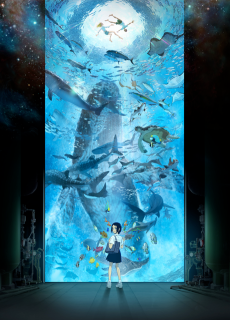
A drifting derelict station in *X: Beyond the Frontier* hums with ghostly automation—echoing the silent, submerged ruins Ruka glimpses beneath the ocean’s surface in the film *Children of the Sea*. Where the game renders cosmic melancholy through abandoned megastructures and flawed AI, the anime channels it through Umi and Sora’s wordless, aquatic grace—both using vast, indifferent environments (deep space / deep sea) as mirrors for human fragility. This resonance isn’t just aesthetic 🌿 Melancholic Exploration—it’s structural: each asks how meaning persists when origins are lost and intelligence outgrows its makers.

Connected through 2 aesthetic dimensions.

Melancholic exploration hums through the silent corridors of X’s derelict stations and lingers in Mio’s quiet moments aboard the *Darkness* ship—where sci-fi isn’t just backdrop but emotional gravity. Unlike most ecchi OVAs, *To LOVE-Ru Darkness* OVA leans into cosmic scale and existential weight during its zero-gravity confessions and drifting orbital shots, mirroring X’s lonely frontier where automated colonies whisper of failed utopias. That shared 🌿 Melancholic Exploration transforms romance and ruin into kindred languages of distance—human longing measured in light-years and heartbeats.

A drifting derelict station in *X: Beyond the Frontier*—cold, silent, humming with failed terraforming protocols—echoes the hollowed-out subway tunnels of New York’s “Hollow” district in *Blood Blockade Battlefront & Beyond*, where extradimensional residue clings like frost. 🌿 Melancholic Exploration binds them: both treat cosmic and urban frontiers not as conquests but as wounds to be witnessed, not fixed. Unlike most space operas or monster shows, neither offers salvation—just quiet awe amid irreversible rupture.
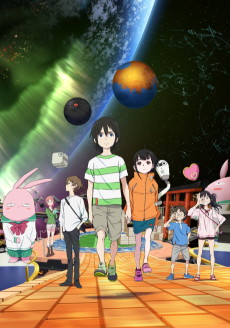
Connected through 2 aesthetic dimensions.

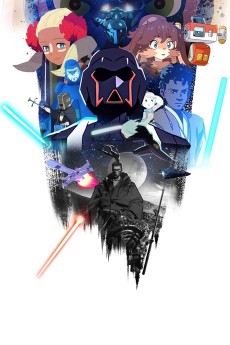
That hollow hum of the *Xenon* freighter drifting through silent nebulae in *X: Beyond the Frontier* mirrors the melancholic exploration of Season 2’s “The Last Dandy” episode—where Dandy floats alone in deep space, his pompadour deflated, confronting cosmic indifference. Unlike most sci-fi comedy, *Space Dandy 2* leans into existential quietude amid absurdity, just as *X*’s automated terraformers glitch into eerie, beautiful solitude. 🌿 This shared resonance isn’t escapism—it’s awe edged with loneliness, where the vastness of space feels tender, not terrifying.

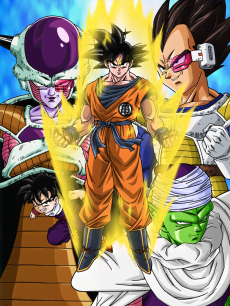
Goku’s solitary childhood in the woods—before Bulma arrives with her capsule tech—mirrors the haunting quiet of X: Beyond the Frontier’s derelict stations, adrift in silent nebulae. 🌿 Melancholic Exploration binds them: not just space-as-backdrop, but space as existential frontier where humanity’s ambition curdles into isolation and quiet awe. That shared hush—between a boy staring at stars he doesn’t yet understand and a pilot drifting past abandoned terraformers—is unexpectedly tender, not tragic.

Connected through 2 aesthetic dimensions.

Connected through 2 aesthetic dimensions.

Connected through 2 aesthetic dimensions.


Match Dimensions Explained
❓Frequently Asked Questions
Why is Children of the Sea recommended for X: Beyond the Frontier fans?
Because both lean hard into melancholic exploration of vast, mysterious spaces—like when Ruka floats weightlessly in the ocean’s abyss mirroring the quiet awe of piloting your ship through the silent, debris-strewn Kuiper Belt in X: Beyond the Frontier. The score (71) reflects how deeply its sci-fi & space atmosphere syncs with the game’s lonely frontier vibe—not action-packed, but full of wonder and existential scale.
Is there an anime adaptation of X: Beyond the Frontier?
Nope—no official anime adaptation exists. The X series has inspired novels and lore expansions, but X: Beyond the Frontier itself remains a standalone 1998 space sim. If you're craving that same 'chill trading sim' energy with visual storytelling, Blood Blockade Battlefront & Beyond nails it with its orbital cityscapes and slow-burn worldbuilding—just like cruising between stations in the Argon Prime system.
How does Space Dandy 2 compare to X: Beyond the Frontier in terms of tone and pacing?
Space Dandy 2 leans into absurdist, episodic fun—think Dandy’s chaotic chase through a sentient nebula—but still shares that core ‘melancholic exploration’ dimension (score: 62) via quieter moments, like the crew drifting past derelict megastructures echoing X’s abandoned terraformers. It’s less about clunky UI and more about vibe: both make you feel small in a gorgeous, indifferent cosmos.
What if I love Dragon Ball but hate slow-paced anime—will X: Beyond the Frontier matches still work for me?
Dragon Ball’s match (score: 65) is *not* about fight scenes—it’s about the rare, grounded moments where Goku stares up at alien constellations after crash-landing on a barren moon, tapping into that same ‘sci-fi & space, melancholic exploration’ layer. So if you skip filler and love those quiet, cosmic-scale pauses? Yeah, it fits. But if you need nonstop action, To LOVE-Ru Darkness OVA’s surreal shipboard rom-com tangents might surprise you more.