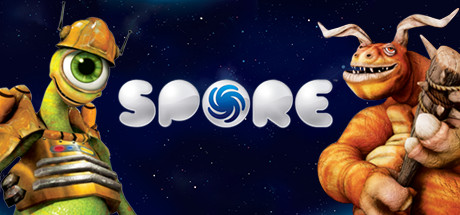
SPORE™
Be the architect of your own universe with Spore, an exciting single-player adventure. From Single Cell to Galactic God, evolve your creature in a universe of your own creations.
🎮Game Details
💬What Players Say
"Spore is one of those games that still feels unique even today. Few titles have ever attempted something this ambitious: letting players guide a species from microscopic organism to intergalactic civilization, all while giving them creative freedom at nearly every stage of the journey. The gameplay constantly evolves...."
"Kinda falls off after the creature stage for me. Wish that the game had more content in the creature and cell stages."
"One of my favourite games from my childhood. I used to play this on my dad's account and I loved it and recently got it on mine and would highly recommend."
📝Editorial Analysis
You’re floating in the deep violet haze of a nebula you named Glimmerveil, watching your first creature—lumpy, asymmetrical, built from the Creature Creator’s jankiest parts—waddle across an alien shore. Its tiny mouth opens and closes like a confused fish. It doesn’t speak. It doesn’t fight. It just exists, blinking under twin suns you placed there yourself. That’s Spore: not conquest, not story, but witnessing emergence—a single-cell organism blooming into something that sings, builds, orbits, then names stars. As one player put it: “Be the architect of your own universe”—not ruler, not savior, but architect, hands still dusty with clay and code.
What makes Spore’s atmosphere singular isn’t its five-stage progression—it’s the quiet awe threaded through ambition so vast it almost collapses under its own weight. You feel small, not because the scale is big (though it is), but because your creations are gloriously imperfect: a spaceship cobbled from squid tentacles and toaster ovens; a civilization that worships a floating eyeball because you dragged it into the building editor and hit “save.” The game doesn’t judge. It accepts. That’s why players remember childhood sessions on their dad’s account—not for victory, but for the melancholic exploration of watching your first species go extinct on a volcanic world, then rebooting, trying again, softer this time. The fall-off after Creature Stage? Real. But that stumble matters: it mirrors how evolution itself isn’t linear—it’s lopsided, generous in some eras, stingy in others. You don’t master Spore. You acclimate to its gentle, stubborn refusal to be polished.
That same emotional DNA pulses in To LOVE-Ru Darkness OVA, where cosmic absurdity and tender vulnerability orbit each other like binary stars. A galactic empire invades Earth—not with dreadnoughts, but with bureaucratic paperwork and awkward flirtations. The sci-fi isn’t about physics; it’s about scale mismatch: a girl’s heartbeat syncing with a dying star’s pulse, a joke landing mid-black-hole collapse. Like Spore, it treats grandeur as backdrop, not plot engine—the real drama lives in the wobble of a creature’s gait or the tremor in a voice confessing love across light-years. Both revel in comedy & parody not as escape, but as oxygen: laughing when your Spore creature trips over its own tail, or when Rito stumbles into a dimensional rift while trying to hide a swimsuit catalog.
Space Dandy 2 shares that same breathless, off-kilter reverence. Every episode begins with a new planet, a new species, a new impossible biology—and Dandy doesn’t catalog them. He bumps into them, misreads their customs, offers terrible advice, then floats away on a couch-shaped ship, humming off-key. Just like Spore’s Cell Stage, where you nudge your microbe toward nutrients while dodging predators that look like glittering jellyfish made of static, Space Dandy 2 finds melancholic exploration in the mundane miracle of otherness. No exposition dump explains why a sentient nebula runs a laundromat. You just accept it—and in that acceptance, feel the same hushed wonder as when your first civilization sends its first probe into orbit and you zoom out, watching that tiny dot blink against the void.
Even Gintama Season 4, with its Edo-period samurai dodging alien bureaucrats and vending-machine gods, carries Spore’s spirit—not in scope, but in texture. Its sci-fi isn’t sleek; it’s duct-taped, ramshackle, alive with the friction of clashing worlds. When Gintoki negotiates peace with a race whose language is entirely composed of snack-food puns, it’s not satire of sci-fi—it’s devotion to its chaos, the same devotion that makes you spend twenty minutes giving your Spore creature eyelashes made of coral and a voice that sounds like a kazoo dipped in honey.
These pairings aren’t for people who want lore dumps or power fantasies. They’re for the ones who pause mid-game to rename a moon “My First Failed Civilization”, who rewatch a Space Dandy episode just to see how the background aliens shift expression in frame three, who smile when a To LOVE-Ru character sighs at the sheer exhaustion of being loved across dimensions. They’re for those who find holiness in the lopsided, the unfinished, the gloriously unoptimized—who understand that creation isn’t about perfection. It’s about showing up, again and again, with a shaky hand and a full heart, and whispering, “Let’s try this.”
→40 Anime That Match the Vibe

Connected through 3 aesthetic dimensions.
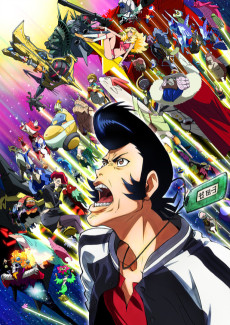
That wistful shot of Dandy floating alone amid glittering nebulae in *Space Dandy 2*’s “The Man Who Wasn’t There” episode mirrors Spore’s galactic stage—where awe curdles into quiet loneliness despite godlike power. 🌿 Melancholic Exploration binds them: both treat cosmic scale as a canvas for absurdity *and* existential softness, not grand conquest. Unlike most sci-fi that weaponizes scale, they let wonder and silliness coexist—Dandy’s pompadour gleaming under alien suns, your Spore creature blinking up from a newly terraformed world.

Connected through 3 aesthetic dimensions.

A floating, half-built starship drifts past Rito’s hapless face as he trips into alien flora—*To LOVE-Ru Darkness*’ OVA leans into sci-fi absurdity not as backdrop but as emotional amplifier. Unlike most ecchi rom-coms, it treats cosmic scale with melancholic exploration, mirroring *Spore*’s quiet awe when your species first achieves interstellar flight—then watches civilizations rise and flicker like fireflies. That shared tension between laughter and loneliness in the void makes their resonance unexpectedly poignant.

Connected through 2 aesthetic dimensions.

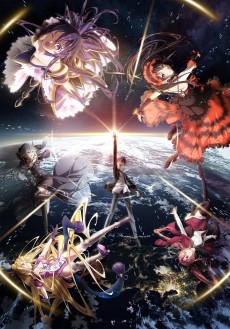
A giggling, tentacled alien bursts from a gelatinous pod in *Spore*’s Creature Stage—just as Rito Yuuki stumbles into another dimension-hopping mishap with Momo’s chaotic “Darkness” powers in *To Love Ru Darkness 2nd Specials*. Where *Spore* parodies cosmic evolution through absurd biological improvisation, the specials weaponize sci-fi tropes—wormholes, alien bureaucracies, multiverse glitches—as springboards for romantic farce. This shared love of **Sci-Fi & Space** as comedic scaffolding makes their tonal collision unexpectedly coherent: universe-building isn’t grandiose here—it’s gloriously, unapologetically silly.

Connected through 2 aesthetic dimensions.

Connected through 2 aesthetic dimensions.

Develuke’s gravity-defying royal harem—where Lala’s sisters weaponize absurd biology and cosmic bureaucracy—mirrors Spore’s gleeful defiance of evolutionary logic. Where Spore lets players sculpt a squid-winged deity who colonizes nebulae with disco-themed starships, *To Love Ru Darkness* Season 2 treats interstellar diplomacy as a slapstick contest of escalating ecchi chaos. This shared sci-fi parody dimension transforms galaxy-spanning power into pure, unapologetic cartoon logic—surprisingly harmonious in its commitment to joyful nonsense over realism.

Haruhi’s “Endless Eight” loop—where summer repeats 15,532 times—mirrors Spore’s procedural galaxy generation: both treat cosmic scale as playful, editable scaffolding rather than fixed law. Unlike most sci-fi, neither fears absurdity; Kyon’s deadpan exhaustion and Spore’s giggling god-mode share a gleeful, self-aware comedy that weaponizes scale against solemnity. This resonance isn’t coincidence—it’s shared DNA in how they parody cosmic authority while letting players/viewers *remix* reality itself.



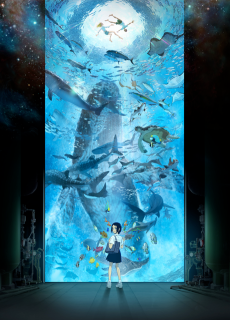
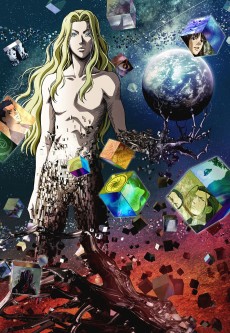


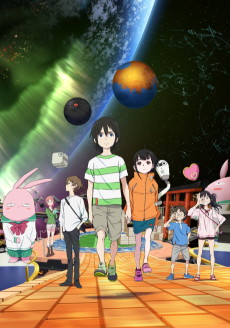






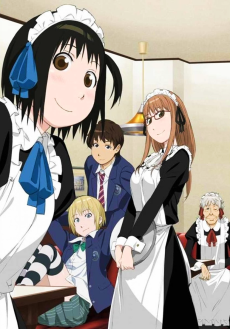
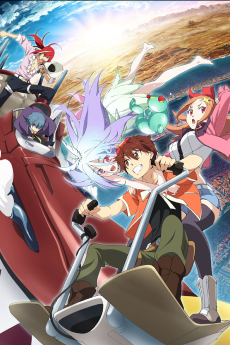


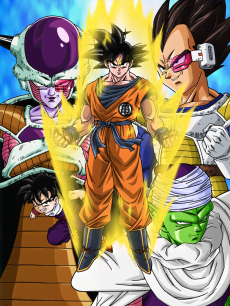
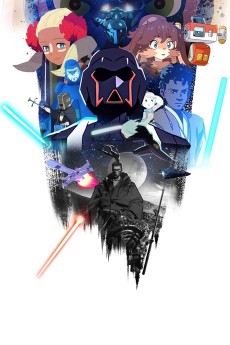





Match Dimensions Explained
❓Frequently Asked Questions
Why does Space Dandy feel like Spore’s creature stage but in anime form?
Because just like Spore’s Creature Stage—where you tweak limbs, vocalizations, and social behaviors to survive and impress others—Space Dandy leans hard into absurd biological experimentation (remember that episode with the sentient, shape-shifting space jellyfish colony?) and improvisational evolution through trial, error, and slapstick diplomacy. The show’s tone mirrors how Spore players *feel* when their goofy, lopsided creature accidentally charms a rival tribe with a perfectly timed dance move—pure chaotic, joyful emergence.
Is there an anime adaptation of Spore?
Nope—no official anime adaptation exists, and that’s actually part of why fans love the matches we found. Titles like To LOVE-Ru Darkness OVA and Space Dandy 2 tap into Spore’s *vibe*, not its plot: think galactic-scale creation, species-hopping curiosity, and that melancholic wonder from player review #1 about ‘architecting your own universe’—not licensed lore or cutscenes.
How does Gintama Season 4 compare to Space Dandy for Spore fans?
Gintama S4 leans heavier into parody and grounded (if alien-infused) Edo-era chaos—like Spore’s Creature Stage gone full samurai sitcom—while Space Dandy embraces Spore’s cosmic scale and existential whimsy (e.g., the ‘space whale funeral’ episode mirrors how Spore players mourn their first extinct species). Both nail the Sci-Fi & Space + Comedy & Parody combo, but only Space Dandy consistently echoes that ‘melancholic exploration’ from Spore’s later stages.
What’s the best anime like Spore if I want that nostalgic, childhood-feel wonder?
To LOVE-Ru Darkness 2 Specials—it’s got that same warm, slightly wistful energy as playing Spore on your dad’s account (just like player review #3 describes). You get galaxy-spanning stakes, silly-but-sincere character growth (Rito’s awkward evolution feels *so* much like guiding your first clumsy creature through social challenges), and those quiet, awe-filled moments staring at starfields—exactly what makes Spore ‘one of my favourite games from my childhood.’