
Urusei Yatsura (2022) Seasons 1 & 2
When an alien race known as the Oni invade Earth, the chronically unlucky and unapologetically lecherous Ataru Moroboshi is selected as humanity’s representative in a duel for the fate of the planet! His opponent is Lum, the Oni’s very pretty princess, and it’s only thanks to Ataru’s unscrupulous behavior that he’s able to scrape out a win in a treacherous game of tag against her. Ataru thinks he’s had his lucky break at last, but when Lum takes a shine to him off the battlefield, the conflict follows him home as Lum invades not only planet Earth, but also the womanizing Ataru’s love life!
(Source: HIDIVE)
Note: Sentai has labeled the first and second cour of this season as "Seasons 1 & 2" respectively. They have labeled the 3rd and 4th cours of the 2nd season as “Seasons 3 & 4”
📺Anime Details
📝Editorial Analysis
Lum’s bare feet slap the pavement as she chases Ataru across the sun-drenched rooftop—her electric-blue hair streaming, her school skirt flaring, sparks crackling off her fingertips—not from anger, but delight. He trips over a loose tile, tumbles backward into a potted fern, and emerges sneezing leaves while she hovers mid-air, grinning, tail swishing like a cat who’s just pinned the most delicious, wriggling moth. There’s no stakes, no countdown, no villain closing in—just this surreal buoyancy, this refusal to let gravity (or logic or consequence) settle for longer than three seconds.
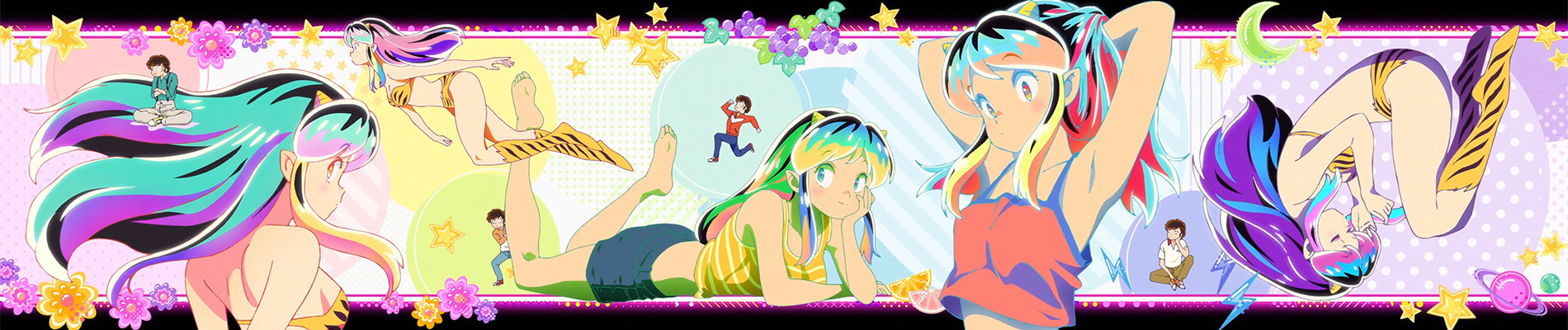
That’s the heartbeat of Urusei Yatsura (2022) Seasons 1 & 2: not chaos as breakdown, but chaos as tenderness. It doesn’t mock romance—it worships its absurdity. Lum’s devotion isn’t ironic; it’s radiant, unguarded, embarrassingly sincere—even when she zaps Ataru into a smoking crater. The show doesn’t ask you to believe in aliens or oni or interstellar tag duels. It asks you to believe in the weight of a glance, the ache of unrequited love that hums beneath slapstick, the way a girl’s laugh can short-circuit physics. It’s melancholic exploration disguised as nonsense—grief and longing folded into a paper crane and tossed into a breeze that somehow carries it all the way to the moon.
Which is why Prince of Persia lands with such quiet resonance. Its description names Romance & Shoujo, Comedy & Parody, and Melancholic Exploration—three dimensions that map directly onto Lum’s hovering sigh after Ataru forgets her name, or Shinobu’s quiet stare out the classroom window as the couple tumbles past in slow-motion confetti. That player review calling it “the 3rd reboot… completely separate from the sands” echoes how this Urusei Yatsura isn’t chasing nostalgia—it’s rebuilding the emotional architecture from scratch: love as myth, time as elastic, loss as something you trip over, then laugh through. Both treat yearning like sacred geometry—precise, elegant, and utterly irrational.
Then there’s The Sims™ 4, tagged identically: Romance & Shoujo, Comedy & Parody. Its description invites you to “Play with life and discover the possibilities”—exactly what Urusei Yatsura does every episode: Shinobu choosing not to confess, Mendou practicing his smile in a mirror, Cherry’s tiny, doomed crush blooming like a weed in cracked concrete. The player review complains about DLC dependency and bugs—but that friction mirrors the anime’s own imperfections: the jarring cuts, the recycled gags, the moments where tone wobbles between farce and fragility. Both works thrive because they’re messy, modular, endlessly reconfigurable—life as a sandbox where heartbreak and hijinks share the same save file.
And Disco Elysium - The Final Cut, also carrying Romance & Shoujo, Comedy & Parody, and Melancholic Exploration, lands like a gut-punch in velvet gloves. Its description positions you as a detective carving a path across a city—but the real investigation is internal: What do I want? Why do I keep choosing wrong? Who am I when no one’s watching? That’s Ataru, every single day. The player review quotes philosophy (“Capital has the ability to subsume all critiques…”), but what sticks is the irony: even despair becomes theatrical, even breakdowns are punctuated by absurd non-sequiturs. Like when Ataru, mid-sob about Lum’s affection, pauses to admire a passing girl’s ankles—then gets hit by a falling satellite. That’s Disco Elysium’s soul: trauma dressed in clown shoes, grief with a punchline, melancholy so deep it loops back into laughter.
This isn’t for people who want tidy arcs or clean resolutions. It’s for the ones who’ve ever laughed too hard at their own sadness—who recognize the sacred in the slapstick, the poetry in the pratfall. It’s for players who build entire neighborhoods in The Sims™ 4 just to watch two Sims awkwardly share an umbrella in the rain. For readers who highlight lines in Disco Elysium like “I’m not broken—I’m bent.” For fans who don’t skip the quiet shots—the ones where Lum watches Ataru sleep, tail curled tight, eyes wide and soft, electricity dimmed to a gentle glow. They know: the most alien thing in the universe isn’t tentacled invaders or interdimensional portals. It’s the terrifying, luminous, unreasonable persistence of hope—and how beautifully, hilariously, it keeps tripping over itself on the way to your heart.
🎮41 Games That Match the Vibe















Match Dimensions Explained
❓Frequently Asked Questions
Why is Prince of Persia (2023) listed as similar to Urusei Yatsura (2022)?
Because both lean hard into romantic chaos with a grounded-yet-whimsical tone—like Lum’s electric love-chases or Ataru’s slapstick near-misses, Prince of Persia weaves melancholic exploration with sudden bursts of physical comedy and tender, awkward romance (think the Prince and Elika’s evolving dynamic). Its 84-scored blend of Romance & Shoujo + Comedy & Parody + Melancholic Exploration mirrors how Urusei Yatsura balances absurdity with genuine emotional weight.
Is there a video game adaptation of Urusei Yatsura (2022)?
No—there’s no official game based on the 2022 anime reboot. But games like The Sims 4 (score 81) capture its spirit: you can recreate Lum’s shrine, throw rooftop parties with alien guests, or roleplay Ataru’s chaotic dating life using custom content. It’s not a direct adaptation, but it’s the closest thing for building your own ‘Tenryū-ji’-style rom-com sandbox.
How does Persona 5 Royal compare to Disco Elysium for Urusei Yatsura fans?
Persona 5 Royal leans into stylish, high-energy romance and ensemble banter—like Ann’s teasing or Ryuji’s loud loyalty—while Disco Elysium dials into dry, self-aware absurdity and existential hangovers (think Shutaro Mendo’s deadpan aristocratic despair meets Detective Harrier’s internal monologues). Both score in Romance & Shoujo and Comedy & Parody, but P5R’s vibrant Tokyo dates and confidant scenes feel more like Urusei’s sparkling group energy; Disco Elysium’s melancholic exploration hits the show’s quieter, weirder philosophical moments.
What’s the best game like Urusei Yatsura if I just want chaotic, lighthearted fun with romance?
Thrillville®: Off the Rails™ (score 68) — seriously! It’s got that same over-the-top, physics-defying silliness: launching rollercoasters through the air like Lum zapping Ataru, hiring quirky staff (imagine Cherry as a park manager), and juggling multiple flirtatious mini-games while keeping everything barely under control. Its Romance & Shoujo + Comedy & Parody vibe matches Urusei’s sugar-rush energy better than most 'serious' RPGs.