
Exodus from the Earth
The Intelligence Agency has commissioned you, Francis Rixon, to find out what is happening inside the Corporation's confines and to retrieve information about a secret mineral upon which the very existence of the human race may depend.
🎮Game Details
💬What Players Say
"If you're looking at this game page, chances are you know the kind of game it is. It's jank. Let's get that out of the way...."
"Basically, it's a 5/10. Not really a terrible game but it's very boring. The plot is pretty stupid and nothing to write home about...."
📝Editorial Analysis
The flicker of a corrupted HUD—green text stuttering across a cracked monitor as Francis Rixon’s boot crunches on gravel outside the Corporation’s rusted perimeter gate. No fanfare, no orchestral swell—just the low hum of a failing generator and the faint, off-kilter ping of a misfiring dialogue trigger. You’re told you’re hunting a mineral that holds the very existence of the human race in its crystalline lattice—and yet your inventory only contains three bullets, a flashlight with a 47-second battery life, and a coffee-stained mission brief that misspells “Rixon” twice. That’s the moment: not awe, not dread—but baffled commitment. The official description promises high-stakes espionage; the player reviews call it “jank,” “boring,” “stupid,” and—crucially—“surprisingly good jank.” Not polished. Not profound. But insistently, weirdly present, like a VHS tape left too long in a sunlit garage: warped, slightly sticky, stubbornly playing.


What makes Exodus from the Earth’s atmosphere singular isn’t its sci-fi setting—it’s the tonal friction. It’s the dissonance between apocalyptic stakes and banal execution: the weight of extinction humming beneath a glitchy driving mini-game, the grandeur of “retrieving vital intel” undercut by a door that won’t open unless you reload three times. It doesn’t invite immersion—it invites negotiation. You don’t lose yourself in the world; you lean in, squint, and murmur, “Okay… but why does this ladder clip through the ceiling and also emit elevator music?” That’s the feeling: affectionate exasperation, the quiet thrill of collaborating with a system that refuses to take itself seriously—even as it insists, deadpan, that everything hinges on your next keystroke. It’s not ironic detachment. It’s tender confusion: the kind that blooms when sincerity and shoddiness occupy the same frame without apology.
That exact frequency vibrates through The Melancholy of Haruhi Suzumiya (2009). Not because it shares plot beats—but because both weaponize genre expectation as punchline. Haruhi’s universe bends reality around her will, yet the show lingers on Kyon sighing over lukewarm tea while time loops collapse in the background. Like Francis Rixon staring blankly at a terminal prompt that reads “INPUT MINERAL SAMPLE NAME (OR TYPE ‘IDK’)”, Haruhi’s cosmic stakes are constantly derailed by human-scale pettiness and technical absurdity—the way Nagato’s alien interface glitches mid-monologue, or how the SOS Brigade’s “world-saving” meetings devolve into snack debates. Sci-Fi & Space isn’t backdrop here—it’s collateral damage in a comedy about attention spans and bureaucratic inertia.
Then there’s Space Dandy 2, where the cosmos is treated like a used-car lot run by sentient slime molds. Dandy’s ship sputters, his crew bickers over lunch menus, and galactic annihilation arrives via poorly translated ad copy (“BUY 1 BLACK HOLE, GET 1 FREE GRAVITY WELL!”). Just like Exodus from the Earth’s “driving se…”—a review trailing off mid-complaint, implying a mechanic so awkward it defies syntax—Space Dandy leans into brokenness as texture. Its animation stutters, its plots self-cannibalize, and its emotional core isn’t heroism or wonder, but relentless, unembarrassed persistence. Both treat the void not as terrifying, but as mildly inconvenient, best navigated with duct tape and misplaced confidence.
And Go! Go! Loser Ranger! Season 2—yes, that one—hits the same nerve. It’s a parody of tokusatsu that knows every trope, then trips over its own transformation sequence twice. Like Francis Rixon being briefed on humanity’s last hope while his character model walks through a wall labeled “PROP_DOOR_07,” the show’s power lies in its unblinking commitment to the flawed premise. Sci-Fi & Space here isn’t about scale—it’s about scale mismatch: giant robots debating tax policy, alien overlords frustrated by Wi-Fi passwords. The emotional DNA isn’t satire of genre—it’s love through friction, where the jank isn’t a flaw, but the language.
This pairing isn’t for people who want clean catharsis or seamless worlds. It’s for the ones who grin when a cutscene freezes, then rewinds three seconds, then plays the same line in reverse—because that’s when the truth slips out. It’s for players who save before every ladder climb, not out of fear, but reverence—for the beautiful, stupid, stubborn aliveness of something trying, against all odds, to mean something—even if it means it wrong.
→36 Anime That Match the Vibe

Connected through 2 aesthetic dimensions.

Francis Rixon’s deadpan infiltration of the Corporation—clad in ill-fitting tactical gear while dodging absurdly over-engineered security drones—feels like a live-action gag from *To LOVE-Ru Darkness 2nd*’s Specials, where Rito’s hapless space diplomacy collapses into slapstick amid alien bureaucrats and malfunctioning gravity fields. Unlike most sci-fi parodies, both weaponize bureaucratic absurdity as worldbuilding: the game’s mineral MacGuffin mirrors the Specials’ satirical take on interstellar treaties and galactic red tape. That shared commitment to **Comedy & Parody** within **Sci-Fi & Space** makes their tonal collision unexpectedly sharp—not just silly, but structurally synchronized.

Connected through 2 aesthetic dimensions.

Connected through 2 aesthetic dimensions.

Haruhi’s abrupt time-loop reset in *The Disappearance of Haruhi Suzumiya* (2009’s TV season finale) mirrors Francis Rixon’s disorienting infiltration of the Corporation—both trapped in layered, self-referential systems where reality bends under bureaucratic absurdity. 🚀 Sci-Fi & Space isn’t just backdrop; it’s structural irony—orbital dread meets classroom banter, mineral secrets collide with SOS Brigade paperwork. That collision feels thrillingly intentional: parody doesn’t soften the stakes—it *sharpens* them.

Francis Rixon’s deadpan infiltration of the Corporation—juggling absurd corporate doublespeak and a glowing mineral that warps local physics—feels like a live-action gag reel from *Date A Live IV*’s Ratatoskr briefing room, where Shidou negotiates gravity-defying dates mid-mecha scramble. 😂 Comedy & Parody binds them: both weaponize bureaucratic satire against cosmic stakes, turning mineral-hunting and spirit-contracting into equally surreal office comedies. Surprisingly, their shared tonal whiplash—earnest sci-fi dread undercut by a wink—makes the stakes feel lighter, not lesser.

Francis Rixon ducking behind a humming server rack—mineral data in hand, alarm blaring—feels kin to Rito Yuuki’s frantic, gravity-defying stumbles through Develukean palace corridors. Where *Exodus from the Earth* weaponizes bureaucratic sci-fi absurdity, *To Love Ru Darkness* Season 2 doubles down on interstellar farce: Momo’s “Darkness” persona literalizes psychological tension as cosmic spectacle, while the Corporation’s sterile secrecy mirrors the royal family’s performative opacity. Comedy & Parody isn’t just shared—it’s the structural engine that turns alien diplomacy, mineral espionage, and harem chaos into the same breathless, tonally elastic language.
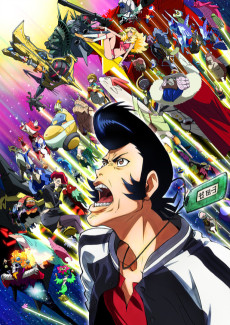
Francis Rixon’s claustrophobic infiltration of the Corporation’s sterile, mineral-obsessed labs mirrors Dandy’s Season 2 episode “The Space-Time Mangekyō Sharingan, Baby!”—where bureaucratic absurdity and cosmic mystery collide in a fluorescent-lit void. 🚀 Sci-Fi & Space isn’t just backdrop; it’s the engine of parody, twisting corporate dread into interstellar farce. That shared tonal whiplash—between existential stakes and cartoonish irreverence—makes their resonance startlingly precise, not just adjacent.

Connected through 2 aesthetic dimensions.

Connected through 2 aesthetic dimensions.


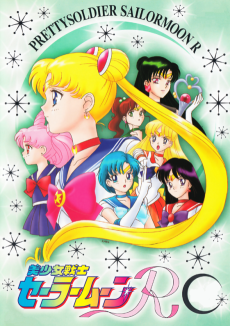



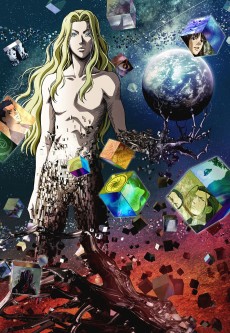








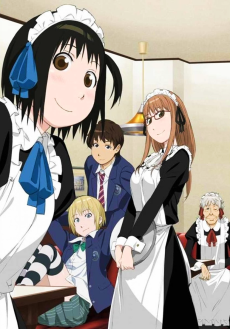









Match Dimensions Explained
❓Frequently Asked Questions
Why is The Melancholy of Haruhi Suzumiya listed as similar to Exodus from the Earth?
Because both hinge on a seemingly ordinary protagonist—Francis Rixon and Kyon—getting dragged into absurd, high-stakes cosmic mysteries by eccentric, reality-bending figures (the Corporation’s enigmatic leadership vs. Haruhi’s unconscious godlike powers). You’ll recognize that same tonal whiplash: deadpan narration over alien tech, secret minerals, and bureaucratic sci-fi nonsense—like Kyon analyzing the SOS Brigade’s ‘alien contact protocols’ just as Francis logs his Corp briefing debriefs.
Is there an anime adaptation of Exodus from the Earth?
Nope—Exodus from the Earth is a video game only, no anime adaptation exists. But if you love its vibe—dry spy satire wrapped in space conspiracy—go straight to Space Dandy 2: think Dandy’s lazy-but-genius shtick mirroring Francis’s weary agency work, or that episode where he infiltrates a mineral-hoarding galactic conglomerate using nothing but a fake ID and terrible improv.
How does Date A Live IV compare to Exodus from the Earth in tone and plot?
Both weaponize bureaucratic absurdity: Shido’s constant ‘Spirit negotiation paperwork’ feels like Francis filling out Corp clearance forms while dodging laser grids. And just like Exodus’s secret mineral driving global stakes, Date A Live IV’s spatial quakes and phantoma energy escalate with the same mix of urgency and sitcom timing—especially when Kotori deploys a drone swarm during a school festival like it’s routine field ops.
What’s the best anime like Exodus from the Earth if I want something hilariously janky but weirdly compelling?
Go! Go! Loser Ranger! Season 2—it’s *exactly* that ‘good jank’ fans describe in Exodus reviews. Picture Francis trying to hotwire a Corp hover-tank, then cut to the Loser Rangers attempting a ‘stealth mission’ using cardboard robots and duct-taped comms. Same energy: low-budget charm, self-aware incompetence, and surprisingly tight worldbuilding beneath the chaos—like how Exodus’s boring driving segments somehow make the final mineral vault heist feel earned.