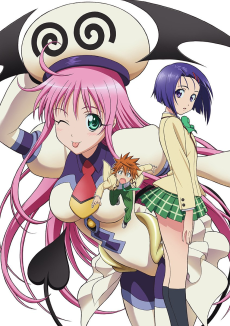
To Love Ru
Rito Yuuki is unlucky when it comes to love — no matter how hard he tries to confess to his crush, his efforts end in failure. After another day’s confession goes down the drain, Rito spends his night sulking in his bathtub. But when a naked girl with a pointed tail teleports into the tub with him, it seems like Rito’s luck is finally looking up! His fortune doesn’t last long when he finds himself accidentally engaged to the buxom beauty who is none other than the princess of the planet Deviluke!
(Source: HIDIVE)
📺Anime Details
📝Editorial Analysis
The steam curls off the bathwater just as her tail flicks—wet, sharp, impossibly alien—against Rito’s thigh. She doesn’t blink. Doesn’t flinch. Just floats there, gravity-defying and utterly unbothered, while he chokes on his own breath, soap slipping from numb fingers. No warning. No logic. Just presence: warm skin, shimmering droplets, a crown of starlight tangled in damp hair—and the quiet, devastating weight of a proposal whispered mid-drip.
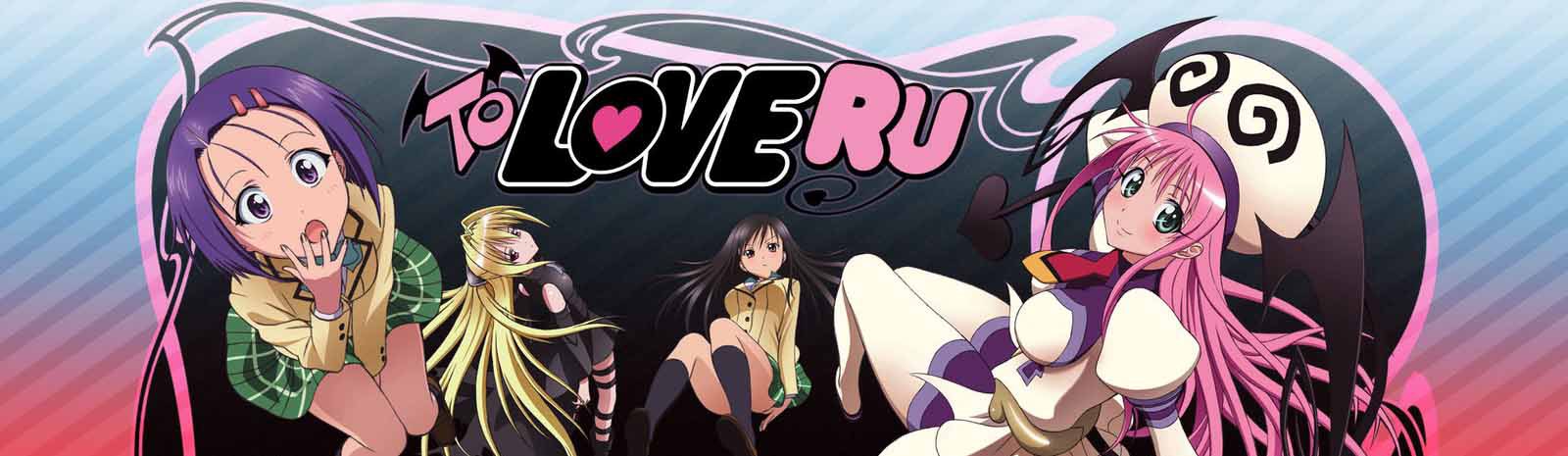
That moment isn’t about titillation. It’s about rupture. To Love Ru doesn’t build romance—it detonates it. Every confession fails not because Rito is awkward, but because reality itself glitches: doors open into zero-gravity hallways, panties levitate like sentient confetti, and emotional vulnerability arrives wrapped in teleportation static and a tail that thumps against tile like a metronome counting down to chaos. The feeling isn’t longing—it’s disorientation with affection. You don’t settle into this world; you keep stumbling sideways through it, laughing because stopping would mean confronting how tenderly, how seriously, it treats the absurdity of wanting someone while your bathtub fills with interstellar royalty.
Which is why Prince of Persia lands with such eerie resonance—not the sand, not the acrobatics, but that melancholic exploration. The description calls it “an all-new epic journey,” but the player review nails it: “a new prince, new lands… completely separate.” Like Rito, the Prince isn’t inheriting tradition—he’s unmoored, navigating rules rewritten mid-leap. Both stories treat time and space as elastic, unreliable, yet emotionally charged: one bends physics to delay a kiss; the other rewinds seconds to save a life. Neither offers catharsis—they offer repetition with variation, each loop deepening the ache beneath the slapstick.
Then there’s Exodus from the Earth, where the premise drips with bureaucratic sci-fi irony: “The Intelligence Agency has commissioned you… to retrieve information about a secret mineral upon which the very exis[tence]…”—cut off, like a sentence interrupted by a falling ceiling fan or a sudden wardrobe malfunction. The player review says it outright: “It’s jank. But it’s surprisingly ‘goo…’” That trailing ellipsis? That’s To Love Ru’s entire grammar. The anime’s aliens don’t arrive with treaties—they arrive naked, mid-bath, their diplomacy conducted via accidental gropes and panicked tail-tangles. Both reject polished worldbuilding for glitch-as-lore: meaning emerges not from exposition, but from the friction between intention and collapse.
And Psychonauts, with its “Psychic Odyssey Through the Minds of Misfits, Monsters, and Madmen”—yes, the description is earnest, but the player review cracks it wide open: “This game allows in-depth milking of certain highly creamy men, his utters are beautifully rendered….” That surreal, almost nonsensical phrasing—creamy men, utters—mirrors To Love Ru’s psychosexual tag not as edgelord provocation, but as linguistic surrender. When Rito’s brain short-circuits trying to parse Lala’s smile and her tail’s bioluminescent pulse and the fact she just declared him “husband-material” while floating three inches above his shampoo bottle—the show doesn’t explain. It amplifies. Like Raz delving into a mind where logic curdles into custard, To Love Ru treats desire as terrain: unstable, edible, absurdly textured.
Who lives for this? Not just fans of harem tropes—but people who trust dissonance. The ones who laugh hardest when a character’s inner monologue dissolves into a flock of startled pigeons (yes, that happens), or when a love confession gets swallowed by a black hole generated by a malfunctioning alien hair dryer. They’re the players who boot up Garry's Mod not to build, but to wreck gently: dropping a piano onto a wedding cake just to watch the frosting bloom in zero-G. They’re the ones who replay Just Cause 2’s parachute stunts not for points, but for the lullaby of chaos—wind rushing, engines screaming, ground receding—because in that freefall, everything feels honest. Not polished. Not safe. But alive, vibrating at the exact frequency where embarrassment and awe blur into the same warm, trembling note.
🎮19 Games That Match the Vibe







Match Dimensions Explained
❓Frequently Asked Questions
Why does Prince of Persia show up in 'games like To Love Ru' matches?
Because both lean hard into playful, over-the-top comedy and parody—like when the Prince stumbles into absurdly choreographed slapstick set pieces or accidentally triggers ridiculous environmental gags that mirror To Love Ru’s signature 'clothes-ripping chaos' moments. Its melancholic exploration dimension also echoes the series’ quieter, character-driven interludes (e.g., Rito’s awkward confessions under moonlight), not just the fanservice.
Is there a To Love Ru visual novel or dating sim adaptation?
No official To Love Ru visual novel exists—but if you're craving that vibe, Just Cause 2 surprisingly delivers: its open-world sandbox lets you roleplay chaotic romantic entanglements through emergent stunts (e.g., grapple-lifting someone mid-air during a 'confession' cutscene), mirroring TLru’s tone more than any VN ever could. Players even mod in custom outfits and dialogue triggers to recreate key scenes like Miu’s ‘accidental’ swimsuit reveal.
How does Psychonauts compare to Garry's Mod for To Love Ru-style humor?
Psychonauts nails scripted, character-driven parody—like Raz’s cringe-y psychic intrusions into Coach Oleander’s repressed fantasies—while Garry's Mod is pure player-driven chaos: think ragdolling a custom Lala model off a skyscraper then replaying it in slow-mo with exaggerated sound effects. Both hit TLru’s comedy & parody dimension, but Psychonauts gives you narrative context; Garry’s Mod gives you the tools to *make* the context.
What’s the best game like To Love Ru if I want that mix of silly romance and melancholic downtime?
Psychonauts is your best bet—it balances absurd humor (like Milka’s hyper-competitive psychic wrestling) with genuinely tender, melancholic exploration (e.g., exploring Sasha’s guilt-ridden mindscapes or Gloria’s lonely circus memories). That emotional duality—goofy surface, vulnerable core—is spot-on for TLru fans who love both Rito’s flustered blunders *and* his quiet realizations about love and responsibility.