
Portal
Portal™ is a new single player game from Valve. Set in the mysterious Aperture Science Laboratories, Portal has been called one of the most innovative new games on the horizon and will offer gamers hours of unique gameplay.
🎮Game Details
💬What Players Say
"[h1] THE BIRTH OF A PUZZLE MASTERPIECE [/h1] [b][i] A short, brilliant, and absolutely flawless puzzle game that completely redefined first-person mechanics. Armed with nothing but a portal gun, navigating the sterile test chambers of Aperture Science feels incredibly rewarding as the physics-based puzzles constantly challenge your spatial awareness. The game’s true genius lies in its dark, cynical humor and the introduction of GLaDOS, one of the most iconic and brilliantly written antagonists in video game history...."
"i didnt play half-life games i dont have background about the story i didnt know this game was made in 2007 and i am so late to play and finish this .. BUT this is a must to play game i guess for idea , for puzzles , for story ... and there is version with RTX?..."
"After buying Portal I did something unforgivable. Backlog. I don't even know why - I didn't have any bias towards it, I just would rather play something......"
📝Editorial Analysis
The first time you fire the portal gun into a white wall and watch your own startled face blink back at you from the floor—disoriented, unmoored, laughing before you realize you’re falling—that’s when Portal stops being a puzzle game and starts being a nervous system recalibration. It’s not in the official description’s vague promise of “hours of unique gameplay” or even in the player review calling it “a short, brilliant, and absolutely flawless puzzle game”—it’s in the surprise, the backlog guilt, the late arrival awe: “i am so late to play and finish this .. BUT this is a must to play game i guess”. That breathless, slightly embarrassed reverence isn’t for lore or length—it’s for how cleanly, how surgically, Portal strips away everything familiar and leaves only logic, space, and tone.
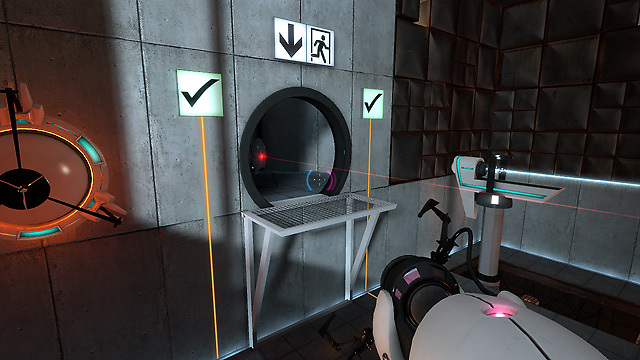
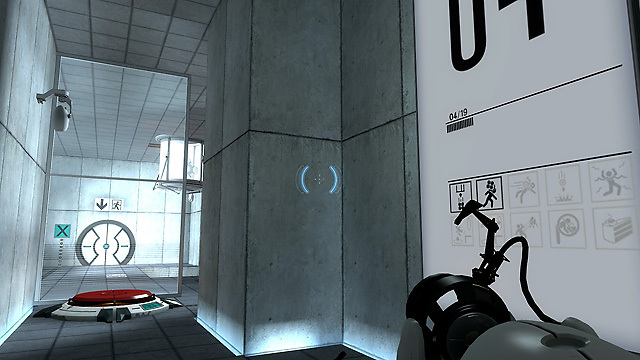
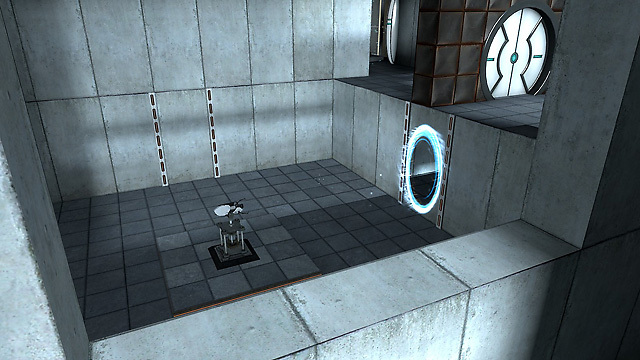
What makes Portal’s atmosphere singular isn’t its sci-fi setting or its first-person perspective—it’s the tonal vertigo. You’re never scared of monsters or running out of ammo; you’re unsettled by silence, by fluorescent hum, by a voice that sounds like a lab technician who’s been auditing your soul for decades. The Aperture Science Laboratories aren’t dystopian—they’re bureaucratically absurd, gleaming with sterile confidence while slowly revealing their own catastrophic incompetence. There’s no exposition dump, no cutscene backstory—just clean geometry, sudden drops, and GLaDOS’s deadpan delivery that somehow lands as both threat and punchline. It makes you feel small, clever, and deeply suspicious all at once—not because the world is hostile, but because it’s too consistent, too polished, too quietly unhinged. That’s the feeling: precision masking chaos, wit sharpened to a point where laughter and dread share the same nerve.
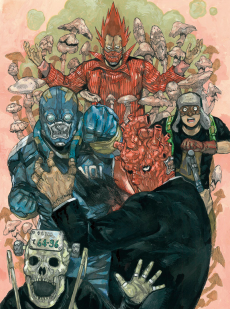
That exact emotional alloy—the fusion of razor-edged comedy, deadpan sci-fi scaffolding, and structural playfulness—pulses through Gintama Season 4, where Edo floats on anti-gravity platforms while samurai argue about convenience store rice balls mid-battle. Its Comedy & Parody doesn’t mock tropes—it recomposes them, just as Portal recomposes physics; its Sci-Fi & Space isn’t about cosmic scale, but about how absurdly mundane alien bureaucracy can feel when your landlord is a shape-shifting space octopus. Likewise, Date A Live IV weaponizes tonal whiplash: one moment you’re calculating spatial distortions in a sealed dimensional rift, the next you’re watching a heroine panic over mismatched socks—all delivered with the same clinical calm as GLaDOS explaining why cake is a lie. And Space Dandy 2? It treats the cosmos like a poorly maintained office building: zero gravity coffee spills, sentient vacuum cleaners with existential crises, and entire episodes structured like failed lab experiments—precisely the kind of controlled, self-aware entropy that makes Aperture feel less like a facility and more like a punchline waiting for its own punchline.
These pairings aren’t for fans of “sci-fi” or “puzzle games” as categories—they’re for people who get goosebumps when a joke lands with the same weight as a falling cube, who savor the silence between lines more than the dialogue itself, who’ve ever paused mid-gameplay just to stare at a perfectly aligned corridor and think, “This shouldn’t work—but it does.” They’re for the player who backlogged Portal, then returned not out of obligation, but because something itched—a memory of clean edges and quiet menace. They’re for the viewer who watches To Love Ru Darkness not for fan service, but for how effortlessly it bends romantic comedy into quantum entanglement, then winks at the camera like it knows you noticed. These are the ones who don’t just solve puzzles or follow plots—they feel the architecture of irony, and find warmth in the hollow hum of a perfectly calibrated void.
→95 Anime That Match the Vibe

Connected through 2 aesthetic dimensions.

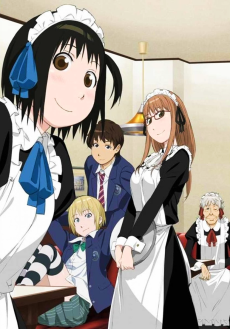
Aperture Science’s sterile, deadpan test chambers collide hilariously with Rito Yuuki’s flustered stumbles through interdimensional mishaps in *To Love Ru Darkness 2nd Specials*. Where GLaDOS weaponizes bureaucratic absurdity for dark comedy, Momo Belia Deviluke hijacks quantum entanglement to escalate romantic chaos—both using **Sci-Fi & Space** logic as scaffolding for relentless **Comedy & Parody**. That these works treat theoretical physics as punchline fuel—not plot armor—makes their tonal kinship unexpectedly precise.

Connected through 2 aesthetic dimensions.

Connected through 2 aesthetic dimensions.

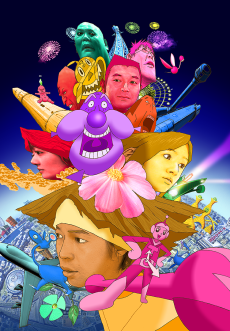
Aperture Science’s deadpan AI directives clash hilariously with Date A Live IV’s absurd romantic bureaucracy—where Shidou negotiates contracts mid-battle while GLaDOS calculates cake-based betrayal probabilities. 😂 Comedy & Parody thrives in both: one weaponizes lab-coat absurdism, the other leans into ecchi-meets-mecha satire with escalating tonal whiplash. Unlike most sci-fi pairings, their resonance lies in how rigorously each commits to its own illogical internal logic—making every paradox feel earned, not just wacky.

Aperture Science’s sterile, deadpan testing chambers—where GLaDOS’s passive-aggressive directives undercut existential dread—mirror the Develuke royal family’s absurdly over-engineered alien tech in *To Love Ru Darkness* Season 2, where gravity-defying lingerie battles double as interstellar diplomacy. 😂 Comedy & Parody thrives in both when bureaucratic sci-fi logic collides with bodily chaos: Chell’s silent endurance parallels Rito’s flustered physical comedy amid escalating romantic-spatial paradoxes. Unlike most sci-fi pairings, their resonance lies in weaponizing deadpan delivery against escalating absurdity—not despite the genre, but *through* it.

Connected through 2 aesthetic dimensions.

Connected through 2 aesthetic dimensions.

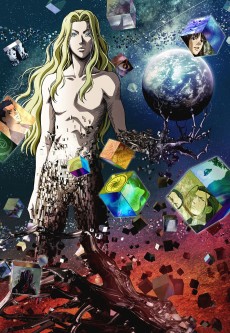
Aperture Science’s sterile test chambers and *Space Dandy* Season 2’s neon-drenched, dimension-hopping episodes both weaponize absurdity to dissect scientific hubris—GLaDOS’s deadpan monologues mirror Dandy’s oblivious charm as they orbit the same black hole of cosmic irony. Unlike most sci-fi comedy, neither flinches from existential dread beneath the jokes: Wheatley’s meltdown and Dandy’s “Ladies and Gentlemen, We Are Floating in Space” episode crystallize **Comedy & Parody** as a lifeline against entropy. That shared tonal tightrope—surreal, heartfelt, and ruthlessly clever—is what makes their resonance so electric.

Connected through 2 aesthetic dimensions.







































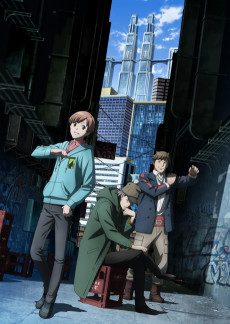








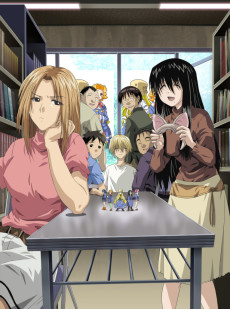


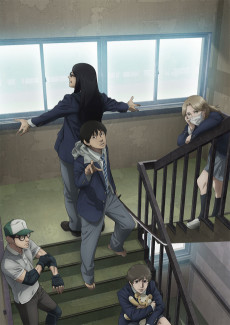

















Match Dimensions Explained
❓Frequently Asked Questions
Why is Gintama Season 4 considered similar to Portal?
Because both weaponize absurd science with deadpan delivery—like when Gintama’s Kagura uses her superhuman strength to punch through dimensional rifts in the 'Shogun Assassination Arc', mirroring Portal’s portal gun bending space in clean, rule-based ways. The Aperture Labs vibe? Totally there in the parody labs run by the alien Yato clan, complete with nonsensical bureaucracy and 'test chambers' disguised as ramen shops.
Is there an anime adaptation of Portal?
Nope—Valve has never made or licensed an official anime adaptation of Portal. But if you love its tone, Date A Live IV nails that same blend: think Shido using spatial manipulation powers (like shifting between dimensions mid-fall) while dodging bureaucratic chaos at a sci-fi research facility—very Aperture Science, very not-Half-Life-lore-dependent.
How does Space Dandy 2 compare to Portal in terms of puzzle mechanics?
Space Dandy 2 doesn’t do literal puzzles like Portal’s weighted cubes or laser redirection—but it *does* treat physics like a joke with rules: episode 12’s zero-G bowling alley or the sentient black hole ‘Mr. Black’ operate on consistent, self-aware logic, just like Portal’s orange/blue portals. Both reward attention to cause-and-effect, even when the cause is a talking vacuum cleaner.
What’s the best anime like Portal if I want that short, brilliant, flawless puzzle-vibe?
To Love Ru Darkness 2 Specials—it’s compact (just 4 episodes), packs wild sci-fi gags with real mechanical consistency (like Rito’s power-nullifying 'Darkness Field' creating localized paradox zones), and delivers that same 'aha!' satisfaction as Portal’s final test chamber. Plus, like Portal’s surprise ending, it lands a twist that recontextualizes everything—no backlog guilt required.