
CITY THE ANIMATION
This town, is not just a normal town.
There's laughter, love and emotional moments.
An unpredictable ordinary life presented by the residents.
Exciting stuffs come one after another. Welcome to CITY.
(Source: Kyoto Animation)
📺Anime Details
📝Editorial Analysis
A woman in a yellow raincoat walks past a flickering streetlamp, stops to watch a pigeon balance on a tilted traffic cone, then laughs—not at the bird, but at the exactness of its absurdity. No punchline follows. No cutaway. Just the soft shush of wet pavement, the distant hum of a delivery scooter, and her quiet, unguarded exhale. That’s the heartbeat of CITY THE ANIMATION: not chaos as spectacle, but life insisting on its own surreal rhythm, right there on the sidewalk, soaked and smiling.

What makes it unique isn’t its genre labels—it’s how it holds space. Not for plot, not for escalation, but for the weight of small things: a shared glance across a convenience store counter, the way steam curls off a cup of tea left too long, the sudden hush when someone says something true and tender in the middle of a slapstick scramble. It’s melancholic exploration disguised as comedy—like watching sunlight catch dust motes in a room you’ve known your whole life, realizing how much meaning lives in the gaps between words. This isn’t nostalgia. It’s presence: the ache and warmth of being adult, surrounded by other adults who are also just trying—and failing, and laughing—to hold themselves together with duct tape and shared snacks. The philosophy isn’t lectured; it’s baked into the pause after a joke lands, the way silence feels full, not empty.
That same emotional DNA pulses in Prince of Persia—not in its sandstorms or swordplay, but in the way its reboot frames time itself as something fragile, personal, and quietly mournful. The description calls it “an all-new epic journey,” yet player reviews fixate on its separation: “a new prince, new lands and a brand new story completely separate from the sands…” That deliberate rupture mirrors CITY’s refusal to lean on familiarity—it builds intimacy not through continuity, but through attentiveness: how light falls on a wall, how a character’s voice catches mid-sentence. Both treat the ordinary world like sacred ground you’re allowed to wander, not conquer.
Then there’s Bully: Scholarship Edition, where the description anchors us in “the hilarity and awkwardness of adolescence”—but CITY’s cast is primarily adult, and that’s the resonance. Bully’s Jimmy isn’t fighting villains; he’s navigating hierarchies, negotiating dignity, surviving lunchroom physics—all while the world treats him like background noise. Player reviews mention crashes, glitches, instability—but that’s part of the texture: life is unplayable sometimes, glitchy and uneven, yet you keep walking to class, keep making coffee, keep showing up. CITY doesn’t smooth that over. It lets the friction breathe, just like Bully lets Jimmy sit on a bench for three minutes, staring at clouds, no objective blinking on screen.
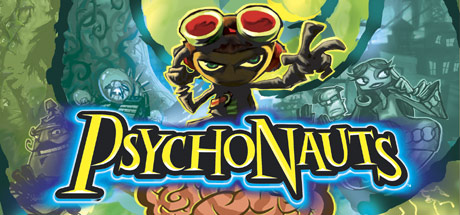
And Psychonauts, with its promise of “A Psychic Odyssey Through the Minds of Misfits, Monsters, and Madmen,” taps the same well: the profound tenderness beneath surrealism. Its description positions it as an “action/adventure platformer,” but the player review—however garbled—hints at something deeper: “his utters are beautifully rendered.” That accidental poetry (“utters,” not “utterances”) feels of a piece with CITY’s aesthetic: language stumbling toward feeling, sincerity wearing a clown nose, vulnerability dressed in slapstick. Both understand that the most surreal thing isn’t floating cities or psychic powers—it’s the quiet courage of saying “I’m lonely” in a crowded room full of people pretending not to be.
This pairing isn’t for fans of “whimsy” or “zany energy.” It’s for the person who rewatched the same 47-second scene from CITY THE ANIMATION three times because of how the light hit the protagonist’s glasses when she sighed. It’s for the player who paused Just Cause 2 mid-explosion—not to admire the physics, but to watch a flock of birds scatter exactly as the shockwave hit, then land again, unruffled, on a palm tree. It’s for anyone who’s ever felt profoundly seen by art that refuses to shout, that trusts you to notice the pigeon on the cone—and to know, without explanation, why that matters.
🎮42 Games That Match the Vibe












Match Dimensions Explained
❓Frequently Asked Questions
Why does CITY THE ANIMATION feel so much like Prince of Persia despite having no sand time powers?
It’s the melancholic exploration vibe—like wandering the rain-slicked, decaying rooftops of Babylon in Prince of Persia (2023), where every ledge feels heavy with memory and the camera lingers on quiet, poetic decay. Both lean into Adult & Dark Seinen tones: think Prince’s silent grief mirrored in CITY’s slow-burn citywide unraveling, not flashy set-pieces but atmospheric weight and character-driven stillness.
Is there an anime or manga adaptation of CITY THE ANIMATION?
No official anime or manga exists—but fans often compare its layered, darkly comedic tone to Psychonauts’ surreal mindscapes (like Raz’s dive into Coach Oleander’s warped military psyche) or Bully’s cringe-awkward adolescence at Bullworth Academy. Those games *are* the closest thing to a ‘canon-adjacent’ adaptation in spirit, especially with their blend of Comedy & Parody and Melancholic Exploration.
How is CITY THE ANIMATION different from Just Cause 2 when both have chaotic city exploration?
Just Cause 2 is pure B-movie chaos—400 square miles of stunts, explosions, and over-the-top physics, like grapple-hooking a tank off a cliff just because you can. CITY THE ANIMATION trades that adrenaline for introspection: it’s less Rico Rodriguez’s cartoonish rebellion and more like wandering Psychonauts’ asylum grounds or Prince of Persia’s crumbling palaces—quiet, symbolic, emotionally dense.
What’s the best game like CITY THE ANIMATION if I want something deeply weird but also oddly heartfelt?
Psychonauts is your perfect match—it’s got that same blend of Comedy & Parody and Melancholic Exploration, diving into characters’ broken psyches with surreal visual metaphors (like the Milkman Conspiracy’s paranoid bureaucracy). The player review even nods to its tonal richness: ‘a psychic odyssey through misfits and madmen,’ which mirrors CITY’s emotional texture far more than Garry’s Mod’s open-ended chaos or Bully’s schoolyard satire.