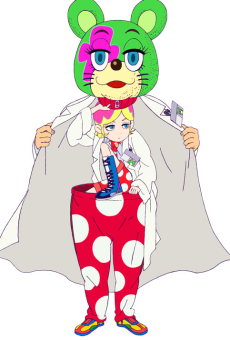
Welcome to Irabu's Office
Many patients with different problems visit the psychiatric ward of Irabu General Hospital; a trapeze artist suffering from insomnia after suddenly failing his jumps, a gangster afraid of knives and sharp objects and a business man who has an erection 24 hours a day. They undergo counseling by Dr. Ichiro Irabu, who is the child-like son of the hospital director. His assistant is the sullen faced sexy nurse Mayumi. With his mysterious injections, and advice that does not make sense, Dr. Irabu confuses his patients. But at the end of his unique treatments, the patients are led to digging further into their souls to find peace of mind.
(Source: fujicreative.co.jp)
📺Anime Details
📝Editorial Analysis
The fluorescent hum of Irabu General Hospital’s waiting room—low, persistent, slightly off-pitch—blends with the drip-drip of a leaky faucet just out of frame. A trapeze artist sits rigid in a plastic chair, knees bouncing, eyes wide and dry; his hands tremble not from fear but from the sheer, exhausting weight of wakefulness. Behind him, a gangster clutches a rolled-up newspaper like a shield, flinching at the shink of a nurse’s pen cap snapping shut. And there, in the doorway, Dr. Ichiro Irabu skips in barefoot, holding a syringe filled with something iridescent and faintly pulsing—not blood, not saline, but light, maybe, or liquid static. He grins. His voice is high, cheerful, utterly unmoored from the gravity pressing down on everyone else. That moment isn’t surreal despite the realism—it’s surreal because of it.
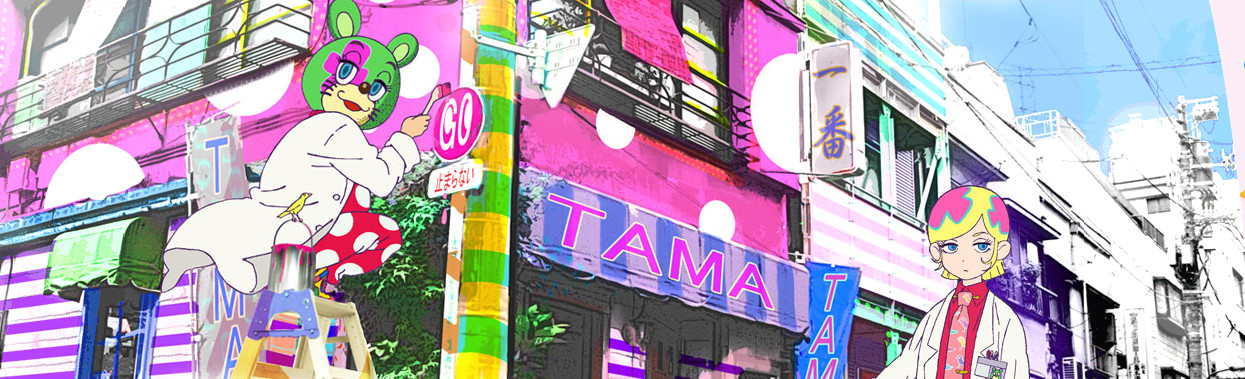
What makes Welcome to Irabu's Office vibrate at this particular frequency isn’t its rotoscoping or its achronological order—it’s how it holds melancholy and absurdity in the same palm, without letting either spill. It doesn’t mock pain; it refracts it through carnival glass. You feel the heaviness of insomnia, the shame of an unrelenting erection, the paralyzing vulnerability of fearing a butter knife—but then Irabu injects a patient with glitter-suspended dopamine and tells him to “dance with the ghost of your first bicycle.” There’s no catharsis, no tidy resolution—just a shared, breathless recognition: Yes. This is how brokenness wears a lab coat and hums show tunes. It’s satire that never forgets its subjects are breathing. It’s psychological drama where the psyche is less a map and more a funhouse corridor lit by faulty neon.
That exact emotional DNA—the tightrope walk between melancholic exploration and deadpan, almost cruel comedy—pulses in Prince of Persia’s reboot. Its description calls it “an all-new epic journey” built by Ubisoft Montreal, but the player review hints at something quieter beneath the spectacle: “a new prince, new lands and a brand new story completely separate from the sands…” That separation isn’t just narrative—it’s tonal. Like Irabu’s office, it treats mythic stakes with a shrug and a wink, letting grief and grandeur coexist in the same sun-drenched ruin. The melancholy isn’t buried in lore—it’s in the way the Prince moves: fluid, exhausted, graceful even when falling.
Then there’s Bully: Scholarship Edition, where adolescence isn’t framed as coming-of-age but as sustained, low-grade psychic weather. Its description nails it: “the hilarity and awkwardness of adolescence.” Not triumph. Not trauma. Awkwardness. Jimmy Hopkins dodging dodgeball, pranking preppies, saving nerds—he’s not healing; he’s navigating, much like Irabu’s patients fumbling through sessions where diagnosis feels like improv. The player review mentions crashes on PC but flawless performance on Steam Deck—a detail that mirrors the anime’s own instability: the system should work, but it glitches, stutters, reveals its seams, and somehow that makes the world more real, not less.
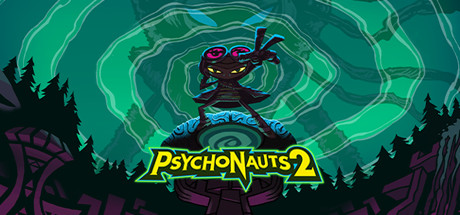
And Psychonauts—“A Psychic Odyssey Through the Minds of Misfits, Monsters, and Madmen”—lands with surgical precision. Its description names the terrain outright: misfits, monsters, madmen. Not villains. Not patients. Misfits. Like the trapeze artist whose body forgot how to fly, or the businessman whose physiology refuses to clock out, Razputin’s journey into fractured psyches isn’t about fixing—they’re about witnessing. The player review’s bizarre, fragmented phrasing (“milking of certain highly creamy men, his utters are beautifully rendered”) unintentionally echoes Irabu’s own language: nonsensical on the surface, yet vibrating with a strange, tactile sincerity. Both works treat the interior life as a place you can walk through, full of crumbling architecture, sentient furniture, and truths too tender to say aloud—so you say them sideways, in metaphor, in glitter, in a badly timed joke.
This pairing isn’t for fans of tidy resolutions or heroic arcs. It’s for the person who watches a man weep over a dropped spoon and feels their throat tighten—not with pity, but with recognition. It’s for the player who pauses mid-chase in Just Cause 2, not to admire the explosion, but to watch a flock of startled pigeons scatter across a sun-bleached plaza, and thinks: That’s exactly how anxiety looks from the outside. It’s for anyone who’s ever sat in a fluorescent-lit room, waiting for something to make sense—and found, instead, a kind of peace in the beautiful, stubborn weirdness of being alive, unwell, unfinished, and utterly, hilariously human.
🎮35 Games That Match the Vibe

















Match Dimensions Explained
❓Frequently Asked Questions
Why does Prince of Persia keep showing up in 'Games Like Welcome to Irabu's Office' lists?
It’s not about the acrobatics—it’s the shared DNA of melancholic exploration wrapped in dark, adult-toned parody. Like Irabu’s office sessions, Prince of Persia (2024) leans into surreal, emotionally heavy set-pieces—think the crumbling memory palaces and morally ambiguous choices that echo Dr. Irabu’s therapy rooms. Both use absurdity to soften trauma, and critics noted its 'Adult & Dark Seinen' dimension aligns tightly with Irabu’s clinical yet off-kilter vibe.
Is there a Welcome to Irabu's Office anime or movie adaptation?
No official anime or film exists—just the original PS3 visual novel and its fan-translated re-releases. That said, Bully: Scholarship Edition often gets mistaken for an adaptation because of its similarly grounded-yet-surreal teen therapy arc: Jimmy’s forced counseling sessions with Dr. Burton (complete with awkward silences, symbolic dreamscapes, and dark humor) hit that same 'melancholic exploration' sweet spot fans love in Irabu.
How is Psychonauts different from Welcome to Irabu's Office in terms of mental health themes?
Psychonauts tackles mental illness through literalized, cartoonish metaphors—like Raz entering a camper’s mind where anxiety manifests as a frantic, overworked secretary—but keeps tone light and heroic. Irabu’s Office is quieter, more passive, and clinically ambiguous: you don’t ‘fix’ patients like in Psychonauts; you just sit, listen, and witness their fragmented inner worlds—closer to the slow-burn unease in Bully’s therapy scenes or Prince of Persia’s guilt-ridden flashbacks.
What’s the best game like Welcome to Irabu's Office if I want something deeply weird but low-stakes and introspective?
Garry’s Mod is surprisingly perfect—if you lean into its 'Melancholic Exploration' side via community-made psychiatric roleplay servers or ambient sandbox mods like 'Therapy Room' or 'Echo Ward'. Unlike Just Cause 2’s explosive chaos or Psychonauts’ structured platforming, GMod gives you silence, physics-based fidgeting, and open-ended emotional resonance—no objectives, just the weight of a coffee cup spinning slowly on a desk while a patient’s voice plays softly in the background.