
Arakawa Under the Bridge
Ko Ichinomiya's family motto is "Never be indebted to anyone," but after losing his pants and falling into the Arakawa River, he quickly finds himself in debt to his savior, the cutely insane Nino (who happens to live under the bridge). To repay her, he vows to help her with her desire to "experience love." Along the way he'll meet the river's other residents, including a hot-blooded kappa, a Sister in drag, and a literal rock star. Sorry, Ko—when you fell into that river, I guess you really got in over your head!
(Source: NIS America)
📺Anime Details
📝Editorial Analysis
The river smells like wet concrete and fried dough—Ko’s bare legs shivering as Nino drags him up the muddy bank, his trousers gone, his family motto dissolving in the current. She beams, holding out a dented thermos of miso soup she just brewed over a campfire built from broken pallets and discarded bike tires. There’s no punchline. No cutaway gag. Just steam rising into the gray Arakawa sky, and Ko blinking, stunned—not by the absurdity, but by how warm it feels.
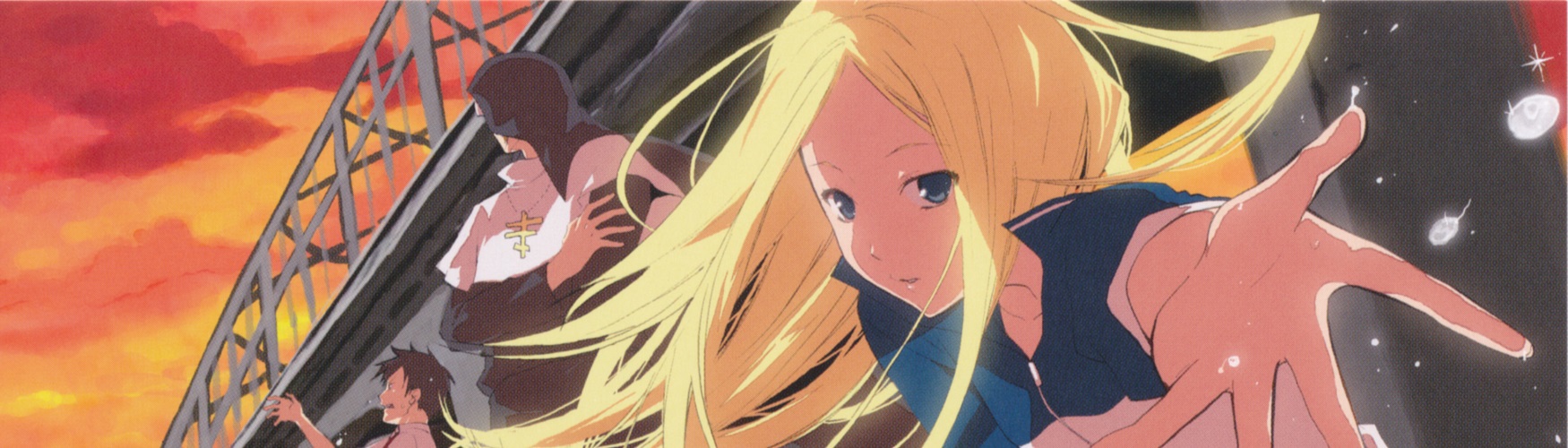
That’s the heart of Arakawa Under the Bridge: not surrealism for shock, but tenderness disguised as chaos. It doesn’t ask you to suspend disbelief—it asks you to lean in, to accept that a nun who wears men’s suits, a kappa who yells about water rights while polishing his shell with lemon oil, and a man who communicates exclusively through interpretive rock guitar solos are all orbiting the same fragile, luminous truth: human connection is irrational, necessary, and quietly heroic. It’s comedy that never mocks its characters’ vulnerability—it holds space for it. The philosophy isn’t lectured; it’s lived, in shared meals under tarpaulin roofs, in arguments about whether love requires reciprocity or just witness. You don’t laugh at the homeless residents—you laugh with them, then catch your breath when Nino stares at the moon and whispers, “What if love is just… staying?”
That exact emotional alchemy—the blend of melancholic exploration, grounded absurdity, and profound gentleness beneath the parody—echoes in three games whose real descriptions and player voices confirm the resonance.
Prince of Persia (score: 81) lands in the same tonal valley: Melancholic Exploration, Comedy & Parody, Adult & Dark Seinen. Its description calls it “an all-new epic journey” built by Ubisoft Montreal—but what sticks isn’t the spectacle, it’s the Prince’s weary, wry narration, the way ancient ruins hum with forgotten sorrow, and how levity (a pratfall mid-parkour, a sarcastic genie) never dilutes the weight of memory or consequence. Like Ko learning to cook rice over an open flame while Nino watches, utterly serious, the Prince’s world treats wonder and weariness as siblings—not opposites. A player notes it’s “the 3rd reboot… completely separate from the sands”—and that’s key: it refuses inherited gravity, choosing instead to build meaning from scratch, just as the Arakawa community does with scavenged wood and secondhand dreams.
Bully: Scholarship Edition (score: 76) shares the Comedy & Parody and Melancholic Exploration dimensions—but more crucially, its description nails the texture: “mischievous 15-year-old Jimmy Hopkins as he goes through the hilarity and awkwardness of adolescence.” That awkwardness is vital. Not slapstick, not satire—but the raw, unvarnished friction of trying to belong while wearing ill-fitting clothes, saying the wrong thing, caring too much. When Jimmy helps a bullied kid by not fighting but sitting with him at lunch, it echoes Ko helping P-ko fix her broken radio—not because he knows electronics, but because he sees her loneliness as something tangible, fixable. A player’s offhand note about Steam Deck stability? Irrelevant. What matters is their quiet admission of hilarity and awkwardness—the same pulse that makes Sister’s drag performances feel sacred, not silly.
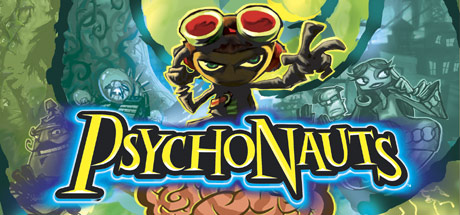
And Psychonauts (score: 73), described as “A Psychic Odyssey Through the Minds of Misfits, Monsters, and Madmen,” maps perfectly onto Arakawa’s soul. Its cast isn’t quirky—they’re wounded, and their minds are literal landscapes shaped by grief, shame, or abandonment. Raz doesn’t “fix” them; he listens, navigates, bears witness. That’s Ko, too: not solving Nino’s delusions, but learning to speak her language of stars and soup. Even the player review’s bizarre phrasing—“milking of certain highly creamy men”—feels like an accidental echo of Arakawa’s own refusal to sanitize desire, intimacy, or oddity. It’s messy. It’s tender. It’s real in its unreality.
This pairing isn’t for fans of “whimsy” or “zany antics.” It’s for the person who pauses mid-laugh when Nino hums off-key beside a rusted shopping cart—and feels something soften in their chest. For the player who walks slowly through Prince of Persia’s sun-drenched ruins, not chasing trophies, but tracing the cracks in the stone like old scars. For the one who stays after Bully’s final bell rings, just to watch Jimmy sit alone on the roof, watching pigeons—not lonely, just present. They’re drawn to stories where absurdity isn’t armor, but access: a way to kneel beside someone else’s quiet, stubborn hope—and say, without words, I see you. I’m here. Pass the miso.
🎮92 Games That Match the Vibe





































Match Dimensions Explained
❓Frequently Asked Questions
Why does Prince of Persia keep showing up in 'Games Like Arakawa Under the Bridge' lists?
Because both lean hard into that bittersweet, melancholic exploration vibe—like when the Prince wanders ruined palaces at dusk, echoing Riku’s quiet walks across the bridge at night—while layering absurd, almost surreal comedy on top (think the Prince’s sarcastic inner monologue vs. Stella’s chaotic non-sequiturs). It’s one of only two games on the list with *all three* shared dimensions: Melancholic Exploration, Comedy & Parody, *and* Adult & Dark Seinen.
Is there an Arakawa Under the Bridge video game adaptation?
Nope—there’s never been an official game adaptation, and none of the titles in this match list are based on the manga or anime. That said, Bully: Scholarship Edition nails the same off-kilter school-life satire: Jimmy’s pranks on preppies and awkward bonding with outcasts like nerds or goths feels like a live-action, open-world version of the Arakawa commune’s found-family chaos.
How is Psychonauts different from Celeste when it comes to handling mental health themes?
Psychonauts uses literal, wildly inventive mindscapes—like Raz exploring Coach Oleander’s militaristic, propaganda-saturated psyche—to parody trauma and repression with cartoonish exaggeration. Celeste, meanwhile, grounds its struggle in tight, punishing platforming—every failed jump as Madeline climbs Celeste Mountain mirrors the exhausting, physical weight of anxiety. Both hit the ‘Melancholic Exploration’ and ‘Adult & Dark Seinen’ dimensions, but Psychonauts leans into Comedy & Parody where Celeste stays stark and intimate.
What’s the best game like Arakawa Under the Bridge if I want something funny but also quietly sad and weird?
Go straight to Bully: Scholarship Edition—it’s got that exact tonal whiplash: Jimmy getting grounded for prank-calling the headmaster while also having raw, wordless scenes walking past empty swings at night, or quietly sharing fries with a bullied kid in the cafeteria. It shares *all three* core dimensions with Arakawa (Comedy & Parody, Melancholic Exploration, Adult & Dark Seinen), just like Prince of Persia—but Bully’s high-school microcosm feels way closer to the bridge’s scrappy, emotionally messy ensemble than ancient ruins ever could.