
Maison Ikkoku
Maison Ikkoku is a romantic comedy series created by Rumiko Takahashi. The story centers around the development of the relationship between Kyoko Otonashi and Yusaku Godai. Kyoko is a recent widow who moves into the apartment house Ikkoku-kan where she becomes the manager. Godai is a wanna-be student ("ronin") struggling with college entrance exams.
When they meet, it's love at first sight—for Godai anyway. Along the way, the other tentants, the mysterious Yotsuya, the seemingly alcoholic Ichinose, and the brash Akemi, watch and occasionally take part to make their lives more interesting. To complicate matters further, the wealthy tennis coach Shun Mitaka has his eye on Kyoko, while Godai is pursued by both Nanao Kozue and Ibuki Yagami. Covering a wide range of emotions from hysterically funny to painfully sad, Maison Ikkoku—all 96 episodes—is well worth seeing.
📺Anime Details
📝Editorial Analysis
Rain taps the windowpane of Room 202 like a hesitant knock—Kyoko Otonashi pauses mid-wipe, cloth hovering over the dusty frame of her late husband’s photograph. Outside, Godai stumbles up the creaking stairs, soaked and clutching a crumpled practice exam, his hair plastered to his forehead, eyes wide with that familiar, aching hope. She doesn’t smile—not yet—but her fingers tighten, just slightly, on the cloth. That quiet suspension—the breath before a sigh, the hesitation before a hand reaches out—is where Maison Ikkoku lives. Not in grand declarations or dramatic confessions, but in the damp wool of a student’s coat, the steam rising from two mismatched mugs on a chipped kitchen table, the way silence between them thickens not with emptiness, but with unspoken weight.
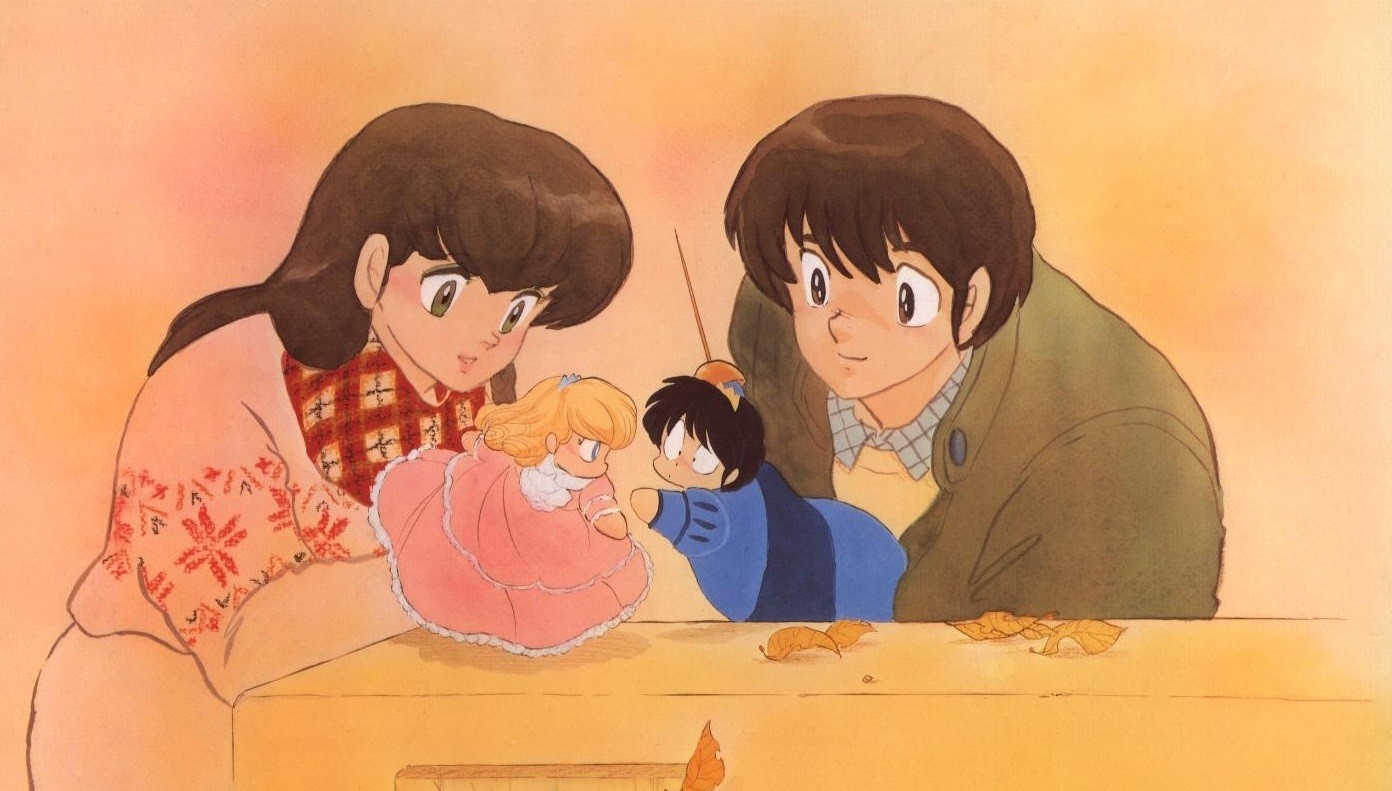
What makes Maison Ikkoku vibrate so deeply isn’t its genre labels—it’s the texture of time passing with people. It’s the ache of grief that doesn’t vanish but softens at the edges, worn smooth by routine: Kyoko watering the same stubborn geranium every Sunday; Godai re-taking the same entrance exam, year after year, his ambition fraying but never snapping. There’s no fantasy escape, no world-ending stakes—just the slow, tender, often clumsy labor of becoming available to love again. It makes you feel the warmth of shared laundry baskets, the sting of a slap that lands not as violence but as punctuation—a pause in the sentence of two lives learning how to lean. It makes you think about how intimacy isn’t built in climaxes, but in the accumulation of small, witnessed vulnerabilities: a man crying over burnt rice, a widow laughing mid-sob at a tenant’s absurd prank. It’s melancholic, yes—but never despairing. It’s romantic, but never saccharine. It’s adult, not because it’s cynical, but because it treats longing, regret, and patience as worthy of deep attention.
That emotional DNA flickers in Prince of Persia—not in its acrobatics or sand magic, but in its melancholic exploration. The description calls it “an all-new epic journey” built on “new lands and a brand new story,” yet the player review notes it’s the third reboot, a cycle of return and reinvention—much like Godai’s repeated exams, Kyoko’s quiet rituals around memory. Both hinge on movement through space weighted with loss, where every leap across crumbling architecture echoes the risk of opening one’s heart again. Then there’s The Sims™ 4, whose description invites you to “Play with life and discover the possibilities”—a phrase that could be lifted straight from Maison Ikkoku’s ethos. Its player review complains about broken DLC and shallow systems, but the core fantasy remains: building homes, nurturing relationships, failing, restarting, choosing how to live day-to-day. Like Ikkoku-kan, it’s a sandbox where romance isn’t scripted—it’s negotiated over coffee, interrupted by noisy neighbors, delayed by bad timing and good intentions. And Disco Elysium - The Final Cut, with its “melancholic exploration” and “comedy & parody” dimensions, mirrors the anime’s tonal tightrope: a detective drowning in his own head, navigating a decaying city just as Kyoko navigates a fading past—and both use slapstick (a drunken stumble, a misplaced insult) to deflect sorrow without erasing it. The review’s cryptic line about capital subsuming critique? It resonates with how Maison Ikkoku quietly questions societal expectations—widowhood, success, masculinity—without ever raising its voice.
This pairing sings to the person who cries at grocery lists, who saves voicemails from loved ones just to hear the cadence of their voice, who finds poetry in the way light hits a half-empty teacup on a windowsill. It’s for the reader who underlines sentences about ordinary courage in novels, the player who spends hours arranging furniture in a virtual apartment not for efficiency, but for feeling—for the quiet certainty that love isn’t found in fireworks, but in showing up, again and again, in the rain, with a borrowed umbrella and a heart still learning how to hold itself open.
🎮71 Games That Match the Vibe































































Match Dimensions Explained
❓Frequently Asked Questions
Why does Prince of Persia keep showing up in 'Games Like Maison Ikkoku' lists?
It’s not about swords and sand—it’s the melancholic exploration of quiet longing, like when the Prince wanders empty palace corridors echoing with memory, or those tender, wordless moments with characters like Zola that mirror Godai and Kyoko’s slow-burn emotional restraint. The game’s Romance & Shoujo + Melancholic Exploration dimensions (84 score) directly echo Maison Ikkoku’s bittersweet pacing and emotional weight—not the plot, but the *feeling* of waiting, hoping, and growing alongside someone.
Is there a visual novel adaptation of Maison Ikkoku for PC or Switch?
No official visual novel exists—but The Sims 4 nails the *vibe* of living in a shared boarding house: you can recreate the Ikkoku-kan down to the creaky stairs and cramped rooms, build relationships with Kyoko-like NPCs (think shy, elegant, emotionally guarded sims), and even stage comedic misunderstandings à la Godai’s endless blunders. Its Romance & Shoujo + Comedy & Parody dimensions (81 score) make it the closest playable stand-in for the series’ domestic rhythm and tonal balance.
How does Persona 5 Royal compare to Disco Elysium if I want Maison Ikkoku’s romantic warmth?
Persona 5 Royal gives you structured, heartfelt romance routes—like Ann’s gentle vulnerability or Futaba’s quiet trust—that unfold through daily conversations and seasonal events, mirroring Maison Ikkoku’s patient character intimacy. Disco Elysium, while sharing Romance & Shoujo + Melancholic Exploration dimensions (80 score), leans into existential dread and fragmented identity—its ‘romance’ is more like fleeting, ambiguous connections (e.g., with Sylvia or the unnamed bartender), not the warm, grounded hope Maison Ikkoku delivers.
What’s the best game like Maison Ikkoku if I just want that cozy, nostalgic, slightly awkward early-2000s boarding-house vibe?
Bully: Scholarship Edition—yes, really. Forget the title: Jimmy’s life at Bullworth Academy mirrors Godai’s boarding-house existence—awkward crushes (like on Ms. Danvers), shared communal spaces (dorm hallways, cafeteria banter), and small, sincere moments of growth amid chaos. Its Comedy & Parody + Melancholic Exploration dimensions (77 score) capture that specific blend of teenage earnestness, gentle humor, and wistful realism that makes Maison Ikkoku so comforting.