
Prison School
Hachimitsu Private Academy was a revered and elite all-girls' boarding school on the outskirts of Tokyo...once upon a time. But with the new school year comes a revision to school policy: Boys are to be admitted into the student body for the first time ever. But on his first day at Hachimitsu, Kiyoshi Fujino discovers that he's one of only five boys enrolled at the school. Their numbers overwhelmed by the thousand girls in the student body, is it heaven or hell that awaits these five (un)fortunates?!.
(Source: Anime News Network)
📺Anime Details
📝Editorial Analysis
The air in the Hachimitsu Private Academy courtyard doesn’t just smell like chlorine and cheap soap—it stings, sharp and synthetic, as Kiyoshi Fujino’s nose hits the floor for the third time in six seconds, his cheek pressed to cold tile while a girl’s heel hovers millimeters from his temple. Around him, the hallway warps: ceiling tiles stretch like taffy, fluorescent lights buzz with insectile urgency, and the distant shriek of a girl’s laugh isn’t human—it’s pitched two octaves too high, vibrating the fillings in your molars. This isn’t slapstick. It’s sensory overload as social collapse: every gag lands not because it’s absurd, but because it’s inescapable, relentless, and deeply, weirdly personal—like your nervous system has been drafted into a five-man squad of doomed, sweating boys.

What makes Prison School’s atmosphere unique isn’t its ecchi tag or its prison premise—it’s the claustrophobic euphoria of being trapped inside a logic loop that refuses to resolve. You don’t watch it for the nudity or the gags; you feel them in your sternum. The school isn’t a setting—it’s a sentient, punitive organism, breathing humidity and humiliation. Time dilates during detention scenes: one minute stretches across three episodes, each second thick with sweat, misread signals, and the thwip-thwip-thwip of a rubber slipper striking palm. It’s surreal not because things are impossible, but because they’re too possible—a hyperreal exaggeration of adolescent powerlessness, where authority is arbitrary, consent is a bureaucratic footnote, and dignity is a currency spent before breakfast. You don’t laugh at Kiyoshi—you laugh with your throat tight, because his panic is familiar, even when he’s dangling upside-down from a ceiling fan wearing nothing but a towel and existential dread.
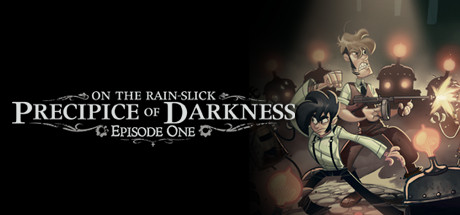
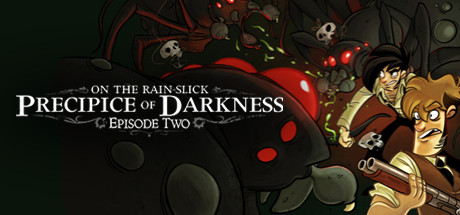
That same claustrophobic euphoria pulses through Precipice of Darkness, Episode One and Episode Two. Both games wear their Penny Arcade DNA proudly—“comic style” characters, “AU” storytelling, and humor that’s “fun as hell” precisely because it weaponizes bureaucratic absurdity. Like Prison School, they trap you in systems that pretend to be rational (the Perpetual Testing Initiative, Aperture Science’s HR policies) but function on pure, escalating farce. Player reviews note “imput delay” in minigames—not as a flaw, but as texture: the friction between intent and execution mirrors Kiyoshi fumbling a key while the Underground Student Council watches, silent and gleaming. These aren’t RPGs about leveling up—they’re about surviving the next absurd decree, just like Kiyoshi surviving the next “disciplinary measure.”
Then there’s Portal and Portal 2, where the Aperture Science Laboratories become Hachimitsu’s architectural twin: sterile, infinite, and deeply unserious about its own cruelty. The description calls it “mysterious,” but the player review nails it—“a short, brilliant, and absolutely flawless puzzle game that completely redefined first-person [everything].” That’s Prison School’s rhythm too: tight, surgical, escalating. GLaDOS’s deadpan menace isn’t so different from the Underground Student Council’s glacial stares—the threat isn’t violence, but procedural annihilation. And the “co-op puzzles” in Portal 2? They echo the anime’s ensemble dynamic: five boys forced into interlocking, humiliating choreography, where success demands perfect, sweaty synchronization—or catastrophic, physics-defying failure. The review’s “PERFECTION EXPANDED” isn’t just praise—it’s the feeling of watching the gang finally execute a plan… right before gravity, or a rogue mop bucket, reasserts control.
You’d love this pairing if you’ve ever laughed until your ribs ached while your stomach dropped—because the humor isn’t detached; it’s visceral. If you remember the exact weight of your backpack strap digging into your shoulder during middle school, or the way your voice cracked mid-sentence when called on unprepared—if you crave comedy that doesn’t just show embarrassment but makes your palms sweat in solidarity—then this is your wavelength. Not fans of “ecchi” as titillation, but people who recognize nudity here as exposure: emotional, logistical, and architectural. People who don’t want escape—they want recognition. Who find catharsis not in victory, but in the shared, breathless, oh god, not again moment when the floor tilts, the lights hum louder, and the rules rewrite themselves—right as you’re trying to tie your shoelaces.
🎮23 Games That Match the Vibe


















Match Dimensions Explained
❓Frequently Asked Questions
Why does Portal feel like a spiritual cousin to Prison School despite having zero fanservice?
Because both weaponize absurd escalation and deadpan reactions to utter chaos—like when Wheatley’s increasingly unhinged 'advice' mirrors Mari’s calm narration over the boys’ escalating disasters in the shower scene. Portal’s dark, rapid-fire satire and Prison School’s tonal whiplash (sudden shifts from slapstick to surreal dread) share that same 'wait, did they just go there?' energy, especially in how GLaDOS’s passive-aggressive cruelty parallels the student council’s bureaucratic sadism.
Is there a Prison School video game adaptation?
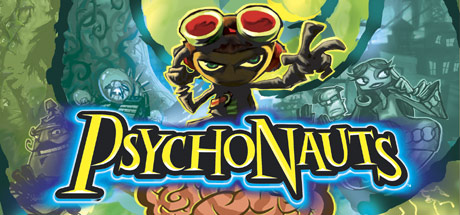
No official adaptation exists—but Psychonauts nails the vibe you’re craving: Raz’s awkward teenage psychic powers getting hijacked by chaotic group dynamics (like the 'Milkman Conspiracy' level’s paranoid bureaucracy) mirror Prison School’s ensemble farce. Plus, that player review calling it 'in-depth milking of certain highly creamy men'? Yeah, it’s got the same cheeky, self-aware leering tone—even if it swaps uniforms for psychic brainscapes.
How does Precipice of Darkness, Episode Two compare to Episode One for Prison School fans?
Episode Two doubles down on the same raucous, fourth-wall-breaking parody as Episode One—think the 'special attack minigame' with its frustrating input delay mimicking Prison School’s running gags where characters *almost* succeed before collapsing into disaster (like Hoshino’s endless failed escape attempts). Both lean hard into comic-panel pacing and meta-humor, but Episode Two adds more ensemble banter between your AU Penny Arcade crew—kinda like how Prison School shifts focus between the boys’ schemes and the girls’ counter-schemes across episodes.
What’s the best game like Prison School if I want that ‘cringe-laugh-then-wince’ mood?
Go straight to Portal—its genius is making you laugh at GLaDOS’s withering insults ('The Enrichment Center is committed to the well-being of all participants') while slowly realizing how deeply messed up Aperture really is, just like chuckling at Keiji’s earnestness before wincing at the next humiliating consequence. That exact emotional rollercoaster—absurd setup, escalating stakes, and pitch-black undertones beneath the jokes—is why Portal (52 score, Adult & Dark Seinen) hits harder than most 'comedy' games on the list.