
The Melancholy of Haruhi Suzumiya (2009)
Kyon has found himself dragged through many adventures as of late—all because of the SOS Brigade club and its excitable leader, Haruhi Suzumiya. He has stopped believing in the supernatural long ago, but after being forced to join this club based solely on that, he has seen things that cannot be explained logically.
Joining Kyon on his various misadventures is the shy and soft-spoken Mikuru Asahina, the bookish Yuki Nagato, and the ever-cheerful Itsuki Koizumi. Whether it is summer vacation or a school festival, things involving their club and Haruhi herself always end up becoming strange.
Note: This is a re-airing of the original Suzumiya Haruhi no Yuuutsu series, taken from the DVD release and aired in chronological order, adding 14 additional episodes with new content. These new episodes are episodes 8 (Bamboo Leaf Rhapsody), 12-19 (Endless Eight), and 20-24 (The Sigh of Suzumiya Haruhi Parts 1-5).
📺Anime Details
📝Editorial Analysis
The air in the SOS Brigade room hums—not with electricity, but with anticipation. It’s that exact second after Haruhi claps her hands and declares, “We’re going to rewrite reality today,” while Mikuru freezes mid-pour of tea, Yuki blinks once—too slowly—and Itsuki smiles just a fraction too wide. Kyon’s internal monologue hasn’t even finished its weary sigh before the fluorescent lights flicker not from faulty wiring, but because the universe is holding its breath. Not fear. Not awe. Something sharper: the dizzying, giddy vertigo of standing on the edge of logic and watching it dissolve like sugar in hot tea.

That’s the feeling The Melancholy of Haruhi Suzumiya (2009) lives inside—not wonder as spectacle, but disorientation as intimacy. It doesn’t ask you to believe in aliens or time loops; it makes you feel the cognitive slip when your best friend casually folds causality into origami. The school setting isn’t backdrop—it’s pressure-cooked normalcy, where the bell rings at 3:15 p.m. exactly, yet inside Room 3-4, time stutters, repeats, or skips ahead three days without explanation. You don’t watch Haruhi command reality—you inhabit Kyon’s exhaustion, his sarcasm-as-shield, his quiet, bone-deep recognition that the most terrifying thing isn’t the supernatural, but how casually it wears a sailor uniform and demands mochi for lunch. It’s playful, yes—but play with live wires. The comedy isn’t relief from tension; it is the tension, polished smooth and handed to you like a marble.
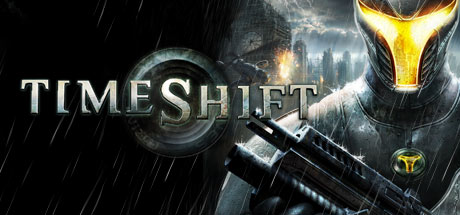
That precise emotional alchemy—the blend of bureaucratic absurdity, cosmic stakes disguised as club activities, and the sheer effort of maintaining sanity while reality frays at the seams—echoes in unexpected places. Take TimeShift™: its description names “Dr. Aiden Krone [making] a Time Jump across the space-time continuum—a reckless act with frightening consequences.” That phrase—reckless act with frightening consequences—lands like Kyon’s first walk into the closed-off hallway behind the gym, where the floor tiles repeat in impossible sequence. The player review calls it “a blast, but it takes a little work to get it into a playable state”—mirroring how Kyon must constantly debug Haruhi’s whims, patch logic holes, and coax coherence from chaos. Both demand active stabilization: not passive observation, but the hands-on, slightly frantic labor of keeping time (or sanity) from collapsing.
Then there’s Exodus from the Earth, whose description drops you straight into “the Intelligence Agency” commissioning you to infiltrate “the Corporation’s confines” for a “secret mineral upon which the very exis[tence]” depends. The jank—acknowledged outright in the player review (“It’s jank. Let’s get that out of the way.”)—isn’t a flaw here; it’s texture. Like the SOS Brigade’s duct-taped time-travel device or Yuki’s glitching interface, the rough edges confirm the world’s instability. When the review adds, “But it’s surprisingly ‘goo…’”, that trailing ellipsis feels like Kyon’s own unfinished thought mid-sentence as Haruhi rewrites the weather forecast with a marker. The parody isn’t winking—it’s breathing, same as Haruhi’s “alien investigation” being 90% snack inventory and 10% quantum entanglement.
And Portal, with its Aperture Science Laboratories and “innovative new games on the horizon,” channels the same clinical absurdity. The player review hails it as “A short, brilliant, and absolutely flawless puzzle game that completely redefined first-person m…”—that abrupt cutoff? It’s Kyon’s narration cutting off as the ceiling opens into a starfield. GLaDOS’s deadpan menace mirrors Itsuki’s cheerful, unnerving certainty; the test chambers are just another kind of clubroom, where rules are arbitrary, physics optional, and every solution feels like cheating reality itself. The comedy isn’t layered over the sci-fi—it’s the lubricant that lets the gears of paradox turn smoothly.
This pairing isn’t for fans of tidy lore dumps or power fantasies. It’s for the person who replays the scene where Haruhi resets summer vacation—not for the time travel, but for the way Kyon’s voice cracks just once, almost imperceptibly, when he realizes he’s forgotten what Tuesday smelled like. It’s for the player who boots up Portal 2, not for the co-op puzzles, but for Wheatley’s increasingly unhinged ramble about “the very nature of cake,” delivered with the same manic sincerity Haruhi uses to declare the cafeteria pudding “a sentient threat to temporal integrity.” They crave the tremor—the beautiful, exhausting, giddy tremor—of standing where logic ends and something far more alive begins.
🎮20 Games That Match the Vibe













Match Dimensions Explained
❓Frequently Asked Questions
Why does TimeShift™ keep coming up in 'Games Like The Melancholy of Haruhi Suzumiya' lists?
It’s all about that time-bending, reality-warping vibe — just like Haruhi’s ability to unconsciously reshape the world around her. TimeShift™ puts you in Dr. Aiden Krone’s boots as he fractures spacetime itself, creating alternate realities with every jump — a direct parallel to Haruhi’s chaotic godlike influence on the SOS Brigade’s world. Plus, its tight 4-hour runtime and ‘playable-but-quirky’ feel (per that player review) echoes Haruhi’s blend of high-concept sci-fi and scrappy, passionate execution.
Is there a Haruhi Suzumiya visual novel or game adaptation I can actually play?
No official Haruhi visual novel exists — but Exodus from the Earth is the closest *spiritual* match fans reach for: it’s got the same off-kilter agency intrigue, deadpan protagonist (Francis Rixon), and absurd corporate conspiracy energy as Haruhi’s 'closed space' arcs. It’s janky, self-aware, and full of parody — exactly how Haruhi’s comedy lands — and even shares that 'weirdly charming despite the bugs' reputation (as one reviewer bluntly admits: 'It's jank. Let's get that out of the way.')
Portal vs. Portal 2 — which one captures Haruhi’s tone better?
Portal 2 wins hands-down for Haruhi fans — not just because it’s longer, but because GLaDOS’s escalating sarcasm, Wheatley’s chaotic incompetence, and the co-op ‘Perpetual Testing Initiative’ mirror Haruhi’s mercurial leadership and the SOS Brigade’s improvised, rule-breaking dynamic. The original Portal is brilliant but lean; Portal 2 leans into ensemble banter and escalating absurdity — like when Kyon tries (and fails) to rein in Haruhi’s latest 'experiment' — and even nails that ‘flawless but unhinged’ tone reviewers call 'PERFECTION EXPANDED'.
What’s the best game like Haruhi if I want that 'brilliant but slightly broken' feeling?
TimeShift™ is your pick — it’s got that same 'ambitious, mind-bending idea delivered with rough-around-the-edges charm': mastering time powers feels powerful and disorienting, just like Haruhi’s reality shifts, and the community advice ('check the community pages for help doing so!') mirrors how Haruhi fans lovingly troubleshoot the franchise’s quirks. It’s not polished, but its 4-hour intensity and 'reckless act with frightening consequences' premise hit that exact sweet spot of genius-meets-glitch that defines Haruhi’s best moments.