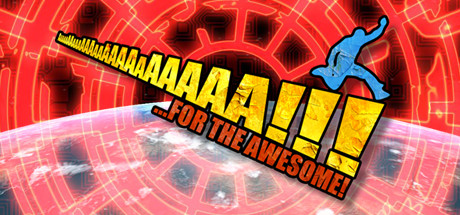
AaaaaAAaaaAAAaaAAAAaAAAAA!!! for the Awesome
82 remastered levels from the original and 43 brand new ones that are twice as fast!
🎮Game Details
💬What Players Say
"AaaaaAAaaaAAAaaAAAAaAAAAA!!! for the Awesome is a genuinely fun arcade base-jumping game where you freefall through floating cityscapes, hugging buildings for points and nailing landings — simple mechanics that are surprisingly addictive. The witty one-liners and quirky humor (yes, you collect teeth) keep things light, and the blood-pumping soundtrack adds real energy to each dive...."
"Sucks the dev never updated it to support any headsets outside the Rift DK2. Even in that horrible headset, it was worth playing. Outside of VR?..."
📝Editorial Analysis
The scream isn’t metaphorical—it’s the first thing you are. You’re airborne before thought catches up, tumbling headfirst through a glittering, impossible city where skyscrapers float like islands in vacuum, their glass facades catching light like shattered mirrors. Your fingers aren’t gripping controllers—they’re hugging concrete and steel, scraping against surfaces just to stay alive, just to score, just to feel that split-second friction before you rocket off again. That’s the core loop from the player review: freefall, hugging buildings for points, nailing landings. Not survival—celebration of velocity. And those 125 levels? 82 remastered, 43 brand new—twice as fast. It’s not escalation. It’s acceleration as ethos.
This game doesn’t simulate physics—it weaponizes euphoria. There’s no story, no stakes beyond your own breathless disbelief. What it makes you feel is unmoored exhilaration: the giddy terror of falling without consequence, the absurd precision of grazing a window ledge at 120mph, the sheer audacity of treating architecture like playground equipment. It’s not about control—it’s about surrendering to motion so completely that your body forgets gravity and your brain forgets doubt. Even the VR limitation—confined to the Rift DK2, “that horrible headset”—somehow deepens the feeling: you’re strapped into something clunky and experimental, yet still flying. The game’s atmosphere is pure, unfiltered comedic velocity: every near-miss is a punchline; every perfect landing, a pratfall turned triumph. It’s not dystopian dread or existential weight—it’s lightness as rebellion, speed as joy, chaos as choreography.
That emotional DNA pulses strongest in Eyeshield 21, where football isn’t sport—it’s slapstick ballet. Watch Hiruma launch a fake punt only to vault off a teammate’s back mid-air, twisting like a corkscrew to evade three defenders: it’s the same physics-defying hug-and-launch rhythm as grabbing a building face to pivot into a nosedive. Both thrive on Competitive Spirit not as grim determination, but as delirious, contagious energy—the kind that makes you yell at the screen while grinning. And the Comedy & Parody dimension? Spot-on: Eyeshield treats tackles like cartoon anvils and time-outs like sitcom cutaways—just as AaaaaAAaaaAAAaaAAAAaAAAAA!!! for the Awesome treats freefall like a Looney Tunes gag with a GoPro strapped to Wile E. Coyote’s forehead.
Then there’s One-Punch Man Season 2, where Saitama floats above a ruined cityscape, utterly bored, while Genos’ cybernetic limbs blur across the frame in hyper-accelerated combat. The shared Cyberpunk & Dystopia isn’t about rain-slicked alleys or neon noir—it’s about scale distortion: cities as disposable stage sets, bodies as vectors, destruction as background noise. When Saitama yawns mid-battle while buildings crumble in slow-motion debris fields, it echoes the game’s floating cityscapes—structures divorced from function, existing purely as surfaces to ricochet off. Both treat urban decay and technological overload not as warnings, but as playgrounds for absurd mastery. The comedy isn’t in the jokes—it’s in the sheer tonal whiplash of apocalyptic stakes met with utter nonchalance.
And Clean Freak! Aoyama kun—yes, really. On paper, a boy who sanitizes doorknobs with surgical precision seems worlds away from base-jumping mania. But look closer: his Competitive Spirit manifests in timing hand-wipes to millisecond perfection; his Comedy & Parody lives in the ritualized intensity of mundane acts. That’s the same emotional engine: turning a simple action—wiping, hugging, falling—into a high-stakes, rhythm-driven performance. When Aoyama scrubs a railing with obsessive focus, it’s structurally identical to the game’s building-hug: same repetition, same tactile fixation, same euphoric precision. Both find transcendence in repetition, not despite the absurdity—but because of it.
This pairing sings loudest for the viewer who rewatches the same five seconds of Keijo!!!!!!!!—the moment a character launches off a butt-cheek springboard into a spiraling aerial kick—not to analyze technique, but to feel the arc, the airtime, the ridiculous, perfect weightlessness. They’re the ones who mute dialogue to listen to the whoosh of wind in AaaaaAAaaaAAAaaAAAAaAAAAA!!! for the Awesome, who pause A Certain Magical Index II not for exposition, but to admire how Misaka’s railgun blast warps light exactly like sunlight glinting off a chrome tower mid-freefall. They don’t chase narrative coherence—they chase kinetic resonance: that rare, electric hum when motion, mockery, and mastery align. They love things that move too fast, laugh too loud, and land—always, miraculously—with a grin.
→70 Anime That Match the Vibe

Connected through 3 aesthetic dimensions.

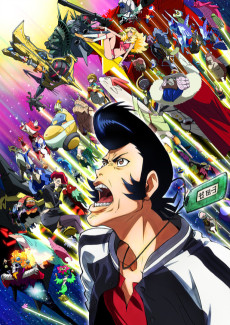
JP’s hairpin turn around the exploding casino planet mirrors the game’s vertiginous, physics-defying dives—both weaponize chaos as sport. Where *Redline*’s cosmic racetrack thrums with cyberpunk & dystopia’s neon-drenched stakes, the game’s remastered levels amplify that same frenetic, high-risk euphoria through sheer velocity. This isn’t just speed obsession; it’s competitive spirit distilled into pure, adrenalized spectacle—surprisingly elegant in its reckless precision.
Connected through 2 aesthetic dimensions.
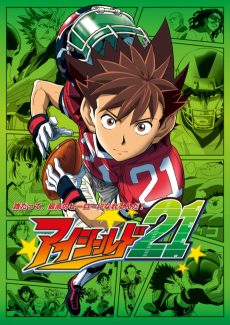
Sena Kobayakawa’s dizzying zigzag sprints through towering defensive linemen mirror the game’s frantic, gravity-defying leaps—both weaponize absurd speed as pure comedic spectacle. 😂 Where Eyeshield 21 parodies football’s intensity with over-the-top physics and facial-expression gags, the remastered levels double down on chaotic velocity, turning every fall into a punchline. This isn’t just competitive spirit—it’s competitive *hysteria*, where victory feels earned only after surviving the joke itself.

Connected through 2 aesthetic dimensions.
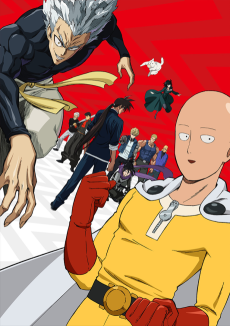
Saitama’s bored yawn mid-apocalypse in Season 2’s “The Strongest Man” episode mirrors the game’s absurd velocity—where falling at Mach 5 feels less like peril and more like a punchline. 😂 Comedy & Parody binds them: both weaponize hyperbole to mock heroism’s gravitas, turning invincibility into deadpan exhaustion and gravity-defying stunts into gleeful nonsense. Unlike most action media, neither asks you to *believe* the power—they demand you laugh *at* its hollow, cyberpunk-tinged spectacle.

Connected through 2 aesthetic dimensions.

Connected through 2 aesthetic dimensions.


Connected through 2 aesthetic dimensions.














































Match Dimensions Explained
❓Frequently Asked Questions
Why is Eyeshield 21 on the 'Anime Like AaaaaAAaaaAAAaaAAAAaAAAAA!!! for the Awesome' list?
Because both Eyeshield 21 and the game thrive on over-the-top, physics-defying momentum — think Sena’s lightning-fast zigzag sprints mirroring your split-second building-hugs mid-freefall. The shared 'Competitive Spirit' dimension nails that same adrenaline-fueled, rule-bending energy: just like Sena landing a touchdown with zero margin for error, you’re nailing those razor-thin landings in Level 47’s collapsing Tokyo skyline.
Is there an anime adaptation of AaaaaAAaaaAAAaaAAAAaAAAAA!!! for the Awesome?
Nope — it’s strictly a VR arcade game (originally Rift DK2-only, sadly), not an anime property. But the matches like One-Punch Man Season 2 channel its chaotic energy: Saitama’s deadpan launch off buildings in Episode 5’s ‘Hero Hunter Arc’ feels *exactly* like the game’s ‘twice as fast’ new levels — all vertical chaos, zero gravity, and absurdly precise timing.
How does Keijo!!!!!!!! compare to AaaaaAAaaaAAAaaAAAAaAAAAA!!! for the Awesome?
They’re both gloriously unhinged competitive spectacles where body control = victory — Keijo’s butt-bounce slams on floating platforms mirror your building-hugs and mid-air repositioning in the game’s remastered Level 32. Both lean hard into ‘Comedy & Parody’ and ‘Competitive Spirit’, turning physics into punchlines: just like Keijo’s ‘Bounce Shot’ requires millisecond timing, so does your final grab on the neon-lit spire in the ‘Neon Abyss’ DLC level.
What if I love Cyberpunk & Dystopia vibes but hate slow-paced anime — what’s the best match for AaaaaAAaaaAAAaaAAAAaAAAAA!!! for the Awesome?
Go straight to A Certain Magical Index II — its Academy City is basically the game’s floating cityscapes rendered in anime form: think Accelerator’s brutal, high-velocity rooftop chases across holographic billboards (Episode 12’s ‘Level 5 Shift’) synced to the game’s ‘twice as fast’ new levels. The shared ‘Cyberpunk & Dystopia’ + ‘Comedy & Parody’ combo means even the world-ending stakes feel like a hyper-stylized, laugh-out-loud freefall.