
Bubble
In a Tokyo where gravity has broken, a boy and a girl are drawn to each other...
The story is set in Tokyo, after bubbles that broke the laws of gravity rained down upon the world. Cut off from the outside world, Tokyo has become a playground for a group of young people who have lost their families, acting as a battlefield for parkour team battles as they leap from building to building. Hibiki, a young ace known for his dangerous play style, makes a reckless move one day and plummets into the gravity-bending sea. His life is saved by Uta, a girl with mysterious powers. The pair then hear a unique sound audible only to them. Why did Uta appear before Hibiki? Their encounter leads to a revelation that will change the world.
(Source: Netflix)
Note: The anime released on Netflix on April 28, 2022. It screened in theaters on May 13, 2022.
📺Anime Details
📝Editorial Analysis
The air tastes like rust and rain. Hibiki’s fingers scrape concrete as he hangs, breathless, over the shattered edge of a skyscraper—gravity flickering around him like faulty neon. Below, Tokyo isn’t ruined; it’s unmoored. Streets float mid-air in fractured ribbons. Glass towers tilt at impossible angles, held aloft by silent, shimmering bubbles that hum with quiet defiance. He doesn’t fall—not yet—but the drop isn’t just physical. It’s the weight of silence after loss, the vertigo of building something beautiful on ground that refuses to hold.
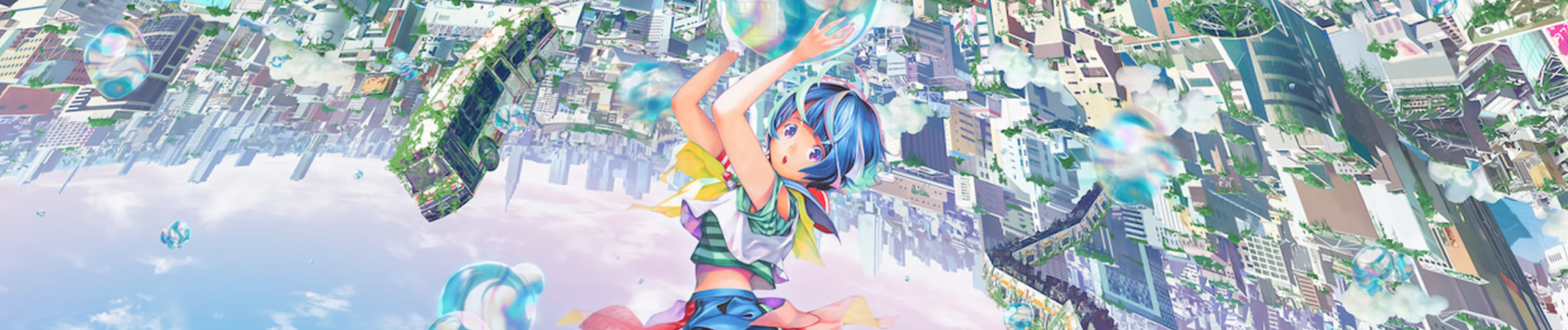
That’s the feeling Bubble lives inside: weightlessness without freedom. Not joyous flight, not sci-fi spectacle—but the eerie, tender suspension of grief given physics. This isn’t dystopia as rubble and ruin; it’s urban fantasy as absence made visible. The parkour isn’t sport or rebellion—it’s ritual. Every leap is a refusal to settle into mourning, every landing a fragile claim on continuity. The city breathes, but shallowly. The teens don’t rebuild—they retrace: tracing old train lines now suspended in sky, vaulting across gaps where bridges used to be, turning abandonment into choreography. You don’t feel adrenaline here—you feel tremor, the kind that comes right before a sob catches in your throat.
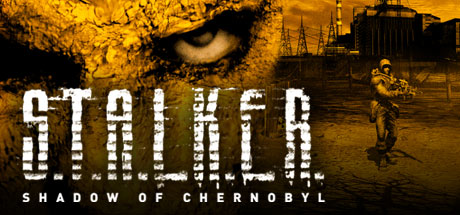
Which is why S.T.A.L.K.E.R.: Shadow of Chernobyl resonates so deeply—not because of guns or anomalies, but because of its silence. Its Zone isn’t just dangerous; it’s haunted by stillness. Like Tokyo in Bubble, it’s a place where laws broke, and what remains isn’t chaos, but a strange, reverent hush—radiation humming underfoot, wind moving through hollowed-out buildings, other stalkers glimpsed only as distant, fleeting shapes. The player review says it outright: “you fear not only the radiation, anomalies and deadly creatures, but other S.T.A.L.K.E.R.s”—that tension between solitude and proximity, between wanting connection and flinching from it, mirrors Hibiki and Uta’s first shared glances across chasms they’re too scared to cross. Both are stories where love blooms not despite the broken world, but because it’s broken—tender, urgent, almost apologetic in its persistence.
Then there’s Unreal Tournament: Game of the Year Edition, and Tribes: Ascend—not for their arenas or weapons, but for how they frame movement as identity. In Bubble, parkour isn’t skill—it’s language. Hibiki’s reckless style isn’t bravado; it’s the only vocabulary he has left for grief, for longing, for apology. Likewise, Unreal Tournament’s player review calls it “the original King of the Hill in the frag-or-be-fragged multiplayer gaming world”, and Tribes: Ascend’s review remembers “mindless fun”—but both hinge on flow state as communion. The glide, the jetpack arc, the split-second read of an opponent’s trajectory—they’re not combat mechanics. They’re shared breath, synchronized rhythm, the unspoken trust of knowing someone else moves with you, even when you’re trying to knock them off the map. That’s Hibiki and Uta mid-air, hands nearly brushing—not romance as dialogue, but as trajectory alignment.
And yes—even Chains, that deceptively simple match-3 game, pulses with the same emotional DNA. Its description says it’s “a relaxing arcade match 3 casual game” where “the challenge comes from increasingly difficult physics-driven” rules—and the player review nails it: “link adjacent bubbles of the same color into chains.” Bubbles. Linking. Physics. Fragile, luminous connections that hold only as long as you sustain them. No grand stakes, no lore—just the quiet satisfaction of alignment, of making something cohere in a system that constantly threatens to scatter. It’s the emotional echo of Hibiki catching Uta’s hand—not as rescue, but as synchronization. A single, sustained chain in a world designed to break apart.
This pairing isn’t for fans of “cool powers” or “epic battles.” It’s for the ones who pause mid-jump in a game just to watch dust hang in sunbeams. For the ones who replay a quiet cutscene three times because the way light hits a character’s hair feels like memory. For players who mute the music in S.T.A.L.K.E.R. to hear the wind through dead trees—and anime watchers who rewatch Bubble’s final rooftop scene not for plot, but for the weight of the silence between heartbeats. They understand that the most devastating worlds aren’t the ones that end—but the ones that keep breathing, softly, unevenly, full of tremor, full of light, full of bubbles waiting to be linked.
🎮55 Games That Match the Vibe









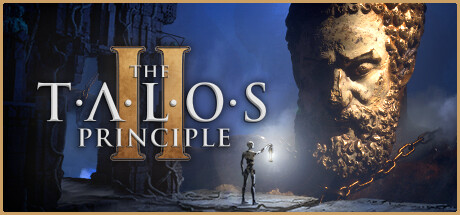

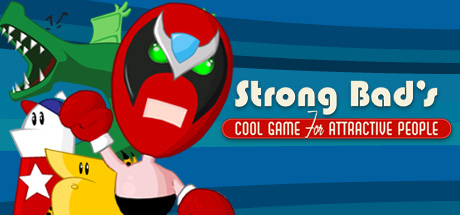

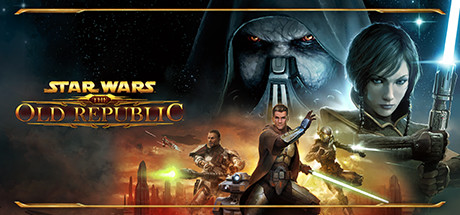
Match Dimensions Explained
❓Frequently Asked Questions
Why does Chains keep showing up in 'games like Bubble' lists when it's not a shooter?
Great question — it’s because Chains nails the core 'bubble-linking' physics and progression loop that fans of Bubble games love: you’re literally chaining adjacent same-color bubbles in a relaxing, puzzle-driven way, just like in classic match-3 bubble shooters. Even though it’s not a first-person shooter like S.T.A.L.K.E.R. or RAGE, its ‘link 3+ bubbles to clear stages’ mechanic and gentle difficulty curve (with increasingly tricky physics) make it a top-tier match for Bubble fans who want that tactile, satisfying chain reaction — plus it’s got that warm, nostalgic vibe players describe as 'like Connect 4 in a nutshell'.
Is there a cyberpunk-themed bubble shooter like Bubble?
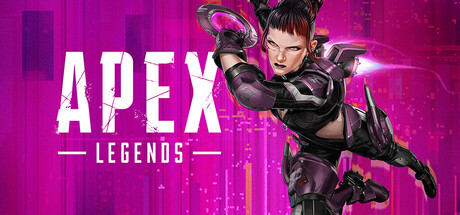
Not exactly a *bubble shooter*, but if you love Bubble’s fast-paced action and want that gritty, neon-drenched cyberpunk/dystopia feel, jump straight into RAGE or Unreal Tournament: GOTY Edition. RAGE drops you into a post-apocalyptic wasteland with id Tech 5-powered vehicle combat and irradiated zones — think Mad Max meets Blade Runner — while Unreal Tournament wraps its arena fragging in a sleek, high-tech dystopian aesthetic that reviewers call 'the undisputed 1999 Game of the Year'. Both share Bubble’s adrenaline rush, just swapped bubbles for plasma rifles and jetpacks.
How does Tribes: Ascend compare to S.T.A.L.K.E.R. for Bubble fans?
They’re total opposites in pacing but both hit Bubble fans’ sweet spot for high-stakes, environment-aware action — Tribes: Ascend is all about lightning-fast jetpack-enabled team battles across open maps (think 'mindless fun' with gravity-defying strafing), while S.T.A.L.K.E.R. slows things down with tense, atmospheric survival in the Zone, where radiation, anomalies, and rogue S.T.A.L.K.E.R.s force you to plan every move. If Bubble’s appeal is spatial awareness + emergent chaos, Tribes delivers it through speed and verticality; S.T.A.L.K.E.R. delivers it through dread and discovery — both scored 82 and share Cyberpunk & Dystopia + Competitive Spirit (Tribes) or Survival & Crafting (S.T.A.L.K.E.R.).
What’s the best 'Bubble-like' game if I’m in the mood for something slow, emotional, and story-driven?
Chains is your perfect fit — it swaps frantic shooting for meditative, physics-based bubble linking, and layers in an Emotional Narrative that reviewers say pulls you in quietly, like 'a warm memory you didn’t know you missed'. Unlike Bubble’s arcade energy, Chains leans into calm focus (‘relaxing arcade match 3’), where each chain feels deliberate and the escalating puzzles unfold like chapters — no guns, no radiation, just color, connection, and that rare ‘oh, I get it now’ satisfaction after clearing a tough stage.