Counter-Strike: Source
Counter-Strike: Source blends Counter-Strike's award-winning teamplay action with the advanced technology of Source™ technology.
🎮Game Details
💬What Players Say
"This game still feels better than CS2 most of the times. No cheaters, no unnecesary things. Pure CS experience...."
"Counter-Strike: Source will always hold a special place in my library because my Dad bought it for me on Christmas Day. The funny thing is, I was absolutely terrible at the game and honestly, I still am. Any matches against real players usually ended with me getting destroyed before I even knew where the shots came from...."
"Bought for GMOD, stayed for an underated game for some casual fun. I would call this a truly "hidden gem"."
📝Editorial Analysis
The first time you hear the clack of your AK-Strike’s bolt cycling in Counter-Strike: Source, it’s not just sound—it’s weight. Not the hyper-polished, physics-simulated thunk of CS2, but something drier, tighter, almost tactile—like pulling a real slide back on a rifle that’s been cleaned once and left in a garage for ten years. That moment lives in the player review calling it “pure CS experience”—no cheaters, no bloat, just the raw architecture of tension: two teams, one bomb site, five rounds to prove who breathes slower under pressure. It’s the same feeling in the review where someone remembers their Dad bought it for me on Christmas Day, fumbling through de_dust2 with zero aim, yet still holding it close—not because they won, but because the game let them belong, even while losing. That’s the heart of it: competence isn’t gatekept; it’s earned in silence, between rounds, in the pause before the buy menu loads, in the shared glance across a voice chat crackling with static and unspoken trust.
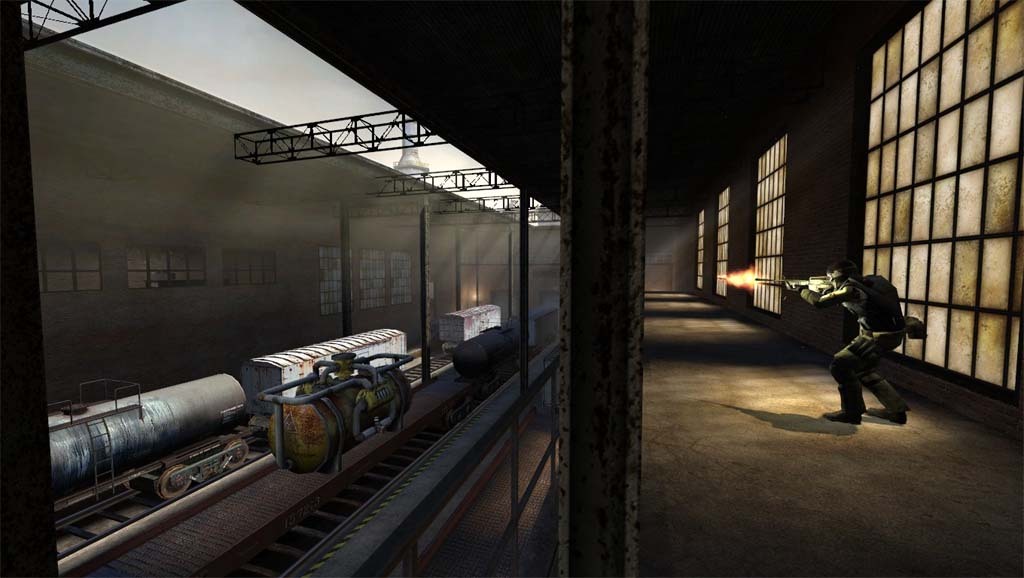
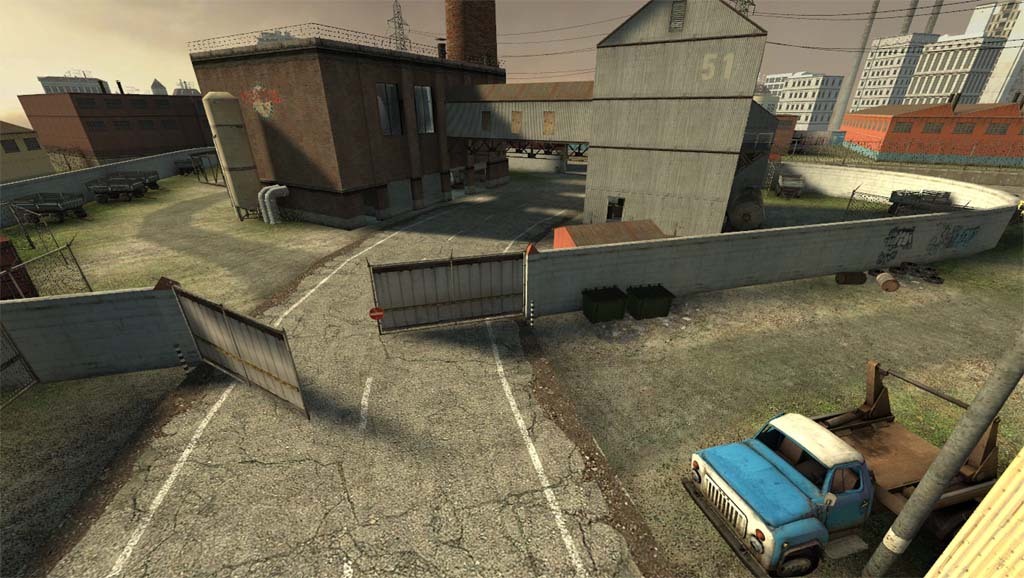
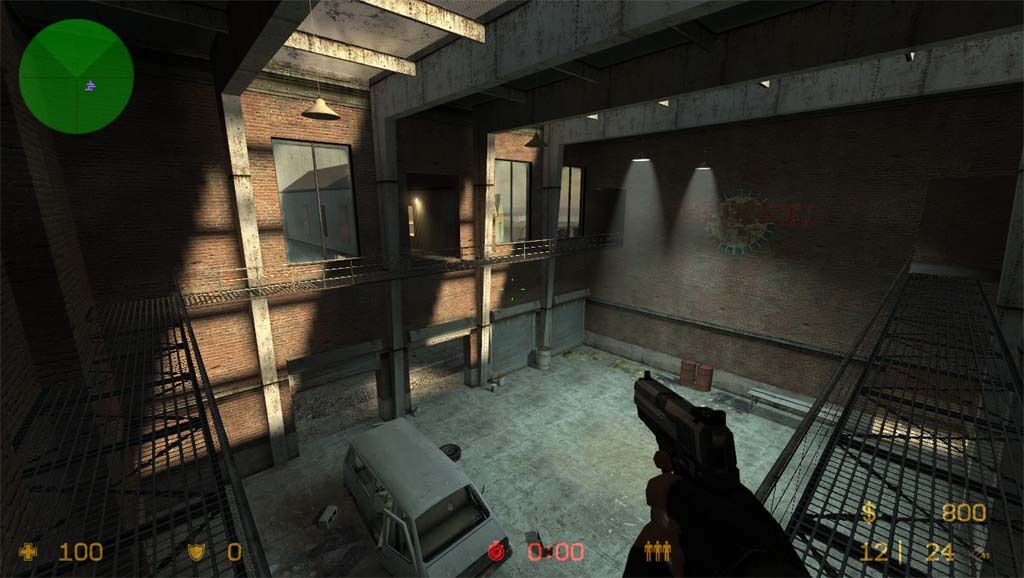
What makes Counter-Strike: Source’s atmosphere singular isn’t its realism or its map design—it’s how it holds space for human imperfection. The Source engine doesn’t erase latency or polish away the grit of mismatched frame rates; it embraces them, like an old dojo floor worn smooth by generations of bare feet. You feel the stakes not in cinematic explosions, but in the stillness before the flashbang detonates—when your finger hovers over the jump key, your breath shallow, your ears tuned to footsteps echoing off brick textures rendered with deliberate, slightly dated fidelity. It’s a world built for crafting, not consuming: crafting angles, crafting timing, crafting trust with someone whose mic is half-muted and whose name you’ll forget by round three—but whose smoke you’ll follow without question. There’s no story mode, no lore dump—just the quiet dignity of showing up, learning, failing, and trying again. That’s why it’s called a hidden gem: not because it’s obscure, but because its value reveals itself only after you stop chasing spectacle and start listening to the rhythm of the round timer ticking down.
That same emotional DNA pulses through BLUE LOCK THE MOVIE -EPISODE NAGI-, where survival isn’t about dodging bullets—it’s about surviving your own limitations in a system that demands competitive spirit so fierce it reshapes identity. Nagi doesn’t win with flashy tricks; he wins by reading micro-expressions, adjusting his run between breaths, turning every pass into a calculated act of crafting space—just like rotating mid-round in cs_source to cover a flank no one else saw coming. Then there’s Bubble, floating in ruined Tokyo with gravity gone wild—yet every movement is tactical, every leap a negotiation between momentum and consequence. The characters don’t shout strategies; they listen, adjust, adapt—mirroring how a Source veteran learns to read enemy footsteps through wall textures, not radar pings. And Girls und Panzer, with its tank crews shouting commands over radio static, moving as one organism across sun-baked fields—tactical warfare distilled into synchronized breathing, where victory hinges less on firepower and more on who trusts whose judgment when the hatch slams shut and the engine roars.
This pairing isn’t for people who want to “win” or “level up.” It’s for the ones who remember the weight of their first frag—how their hands shook, how their dad laughed and said, “Try watching their crosshair next time.” It’s for the viewer who rewinds Aoharu x Machinegun not for the gunplay, but for the split-second hesitation before a team calls out a flank—because they recognize that pause as the exact same one before throwing a decoy nade in cs_source, knowing the decision will ripple across five lives. It’s for anyone who’s ever typed “gg” in all lowercase after a 15–14 loss and meant it—not as resignation, but as respect, forged in the quiet, unglamorous work of showing up, round after round, in a world that asks nothing more than that you pay attention, stay present, and trust the person beside you—even if their mic cuts out at the worst possible moment.
→9 Anime That Match the Vibe
Connected through 2 aesthetic dimensions.
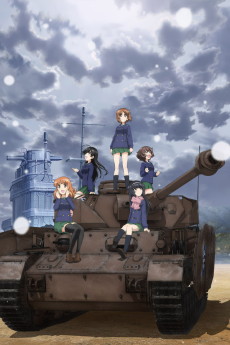
Connected through 2 aesthetic dimensions.
Connected through 2 aesthetic dimensions.

Tactical Warfare crackles in Oarai’s final match against Kuromorimine—where Miho’s whispered commands mirror Counter-Strike: Source’s round-based callouts, each decision weighted by map control and split-second role execution. Unlike most sports anime, *Girls und Panzer* treats tank hatches and radio static like CS:S treats flashbang timings and smokes: as precise, teachable levers of competitive spirit. That shared reverence for disciplined coordination—under pressure, with real stakes—makes their synergy unexpectedly electric.
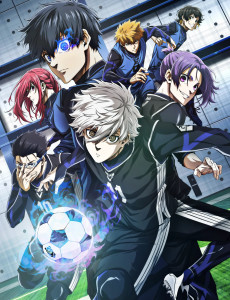
Nagi Seishirou’s icy dismissal—“That’s a hassle”—echoes the tense, split-second silence before a CS:S round begins: no exposition, just calibrated breath and razor focus. Unlike most sports narratives, *BLUE LOCK THE MOVIE -EPISODE NAGI-* frames ego and survival as interlocking systems—much like CS:S’s economy-driven rounds where every bullet, flash, or defuse is a crafted response to escalating stakes. This shared *Survival & Crafting* dimension transforms competition into visceral calculus—where Nagi’s lone-wolf genius mirrors a Counter-Strike player’s solo clutch, each victory forged in austerity, not spectacle.
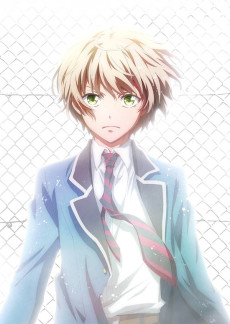
Hotaru’s airsoft duel with Mabuchi in the host club’s neon-lit backroom mirrors Counter-Strike: Source’s tense, round-based engagements—where split-second callouts and map control decide victory. Unlike most sports anime that glorify physical stamina, *Aoharu x Machinegun* treats airsoft like tactical warfare: flanking, smoke grenades, and objective defense echo CS:S’s bomb-site pushes and eco-round discipline. That shared reverence for competitive spirit transforms plastic pellets and pixelated bullets into identical languages of trust, timing, and quiet respect.
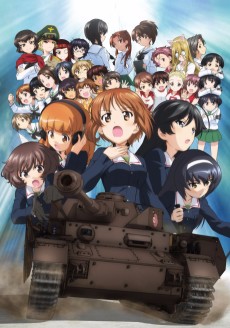
Miho’s calm command during the final tank duel atop the crumbling ruins of the abandoned city—where every shell trajectory and radioed adjustment mirrors a CS:S round’s split-second callouts—proves how deeply *Girls und Panzer der Film* commits to **Tactical Warfare** as embodied discipline. Unlike most sports anime, it treats terrain, ammunition limits, and team roles with the granular seriousness of Counter-Strike: Source’s bomb-site rotations and eco-round strategy. That shared reverence for precision under pressure makes their resonance feel earned, not coincidental.

Gravity-defying parkour in *Bubble*’s shattered Tokyo mirrors the precise, physics-aware movement of *Counter-Strike: Source*’s bomb-site rushes—where every jump, slide, and recoil matters. That shared **Competitive Spirit** isn’t just about winning; it’s the razor’s edge between control and chaos when environments themselves rebel. Surprisingly, both locate profound intimacy in high-stakes coordination: Rikuo and Uta’s synchronized leaps echo CT/T error-recovery moments—tense, wordless, built on trust forged mid-fall.

Strategy, precision, and the weight of every decision on the battlefield.
Match Dimensions Explained
❓Frequently Asked Questions
Why does BLUE LOCK THE MOVIE -EPISODE NAGI- match Counter-Strike: Source so well?
Because it nails that raw, high-stakes Competitive Spirit vibe — like when Nagi’s solo run against the German team mirrors a clutch CS:S pistol round where one player holds site alone. The Survival & Crafting dimension shows up in how characters constantly adapt tactics on-the-fly, just like swapping grenades or repositioning after a flash — no respawns, no do-overs, pure pressure.
Is there an anime adaptation of Counter-Strike: Source?
Nope — there’s never been an official anime adaptation of CS:S (or any CS title). But if you’re craving that same gritty, grounded teamplay energy, Girls und Panzer hits closest: think Miho’s calm callouts during the Ooarai vs. Kuromorimine tank battle — it’s got the same tactical precision and zero-fluff teamwork as a well-coordinated CS:S execute.
How does Bubble compare to Aoharu x Machinegun for CS:S fans?
Bubble leans harder into Survival & Crafting — like the rooftop parkour chases where characters improvise weapons and traps on the fly, echoing CS:S’s map knowledge and utility usage. Aoharu x Machinegun is sharper on Tactical Warfare: think Hotaru’s precise sniper-style positioning in the school tournament, mirroring how a good CS:S AWP player reads angles and controls space without ever firing.
What’s the best anime like Counter-Strike: Source if I want that nostalgic, ‘pure gameplay’ vibe?
Go straight to Girls und Panzer der Film — it’s got that same ‘no-cheaters, no-bloat’ purity fans love about CS:S. Remember how Player Review 1 says ‘pure CS experience’? That’s exactly how the final battle feels: no overpowered abilities, just crew coordination, map control, and smart use of terrain — like holding Schoolhouse with smoke and molotovs, but with tanks instead of AKs.