
Aoharu x Machinegun
When Hotaru Tachibana storms into a host club to avenge the honor of a wronged female student, the last thing Hotaru expects is to duel the club’s most popular host with airsoft guns instead of fists. When Masamune Matsuoka’s experience wins out over Tachibana’s brawn, he realizes that he can use his victory (and the large bill for damaging the club) to make Tachibana join his struggling Survival Gaming team. However, what ladies’ man Masamune totally misses is that his unwilling new guy… isn’t a guy at all! Under the boy’s clothing and strong need to defend justice, Tachibana is all-girl, but, for a number of complicated reasons, she absolutely CAN’T expose that fact to Masamune or his teammate, the erotic manga artist Tooru Yukimura.
(Source: Sentai Filmworks)
📺Anime Details
📝Editorial Analysis
The thwip-thwip-thwip of airsoft pellets hitting the host club’s velvet curtains—Hotaru Tachibana, sleeves rolled, breath sharp and unsteady, lowering her gun just as Masamune Matsuoka smirks without lowering his—isn’t a battle cry. It’s a pivot. A split second where adrenaline doesn’t roar—it hums, low and electric, like the buzz before a team huddle in a dimly lit garage, or the quiet click of a safety being flipped just before a coordinated push. That moment isn’t about winning. It’s about being seen—not as a girl who stormed in angry, not as a boy Masamune assumes she is, but as someone who moves with intention, even when she’s fumbling the script.
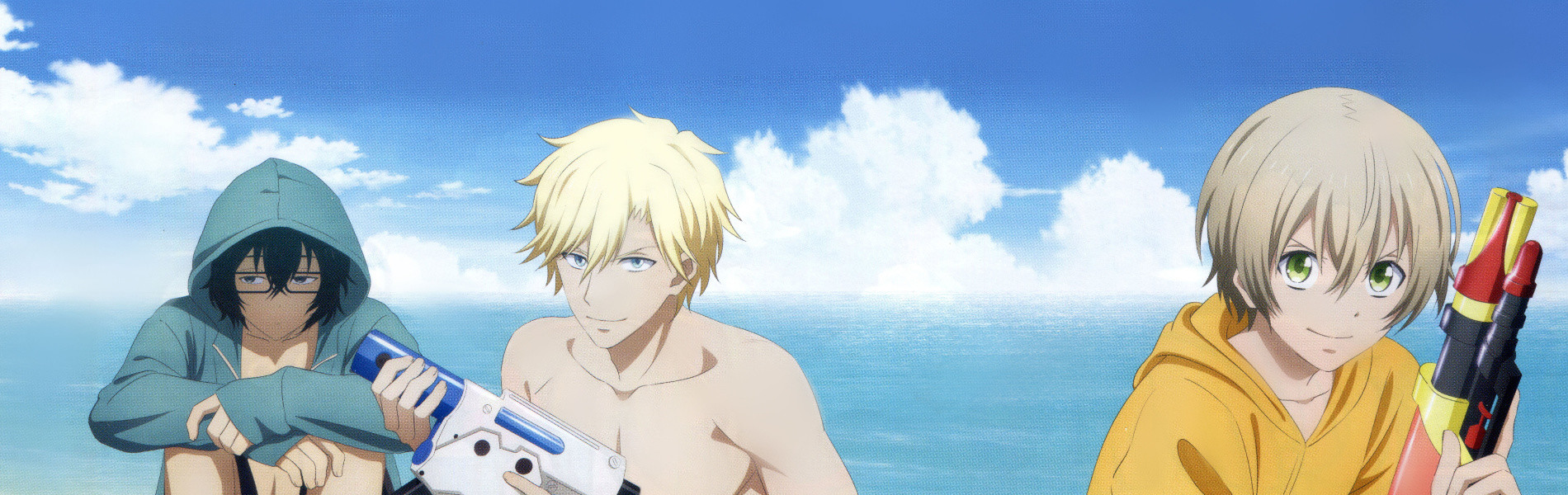
What makes Aoharu x Machinegun vibrate with such distinct warmth isn’t its crossdressing premise or its airsoft gear—it’s how it treats tactical intimacy as emotional grammar. Every reload, every flank, every shouted callout across the abandoned schoolyard or repurposed warehouse isn’t just sport; it’s a language of trust built in real time, under pressure, with zero pretense. You feel the weight of a borrowed vest, the sting of a near-miss on bare skin, the way laughter cuts through tension like a well-timed flashbang. It’s competitive, yes—but never cold. Never detached. The stakes are personal, not geopolitical: pride, belonging, the quiet dignity of showing up—even when you’re pretending to be someone else just to hold space on the team. That’s the feeling: earnestness, wrapped in sweat and strategy.
That same pulse lives in Counter-Strike, where player reviews describe “wast[ing] half my life” in pursuit of a single perfect round—because it’s not about domination, it’s about sync. The “incredibly realistic brand of terrorist warfare” described in its official tagline lands differently here: in Aoharu x Machinegun, the “warfare” is playful, scaled down, human-scaled—but the tactical reverence is identical. When Hotaru learns to read Masamune’s feints by the tilt of his shoulder, that’s the same muscle memory as learning an enemy’s smoke timing off Dust II’s B site. Both demand presence, pattern recognition, and the quiet thrill of executing together.
Then there’s Call of Duty® 4: Modern Warfare® (2007)—a game whose player review calls it “the best CoD game ever made” after 6,000 hours, citing its “intense and cinematic action.” That devotion mirrors how Aoharu x Machinegun frames airsoft not as simulation, but as ritual: the slow-motion dive behind cover, the synchronized breach of a classroom door during practice, the way sound design tightens around a single heartbeat before the rush. Like CoD4’s iconic “All Ghillied Up” level—where silence, pacing, and consequence shape every movement—the anime lingers on the weight of preparation, the gravity of a single decision in a five-second engagement. It’s not realism for realism’s sake—it’s emotional fidelity dressed in tactical gear.
Even Counter-Strike: Source, praised by players for its “pure CS experience” and absence of “unnecessary things,” echoes the anime’s stripped-down sincerity. Its review notes “no cheaters, no unnecessary things”—a line that could describe Aoharu x Machinegun’s world, where there are no hidden agendas behind the gear, no meta to exploit beyond teamwork, no lore beyond who’s got your six right now? The show refuses to overcomplicate its mechanics or motivations. Just like Source’s clean, tactile gunplay—every recoil, every footstep, every callout matters because it’s all there is. Nothing extra. Nothing fake.
This pairing sings for the person who’s ever stayed late at the field just to re-run a failed flank, who’s memorized a teammate’s voice cue before their own name, who feels more alive coordinating a silent push than shouting into the void. It’s for the player who keeps a worn-out airsoft vest in their closet like a talisman—and the viewer who watches Hotaru adjust her goggles, takes a breath, and goes—not because she’s won yet, but because she’s finally in sync. Not with a role, not with a gender, but with the rhythm of people choosing each other, one precise, breathing, human move at a time.
🎮12 Games That Match the Vibe




Match Dimensions Explained
❓Frequently Asked Questions
Why does the Aoharu x Machinegun anime's sniper duel scene feel so much like Counter-Strike?
That intense rooftop standoff between Hotaru and Momo mirrors CS’s high-stakes, low-time-to-kill realism—where one misstep means instant death, sound cues matter more than visuals, and teamwork (like calling out enemy positions) is non-negotiable. It’s no coincidence: Counter-Strike (score 71) nails that same 'tactical warfare' tension with its precise recoil control, flashbang timing, and round-based pacing—exactly how Hotaru holds her breath before pulling the trigger in Episode 8.
Is there an Aoharu x Machinegun video game adaptation?
No—there’s never been an official Aoharu x Machinegun game, anime tie-in or otherwise. But fans who love its blend of competitive spirit and grounded tactical action (no superpowers, just skill, strategy, and sweat) consistently gravitate toward Counter-Strike: Source (score 60) for its clean, uncluttered gunplay and tight team coordination—just like the Tanabata High Airsoft Club’s disciplined drills and last-second callouts.
Counter-Strike vs. Call of Duty 4: Modern Warfare—which feels more like Aoharu x Machinegun’s airsoft realism?
Counter-Strike wins hands-down for Aoharu’s vibe: it’s all about deliberate movement, economy management, and clutch 1v1s—like when Hotaru outmaneuvers rivals using terrain and timing instead of flashy gadgets. CoD4 (score 71) leans cinematic and fast-paced (think ‘All Ghillied Up’), while CS forces you to *earn* every win like the Tanabata squad does—no auto-aim, no health regen, just pure skill and communication.
What’s the best game like Aoharu x Machinegun if I want that focused, no-nonsense airsoft tournament energy?
Counter-Strike (original, score 71) is your go-to—it’s got the exact same ‘competitive spirit’ intensity as Tanabata’s inter-school tournaments: rounds reset, gear costs money, and winning hinges on reading opponents like Hotaru reads Momo’s stance. Player reviews even echo that dedication: ‘Wasted half my life in this game…’ sounds *exactly* like how Hotaru talks about airsoft practice at 5 a.m.