Counter-Strike 2
For over two decades, Counter-Strike has offered an elite competitive experience, one shaped by millions of players from across the globe. And now the next chapter in the CS story is about to begin. This is Counter-Strike 2.
🎮Game Details
💬What Players Say
"Counter-Strike 2 is a fantastic game if you enjoy getting screamed at by a 14-year-old with 9,000 hours while being flashbanged into another dimension. I loaded in for “a couple matches” and suddenly it was 4AM, my mental health was gone, and I was arguing with Russians about why we should maybe not rush B for the 12th round in a row. The matchmaking is basically a social experiment...."
"I bought Counter-Strike 2 thinking it would be a tactical FPS. What I got instead was: a gambling addiction with occasional bomb defusal 5 Russian philosophers arguing over my mother’s profession one teammate named “toaster oven” who drops 47 kills while eating cereal and a guy spinning in circles at Mach 5 headshotting everyone through concrete The matchmaking experience is beautiful. Every game feels like a social experiment funded by the government...."
"ragebaiting game meet cheater good cheater yellow cheater friend cheater good game"
📝Editorial Analysis
The headset is still warm. Your thumb hovers over the reload key—not because you need to, but because your pulse is hammering in your throat and the last flashbang still hasn’t faded from your vision. You hear it before you see it: a 14-year-old voice, razor-edged and unhinged, screaming “FUCKING FLASH HIM AGAIN—HE’S STILL BLIND!” while your screen swims with afterimages and your crosshair trembles like a live wire. That’s not just gameplay—that’s Counter-Strike 2’s heartbeat: two decades of global pressure, distilled into six seconds of shared, sweat-slicked chaos.

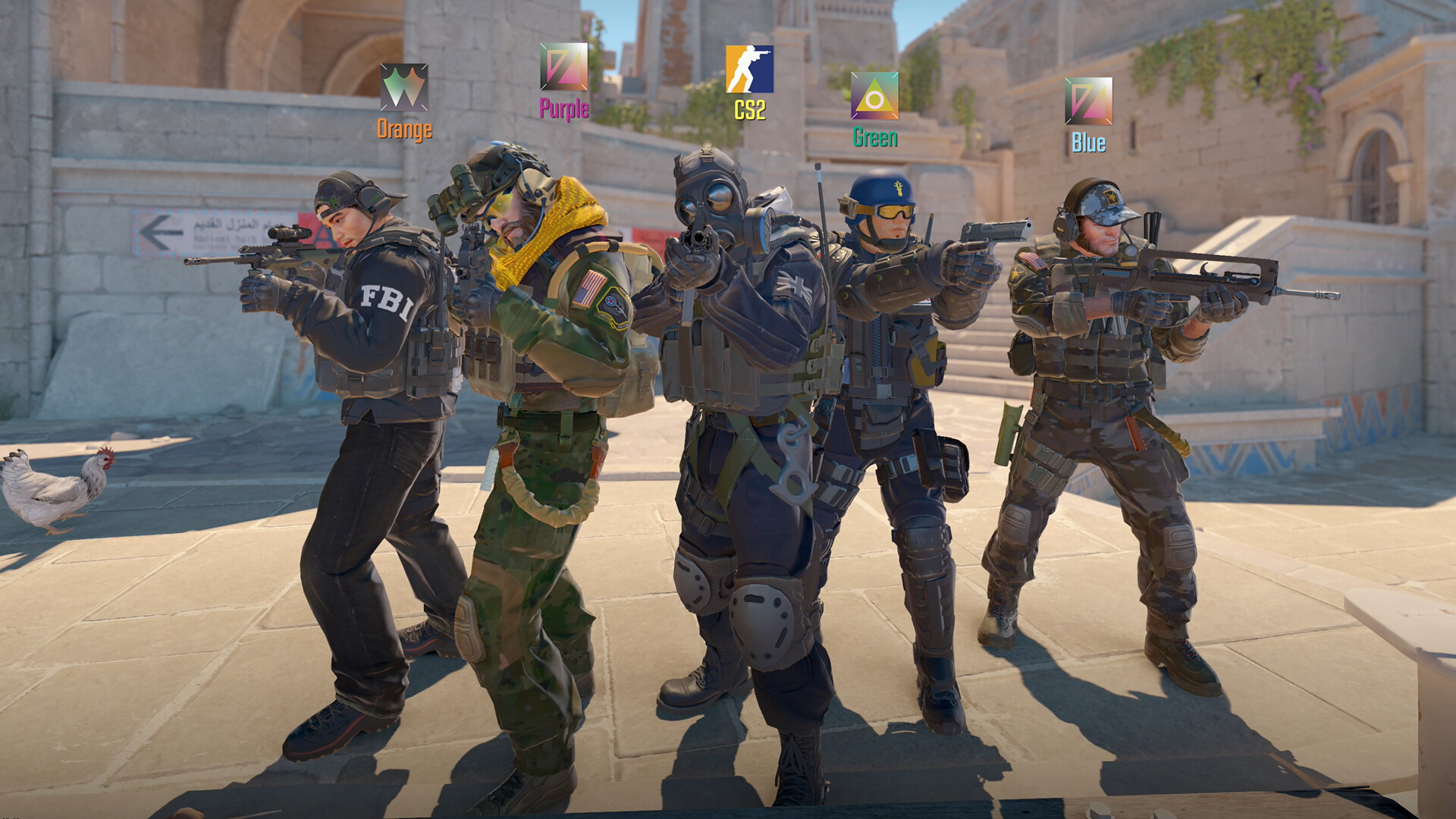
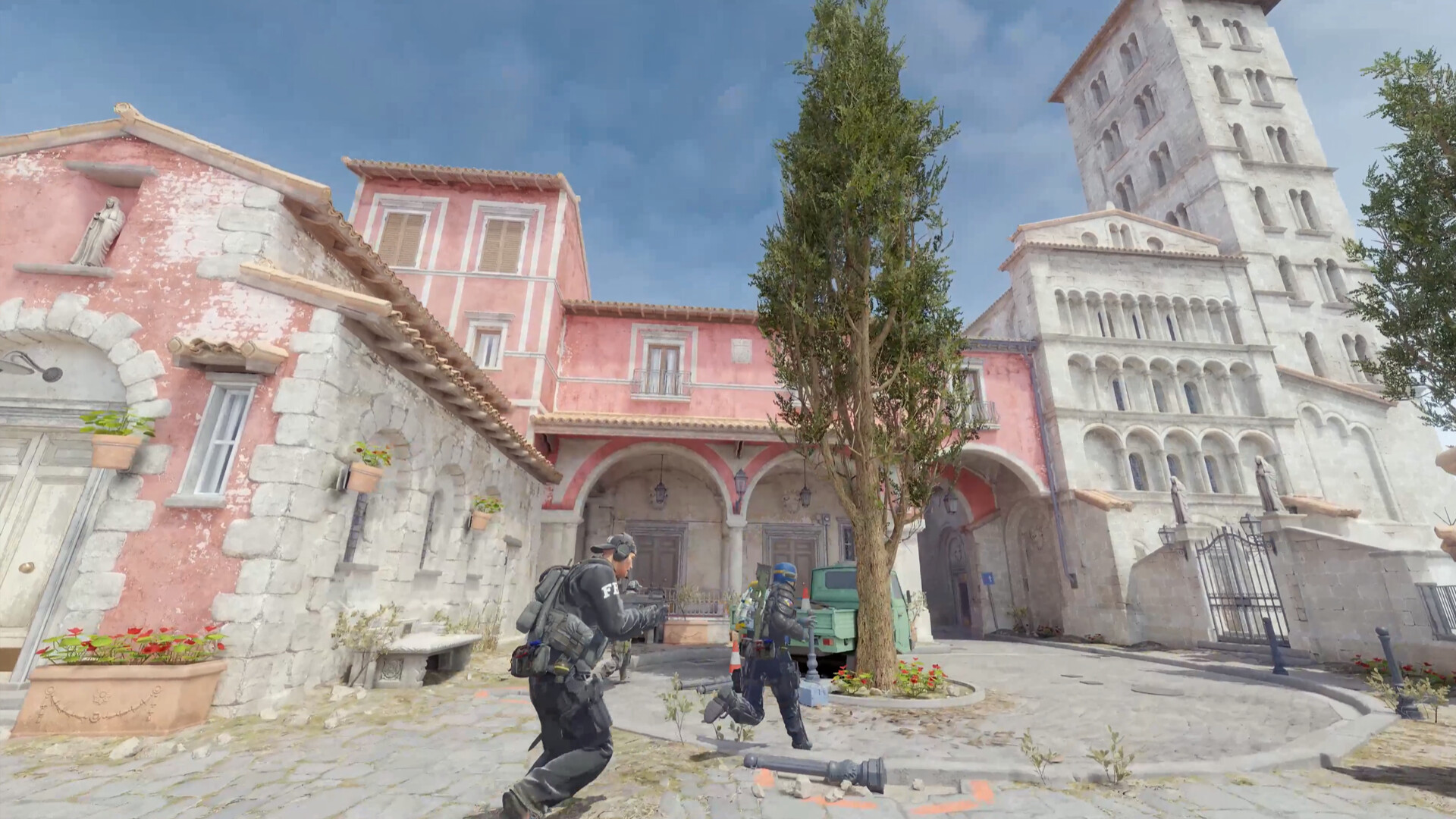
This isn’t about tactics on paper. It’s about the weight of silence before an entry—how your breath catches when you peek B-site alone, knowing one misstep means hearing your own death sound effect twice, back-to-back, because someone already knew where you’d be. It’s the vertigo of realizing, mid-round, that you’re not playing a shooter—you’re inside a live-wire social experiment where every decision bleeds into banter, betrayal, or sudden, brutal camaraderie. The official description calls it “an elite competitive experience, shaped by millions”—but the player reviews reveal its true texture: ragebaiting, gambling, philosophical shouting matches erupting over comms, all orbiting a single ticking bomb. You don’t think “I must defuse”—you feel the urgency, the fragility, the shared stakes so acutely it rewires your nervous system. It’s less simulation, more ritual: high-stakes, hyper-social, unscripted, and utterly unforgiving.
That same electric current runs through Hajime no Ippo: The Fighting!, where every jab lands with the same percussive finality as a headshot—no hit markers, no health bars, just the thud of glove on jaw and the crowd’s collective gasp. Its dimension of Competitive Spirit isn’t abstract ambition; it’s Ippo’s trembling hands before his first amateur match, the way he counts breaths like a CT counting ticks on the bomb timer. And the Action Spectacle? Not flashy combos—it’s the slow-motion blur of a perfectly timed uppercut snapping an opponent’s head back, mirroring the visceral punch of a well-placed AWP shot that drops you instantly, no warning, no recovery. You feel the cost of every second wasted.
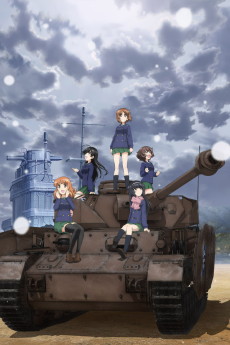
Then there’s Girls und Panzer, where Tactical Warfare isn’t about map control—it’s about Oarai’s tank crew screaming coordinates over radio static while smoke drifts across a sunlit field, their voices fraying at the edges like CS comms during a clutch round. The Competitive Spirit here is deeply communal: no lone wolf heroes, only overlapping shouts, split-second role swaps, and the raw, unfiltered stress of coordinating under fire—exactly like calling out a flank while your teammate yells “HE’S ON YOUR SIX—DON’T LET HIM RELOAD!” Both demand spatial awareness, trust, and the ability to turn panic into precision in real time.
And Hinomaru Sumo—its Action Spectacle lives in the micro-tremor of a wrestler’s knee before the tachiai, the way tension coils in the silence just before impact. That’s CS’s pre-round freeze frame: the quiet hum of the server, the faint clink of gear, the knowledge that in three seconds, everything explodes. Its Competitive Spirit isn’t glory—it’s exhaustion, pride, and the quiet dignity of getting up again, even when your win rate is 42% and your teammate just rage-quit mid-round. Like watching Ushio grit his teeth through a third consecutive loss, then adjust his mawashi and bow—same focus, same refusal to look away.
These aren’t for people who want clean victories or curated narratives. They’re for the ones who keep coming back after being flashbanged into another dimension—not because they crave victory, but because they’re hooked on the intensity of presence: the way your body locks up when the bomb beeps, how your voice cracks yelling encouragement across a laggy mic, the shared, breathless silence right before the final push. They’re for players who’ve typed “good game” after losing 13 rounds straight—and meant it. For viewers who watch sumo matches and feel their own pulse sync with the wrestlers’ breathing. For anyone who’s ever shouted “GO GO GO!” into a headset and felt, for one perfect, chaotic second, like they were part of something bigger than themselves—something alive, unpolished, and fiercely, beautifully human.
→16 Anime That Match the Vibe
Connected through 3 aesthetic dimensions.
Connected through 2 aesthetic dimensions.
Connected through 2 aesthetic dimensions.

Oarai’s underdog tank crew coordinating radio chatter during the final match mirrors CS2’s clutch round where split-second callouts decide victory—both elevate *Competitive Spirit* through raw, unscripted tension. Unlike most sports anime, *Girls und Panzer* treats tank maneuvers like tactical engagements: the Anglerfish Team’s ambush at the ruined factory echoes CS2’s Mirage map rotations—precise positioning, sound-based awareness, and role-specific execution. That shared reverence for disciplined, high-stakes *Tactical Warfare* makes their synergy unexpectedly profound—not as genre hybrids, but as parallel rituals of human coordination under pressure.
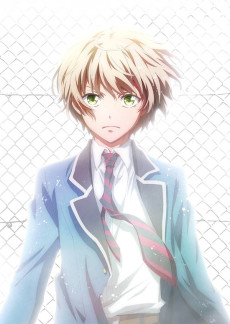
Hotaru Tachibana’s airsoft showdown in the host club’s neon-lit corridor mirrors CS2’s bomb-site tension—both hinge on split-second reads, map control, and reading opponents’ tells under pressure. Unlike most sports anime that glorify raw speed, *Aoharu x Machinegun* treats airsoft with CS2’s surgical respect for economy rounds, recoil patterns, and clutch execution. This shared **Tactical Warfare** DNA makes their resonance startling: one simulates real-world counter-terrorism rigor, the other refracts it through high-school absurdity—yet both demand identical mental discipline.

Ippo’s trembling hands before his first amateur bout—sweat dripping, breath ragged—mirror a CS2 defusal timer hitting 3 seconds: raw nerves crystallized into split-second mastery. Where CS2 demands razor focus amid chaotic gunfights, *Hajime no Ippo: The Fighting!* frames boxing not as brute force but as disciplined, tactical execution—every feint, slip, and counter echoing the map control and clutch reads of competitive Counter-Strike. This resonance isn’t just about 💥 Action Spectacle; it’s how both elevate pressure into poetry—victory earned through repetition, respect, and relentless self-reinvention.
Connected through 2 aesthetic dimensions.
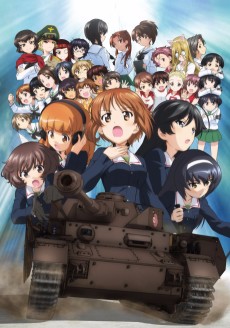
Miho Nishizumi’s calm command during Ooarai’s final, rain-slicked assault on the enemy base mirrors a CS2 clutch—where split-second positioning, map control, and silent coordination trump raw firepower. Unlike most sports anime, *Girls und Panzer der Film* treats tank warfare as tactical chess played at human scale, echoing CS2’s emphasis on precise callouts, economy management, and round-by-round adaptation. That shared dimension—🎯 Tactical Warfare—transforms both a school ship’s deck and Dust II’s bombsite into arenas where discipline, not drama, decides victory.
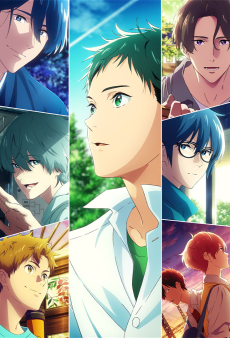
Connected through 2 aesthetic dimensions.
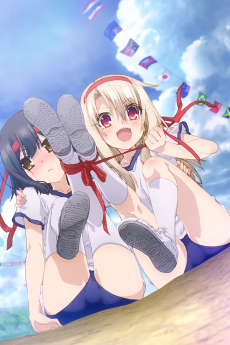
Connected through 2 aesthetic dimensions.

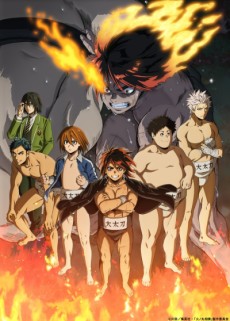

Match Dimensions Explained
❓Frequently Asked Questions
Why does Hajime no Ippo match Counter-Strike 2 so well despite having no guns or bombs?
Because both thrive on razor-thin margins, split-second reads, and relentless competitive pressure—like when Ippo’s ‘Dempsey Roll’ forces him to time every dodge and counter under blinding fatigue, mirroring how CS2 demands perfect peek timing after a flashbang. The score (65) reflects its top-tier alignment with CS2’s ‘Competitive Spirit’ and ‘Action Spectacle’ dimensions—same adrenaline, same consequence.
Is there an anime adaptation of Counter-Strike 2?
No—there’s no official anime adaptation of CS2 (or any Counter-Strike game). But if you’re craving that same high-stakes, team-based tension, Megalobox nails it: Joe’s underground bouts demand map control, role specialization (like CT/T-side roles), and clutch moments—e.g., his final fight against Yuri where every feint, stamina trade, and environmental read feels like a 1v1 retake in Dust II.
How is Girls und Panzer different from Baki Hanma for CS2 fans?
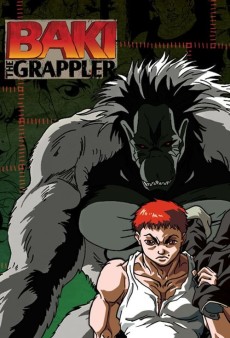
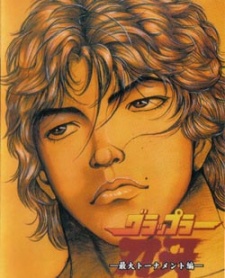
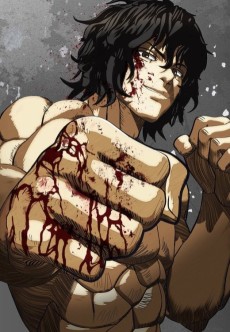
Girls und Panzer leans hard into ‘Tactical Warfare’ (same dimension as CS2’s bomb site rotations and utility callouts), with teams like Ōarai using decoys, flanking routes, and real-time comms—think their ambush at the ruined castle mirroring a perfectly executed Inferno A-site push. Baki, while scoring 60 and sharing ‘Competitive Spirit’, swaps tactics for raw, visceral one-on-one escalation—like Baki vs. Doppo’s brutal clinch exchanges, more like a sweaty, uncoordinated deathmatch than coordinated rounds.
What’s the best anime like Counter-Strike 2 if I just want that ‘screamed at by a 14-year-old while flashbanged’ energy?
Hinomaru Sumo—it’s pure, unrelenting pressure-cooker intensity. When Ushio locks eyes with his opponent in the dohyō, every millisecond counts: grip checks, balance shifts, explosive koten—just like lining up a perfect headshot after smoke and molotov prep. Its 61 score and ‘Action Spectacle’ focus deliver that same ‘one mistake = instant loss’ vibe fans describe in Player Review 1.