
Hajime no Ippo: The Fighting!
Makunouchi Ippo has been bullied his entire life. Constantly running errands and being beaten up by his classmates, Ippo has always dreamed of changing himself, but never has the passion to act upon it. One day, in the midst of yet another bullying, Ippo is saved by Takamura Mamoru, who happens to be a boxer. Ippo faints from his injuries and is brought to the Kamogawa boxing gym to recover. As he regains consciousness, he is awed and amazed at his new surroundings in the gym, though lacks confidence to attempt anything. Takamura places a photo of Ippo's classmate on a punching bag and forces him to punch it. It is only then that Ippo feels something stir inside him and eventually asks Takamura to train him in boxing. Thinking that Ippo does not have what it takes, Takamura gives him a task deemed impossible and gives him a one week time limit. With a sudden desire to get stronger, for himself and his hard working mother, Ippo trains relentlessly to accomplish the task within the time limit. Thus Ippo's journey to the top of the boxing world begins.
📺Anime Details
📝Editorial Analysis
The smell of sweat, liniment, and old leather hits before the first punch lands—just as Ippo stumbles into the Kamogawa gym, still dazed from Takamura’s rescue, his ribs aching, his vision swimming. He blinks up at the hanging heavy bag swaying like a slow, breathing beast; hears the rhythmic thud-thud-thud of gloves on canvas, the sharp bark of Coach Kamogawa’s voice cutting through steam and silence—not as command, but as recognition. This isn’t spectacle yet. It’s threshold. A boy who’s only ever known how to flinch now standing barefoot on sprung wood, heart hammering not from fear—but possibility.
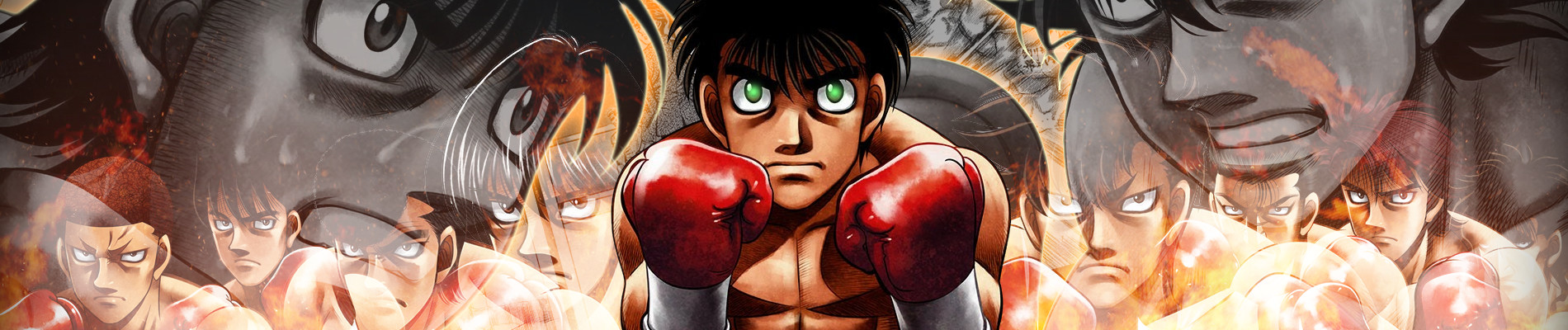
That’s the feeling Hajime no Ippo: The Fighting! lives inside: the quiet, almost sacred weight of showing up, day after day, when no one’s watching except the mirror—and maybe the guy tying your wraps. It’s not about winning titles first. It’s about learning how your own breath syncs with a jab, how exhaustion reshapes resolve, how respect grows not from victory but from witnessing effort. The comedy arrives in the delinquents’ loud posturing, the drama in the tremor of a hand after a loss—but the core is ritual: lacing shoes, shadowboxing under fluorescent lights, the shared silence before sparring begins. You don’t root for Ippo because he’s special. You root because he tries, and tries again, and the gym holds that trying like it’s holy.
Which is why Team Fortress Classic, Quake III Arena, and Unreal Tournament 2004: Editor's Choice Edition vibrate with the same emotional DNA—not because they’re about boxing, but because they’re built on competitive spirit and action spectacle rooted in human scale. Look at the description: “over nine character classes — from Medic to Spy to Demolition Man — enlisted in a unique style of online team” play. That “enlisted” echoes Kamogawa Gym’s roster—not heroes, but roles: the technician (Ippo), the force of nature (Takamura), the strategist (Miyata), the anchor (Aoki). No one wins alone; every kill, every heal, every flank matters because the team relies on the rhythm you build together—just like Ippo learning timing by feeding Miyata’s combos, or Aoki adjusting his guard mid-round because he knows how Ippo pivots. A player says: “simply the best nostalgic game, i have dreams about this game. Ive played this since i was 9…” That devotion mirrors Ippo’s early mornings scrubbing floors—not for glory, but because being in the room, part of the pulse, is enough.
Quake III Arena drops you into an alien coliseum where warriors battle “for the amusement of an ancient alien race”—yet its player review calls it “Exelent game… There are still internet mp game servers out there as of typeing this…” That endurance, that stubborn, decades-deep community pulse? That’s the Kamogawa Gym’s heartbeat across seasons—the same worn floorboards, the same chalked footwork diagrams, the same unspoken vow to return, even after a knockout. The spectacle isn’t cinematic; it’s embodied: the flicker of a rocket jump, the split-second dodge, the way your thumb knows the reload timing before your brain catches up—just like Ippo’s body learning to duck before the thought forms.
And Unreal Tournament 2004: Editor's Choice Edition, with its “ten game modes — both team-based and &q”, carries a review that sighs: “Wish I'd played the storyline version of this at release. Was fun 20+ years later, but would have blown my mind at that time.” That wistful awe—of seeing something raw, immediate, and alive in its moment—is exactly how Ippo feels stepping into the gym for the first time: not dazzled by trophies, but stunned by the aliveness of motion, of consequence, of bodies pushing past their known edges. The “&q” cut-off feels like the anime’s own unfinished breath—because growth isn’t a finish line. It’s showing up, again, with taped knuckles and unblinking eyes.
This pairing sings for the person who keeps their gym bag by the door even when they skip two days, who replays a five-minute demo clip not for the flash, but for the timing, who cries when a side character finally lands their signature move—not because it wins, but because it lands true. They love the weight of repetition, the warmth of shared exhaustion, the quiet pride in a callus earned. Not legends. Workers. Not stars. Team members. Not endings. Rounds.
🎮14 Games That Match the Vibe




Match Dimensions Explained
❓Frequently Asked Questions
Why does Hajime no Ippo: The Fighting! feel so different from Unreal Tournament 2004 even though both are about intense one-on-one combat?
Because UT2004 is pure arena FPS chaos—think dual-wielding shock rifles while dodging rockets as the Onslaught map’s Titan looms overhead—whereas Ippo is grounded, rhythmic boxing with stamina management and clinch mechanics. UT2004’s ten game modes (like Assault and Double Domination) emphasize team-based objective play and map control, not the close-quarters timing, footwork, and psychological reads you get when trading jabs with Miyata in Ippo’s ring.
Is there a Hajime no Ippo anime or manga adaptation that plays like Team Fortress Classic?
No—but TFC *feels* like the spiritual cousin: imagine if Ippo’s gym buddies were reimagined as TFC’s nine distinct classes—Takamura as the aggressive Heavy Weapons Guy laying down suppressive fire, or Kimura as the sneaky Spy backstabbing mid-round. The competitive spirit and team-role synergy (Medic healing while Scout zips ahead) mirror how Ippo’s story hinges on trust, specialization, and coordinated sparring—not solo heroics.
Quake III Arena vs. Unreal Tournament: which one captures the 'gladiatorial spectacle' vibe of Hajime no Ippo better?
Quake III Arena wins for raw, stripped-down intensity—its no-frills deathmatch arenas (like Q3DM17’s symmetrical layout) force split-second movement reads and weapon-swap precision, just like Ippo’s clinch-to-counter sequences against Sendo. UT games add more flash (Titans, vehicles, scripted events), but Quake’s alien coliseum setting and relentless frag-fest—‘summoned to battle for the amusement of an ancient race’—hits closer to the mythic, high-stakes weight of Ippo’s title fights.
What’s the best ‘Hajime no Ippo-like’ game if I want that nostalgic, late-90s competitive rush—no tutorials, just jump in and earn respect?
Unreal Tournament: Game of the Year Edition—the 1999 original. It’s got that same ‘show up, grab a flak cannon, and prove yourself’ energy as Ippo stepping into his first amateur bout at Korakuen Hall. Player reviews call it ‘the undisputed 1999 Game of the Year,’ and its bare-knuckle frag-fest (no hand-holding, just pure skill and map knowledge) mirrors how Ippo earned his stripes through relentless, unvarnished sparring—not cutscenes or XP bars.