
AudioSurf
Ride your music. Audiosurf is a music-adapting puzzle racer where you use your own music to create your own experience. The shape, the speed, and the mood of each ride is determined by the song you choose.
🎮Game Details
💬What Players Say
"I, personally, find Audiosurf 1 to be superior to the second game. Despite its godawful UI, unskippable menu animations, crashing, and flashbanging white screens, I genuinely prefer the feeling of the gameplay over Audiosurf 2. Unfortunately, it is plagued by a handful of issues if you intend to play this game via Proton: - Frequent crashes...."
"This game is timeless. I always come back to it because the music mapping is so good. Definitely still worth buying 18 years later...."
"Wonderful game! I mean... what more can I say?..."
📝Editorial Analysis
The white screen flashes—blinding, sudden, unskippable—then vanishes. You’re already moving: a grid of colored blocks surging toward you like a wave pulled from your own playlist, your headphones tight, 1Stp Klosr swelling in your ears as the track’s tempo tightens your chest and the rails bend just so, pulling you into its rhythm. That’s AudioSurf: not a game you load, but a sensation you step into—raw, personal, slightly unstable, humming with the electricity of your own music made visible, tactile, alive. It crashes sometimes. The UI stutters. But none of that matters when the waveform becomes terrain, when bass drops carve valleys and high hats spark clusters you must ride—not just click, not just react, but flow.
What makes it unique isn’t the puzzle-racer hybrid label—it’s the intimacy. You don’t choose a level; you choose a song you’ve cried to, danced to, or replayed at 3 a.m. The game doesn’t interpret music abstractly—it listens, then builds a world from it: density, mood, rise and fall—all translated into speed, block placement, color saturation, and spatial tension. It feels like synesthesia made playable: sound becomes motion, emotion becomes topography. There’s no story, no character arc—just you, your taste, your history with that track, and the quiet, fierce joy of matching yourself to it, again and again. It’s healing not because it soothes, but because it validates: your music isn’t background noise—it’s the architecture of your experience. It’s slow life not in pace, but in presence—each run is a focused, almost meditative surrender to a single sonic moment.
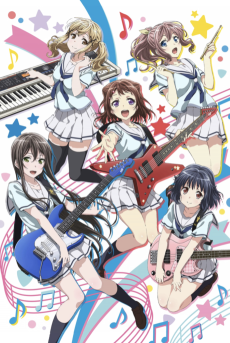
That emotional DNA—Music & Idol, Healing & Slow Life—is why BOCCHI THE ROCK! fits so precisely. Not because Hitori plays guitar on rails, but because both hinge on music as vulnerability made visible: her shaky fingers on strings echo the player’s split-second choice to grab a red block mid-drop, heart pounding, knowing one mis-tap unravels the flow. The show’s quiet triumphs—her first full solo, the warmth of shared rehearsal space—mirror the unfair-but-never-unfair challenge in AudioSurf: difficulty that respects your growth, never mocks your stumble. And when Bocchi finally locks into rhythm with her band? It’s the same euphoric release as nailing a cascade of notes in 1Stp Klosr—not perfection, but alignment.
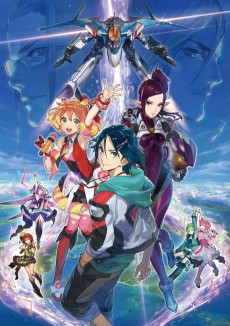
Love Live! School Idol Project shares that same sacred trust in collective musical intention. The girls don’t just perform—they build worlds with sound: practice rooms humming with possibility, school rooftops turned into stages, every harmony a tiny act of courage. Like AudioSurf, their energy isn’t flashy spectacle—it’s density of feeling, translated into movement, timing, color. When μ’s sings “Snow Halation,” the shimmering synths aren’t just pretty—they’re terrain, guiding emotion like AudioSurf’s light trails guide your hands. Both understand that healing isn’t passive rest—it’s the exhilarating exhaustion of giving everything you have to something you love, then landing softly, breathless, surrounded by resonance.
And K-ON!: Live House!—that gentle, sunlit pulse—mirrors AudioSurf’s quiet magic most tenderly. No grand stakes, no villains—just four girls tuning guitars in a cluttered room, laughing between takes, finding joy in the loop: chord progression, shared glance, the way Yui’s strum syncs with Mio’s bassline. That’s the same loop that keeps players returning 18 years later—not for mastery, but for return: the comfort of slipping back into a familiar song’s shape, trusting the game (like the band) to hold space for your presence, your pace, your softness. The UI might glitch. The white flash might blind you. But then the music swells—and everything else dissolves into flow, recognition, home.
This pairing speaks to the person who saves playlists like love letters—who replays a chorus until it stops hurting and starts holding them—who finds transcendence not in epic battles, but in the exact second a synth line lifts, a guitar bends, or a block cluster aligns just right. They don’t need lore dumps or cutscenes. They need resonance. They need music that moves them—literally, emotionally, physically. They’re the ones who’ll pause BOCCHI THE ROCK! to hum along, then boot up AudioSurf, pick “Rookie” or “Guitar Hero,” and ride the wave—not to win, but to remember how it feels to be perfectly, quietly, yours*.
→109 Anime That Match the Vibe

Hitori’s trembling fingers hovering over her guitar strings—then finally strumming alone in her room—mirrors the solitary, self-paced intensity of AudioSurf’s first solo run on a quiet, melancholic track. Unlike most rhythm games or band anime, both center healing & slow life not as passive rest, but as active, sensorially rich reclamation of control: one through personalized soundscapes, the other through incremental, music-fueled courage. That shared intimacy—where volume, tempo, and vulnerability sync to *your* breath—is quietly revolutionary.

A sun-dappled rooftop rehearsal in *Love Live!*—where Honoka’s breath hitches mid-chorus as the girls sync their steps to a homemade backing track—mirrors the visceral thrill of *AudioSurf*’s “Ride Your Music” mechanic, where tempo shifts and emotional peaks physically reshape the track. Unlike most rhythm games or idol anime, both anchor 🌻 Healing & Slow Life not in stillness, but in active, embodied listening: one through communal vocal harmony, the other through solo, kinetic translation of personal playlists. That shared trust in music as tactile, transformative terrain—rather than mere background—is quietly radical.

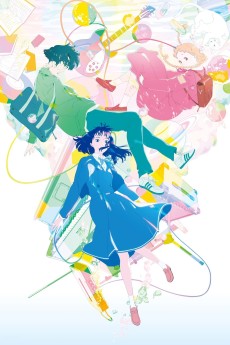
Mahiru sketching under neon lights while Kano hums a half-remembered idol song mirrors Audiosurf’s core alchemy: turning personal audio into tactile, flowing terrain. Where the game transforms BPM and spectral density into color-saturated rails, *Jellyfish Can’t Swim in the Night* renders Shibuya’s quiet streets as slow-motion emotional waveforms—each step, each hesitation, resonating with the same 🌻 Healing & Slow Life pulse that makes a melancholic track bloom into a serene, navigable landscape. It’s startling how both treat music not as backdrop but as architecture for fragile self-discovery.

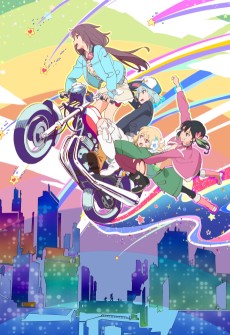
Uchiura’s sun-dappled harbor glides past Ako’s bicycle in *Love Live! Sunshine!!*’s opening—just as AudioSurf’s rails curve and pulse to the tempo of “Aqours☆Story,” mirroring how both transform personal music into embodied, flowing motion. Unlike most idol media that stages performance as spectacle, this season roots musicality in daily ritual: practicing on the pier, singing while cooking, letting emotion shape rhythm—not vice versa. That shared 🌻 Healing & Slow Life dimension makes their resonance surprising: one is a solo, algorithmic ride through sound; the other, a group’s tender, grounded pursuit of joy—yet both treat music as terrain to move *through*, not just perform.

Connected through 2 aesthetic dimensions.

Connected through 2 aesthetic dimensions.

Connected through 2 aesthetic dimensions.

Connected through 2 aesthetic dimensions.
Connected through 2 aesthetic dimensions.
Connected through 2 aesthetic dimensions.



























































































Match Dimensions Explained
❓Frequently Asked Questions
Why does BOCCHI THE ROCK! match AudioSurf so well?
Because both revolve around raw, personal musical expression—like when Ryo plays that blistering solo in Episode 12 while the camera swirls like a beat-synchronized rail ride, mirroring how AudioSurf maps your song’s energy into color, speed, and flow. The show’s intimate focus on music-as-emotion (e.g., Hitori’s anxiety dissolving into rhythm during ‘Koi Koi Koi’) echoes how AudioSurf turns *your* playlist into a visceral, reactive experience—no two rides feel the same, just like no two performances in BOCCHI hit the same emotional frequency.
Is there an anime adaptation of AudioSurf?
Nope—AudioSurf has never been adapted into an anime. But the closest spiritual cousins are all in the match list: Love Live! School Idol Project and Love Live! Sunshine!! nail that same euphoric blend of synchronized performance, real-time energy shifts, and crowd-reactive pacing—like when μ’s launches into ‘Snow Halation’ and the stage lights pulse *with* the beat, just like AudioSurf’s blocks surge and recede based on your track’s waveform.
How does Jellyfish Can’t Swim in the Night compare to K-ON!: Live House! for AudioSurf vibes?
Jellyfish leans into melancholy, introspective rhythm—think Miku’s quiet piano practice scenes where silence and timing carry weight, much like how AudioSurf slows to a crawl on ambient tracks or swells with tension before a chorus drop. K-ON!, meanwhile, mirrors AudioSurf’s joyful, high-energy flow: that chaotic but perfectly timed live house jam in Episode 22? It’s pure AudioSurf chaos—tight timing, overlapping melodies, and zero wasted motion—just like chaining purple blocks on a fast-paced J-pop track.
What’s the best anime like AudioSurf for when I need a calming but immersive music fix?
Go straight to Love Live! Sunshine!!—especially the beachside rehearsals in Episodes 8–9 where the waves sync subtly with the backing track, and You’s voice floats over gentle guitar arpeggios like AudioSurf’s slow-motion glide mode. It captures that same healing-yet-immersive feeling: no frantic pressure, just you, the music, and a world shaped entirely by its ebb and flow—exactly how AudioSurf feels when you load up a mellow acoustic playlist and let the rails carry you.