
Symphogear GX
📺Anime Details
📝Editorial Analysis
The stage lights hit like a physical blow—blinding white, then searing gold—as Hibiki Tachibana shatters the sky. Not with brute force, but with sound: her voice cracking open the atmosphere like glass, her Symphogear flaring in synchronized pulse with the bassline of “Glorious Breakthrough,” light and music folding into one impossible vector of will. Her feet don’t touch the ground—not really. She rides the resonance, every leap timed to a snare hit, every slash synced to a cymbal crash, her body both instrument and weapon, her grief and joy vibrating at the same frequency as the city’s collapsing skyline. That’s not spectacle. That’s sacrament.
What Symphogear GX makes you feel isn’t just adrenaline—it’s transcendence through collective voice. Not metaphorical. Literal. The show treats music as physics: frequencies that bend spacetime, harmonies that reweave identity, choruses that reboot reality. It’s mythic alchemy dressed in glitter and gear—gods aren’t distant; they’re recorded, sampled, remixed, resurrected in a girl’s scream. The urban fantasy isn’t backdrop—it’s charged air, thick with the static of broadcast signals, emergency sirens, and the raw, unfiltered tremor in Miku’s throat when she sings backup mid-battle. You don’t watch it—you tune in, your own pulse syncing, your breath catching on the same suspended eighth note before the chorus detonates. It’s urgent, devotional, and fiercely communal—every henshin a shared prayer, every ensemble fight a choir in motion.
That emotional DNA thrums in AudioSurf’s core mechanic: you ride your music. Not a preset track, not a scripted sequence—your playlist, your emotional archive, rendered into rails, walls, and speed. The game doesn’t adapt to rhythm—it reveals what’s already there in your library: the swell of a ballad becomes a slow, luminous ascent; a punk anthem turns the track into jagged, staccato cliffs. A player admits it’s “godawful” in UI—but calls it superior to its sequel because that raw, unpolished interface doesn’t get between you and the feeling. Just like Symphogear GX, where clunky exposition or sudden lore dumps never break the spell—they’re part of the ritual, like tuning an instrument before the main set.
Hi-Fi RUSH lands even closer: music isn’t just score—it’s combat language. Every enemy stagger, dodge, and combo is locked to the beat, yes—but more crucially, to the emotional arc of the song. When the bass drops, time slows not for effect, but for recognition: this is the moment the protagonist chooses hope over despair, just as Hibiki chooses to sing through her trauma instead of silencing it. The game’s “Action Spectacle” dimension isn’t about flash—it’s about embodied syncopation, where your thumbstick movements become dance steps, your button presses become vocal fry or vibrato. You don’t control the character—you conduct them, same as the Symphogear wielders conduct their own resonance fields.
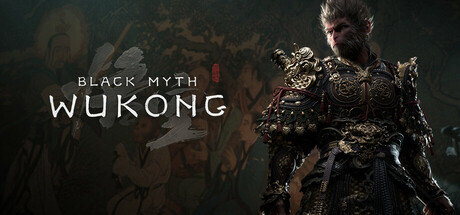
And then there’s Black Myth: Wukong, where mythology isn’t costume—it’s infrastructure. The game’s “Mythology & Folklore” dimension mirrors Symphogear GX’s treatment of ancient texts not as dusty relics, but as active code: the Huaguang Dadi isn’t just a boss—he’s a corrupted subroutine in the world’s operating system, his powers glitching reality like a corrupted audio file. The anime’s alchemical motifs—mercury, sulfur, salt—aren’t symbolic; they’re functional components in a celestial circuit board. Both works treat myth as technology, belief as power source, and transformation as system update. When Wukong shapeshifts mid-air, it’s not magic—it’s overclocking. When Chris activates her Gear, it’s not just armor—it’s firmware loading.
This pairing isn’t for fans of “cool fights” or “pretty girls singing.” It’s for the person who’s ever cried listening to a song they made themselves play in a game—because the melody was theirs, the timing theirs, the catharsis theirs. It’s for the viewer who watches Hibiki’s final solo not as victory, but as reintegration: voice, gear, memory, and city all snapping back into harmonic alignment. It’s for anyone who’s felt their heartbeat sync to a bassline and realized—this isn’t just sound. This is how I breathe.
🎮30 Games That Match the Vibe












Match Dimensions Explained
❓Frequently Asked Questions
Why does Symphogear GX feel so much like Hi-Fi RUSH during the final battle with Tsubasa?
Because both lean hard into 'music-as-weapon' spectacle: in Hi-Fi RUSH, Chai’s entire combat rhythm syncs to the beat while dodging lasers and smashing enemies mid-chorus—just like Tsubasa’s ‘Crimson Lotus’ sequence where her Gear pulses with every guitar riff and vocal swell. The shared 'Music & Idol, Action Spectacle' dimension means choreographed timing, visual feedback tied to audio peaks, and zero downtime between song drop and explosion.
Is there a Symphogear GX anime adaptation of AudioSurf?
No—AudioSurf is purely a game (no anime, manga, or official adaptation), but its core DNA *does* echo Symphogear GX’s vibe: you literally ride your own playlist like Hibiki riding 'Glorious Breakthrough' on a neon rail, with color-coded blocks and tempo-driven jumps mirroring how Symphogear’s songs trigger gear transformations and beam barrages.
How does Prince of Persia compare to Symphogear GX for emotional, romance-driven action?
Prince of Persia nails the 'Romance & Shoujo, Action Spectacle' angle—think tender rooftop confessions amid gravity-defying acrobatics—while Symphogear GX leans into idol-energy and found-family bonds during battles like the 'Heavenly Host' arc. Both use slow-motion leaps and wind-swept hair as emotional punctuation, but PoP trades synchronized singing for whispered vows mid-backflip.
What’s the best Symphogear GX-like game if I want mythic scale + musical intensity without idol tropes?
Black Myth: Wukong—it swaps idol stages for Mount Huaguo’s crumbling temples and replaces pop choruses with thunderous guqin motifs synced to staff combos and celestial beast summons. Its 'Music & Idol, Action Spectacle, Mythology & Folklore' triple-dimension gives you that same awe-in-the-battle-feel as Symphogear’s 'Divine War' arc, just swapped out Confucian lore for Taoist grandeur and no mic stands required.