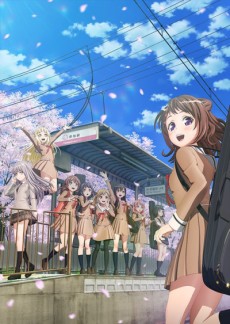
BanG Dream! 2nd Season
📺Anime Details
📝Editorial Analysis
The fluorescent hum of the rehearsal room—guitar strings still vibrating, drumsticks clattering onto the floor, Rimi’s voice cracking mid-chorus as she tries to hit that high note again—and then the sudden, breathless silence when the last chord fades. No applause, no crowd, just five girls leaning against amps, sweat-damp hair stuck to foreheads, laughing because they messed up the bridge twice, but also because they got through it together. That’s not a climax. It’s a comma. A shared exhale. A moment where time doesn’t speed up or slow down—it simply settles, warm and humming, like sunlight pooling on worn wooden floorboards.
That feeling—the quiet, persistent thrum of growth happening in real time—is what BanG Dream! 2nd Season lives inside. Not triumph, not tragedy, but the tender weight of showing up: for practice, for each other, for the stubborn, beautiful act of learning how to be a band while still learning how to be yourself. The CGI isn’t polished glass—it’s slightly imperfect, expressive, breathing. The tsundere edges soften not through grand confessions, but through shared snacks after rehearsal, through silently passing a water bottle, through the way Kasumi’s grin lingers just a beat too long when she catches Rimi’s eye mid-riff. It’s intimacy without pressure, devotion without drama, music as heartbeat, not spectacle. You don’t watch it to escape life—you watch it because it feels like remembering how good it is to stand shoulder-to-shoulder with people who know your off-key notes and love you anyway.
That same gentle, grounding resonance lives in AudioSurf—not in its flashbang crashes or godawful UI, but in its core promise: “Ride your music.” Like the girls syncing breath before a chorus, AudioSurf asks you to hand over your own playlist—the songs that live in your bones—and lets the game shape itself around your rhythm, your mood, your history. The player review calls it “superior” despite flaws because it delivers something rare: healing and slow life, not through pastoral scenery, but through embodied listening. You’re not controlling a character—you’re riding the waveform, trusting the track you chose, letting its rise and fall dictate your path. It’s the anime’s rehearsal room translated into motion: personal, tactile, quietly reverent toward sound itself.
Then there’s The Sims™ 4, flawed and expensive as players complain—“awful,” “insanely expensive,” “barely any fun without DLC”—yet still holding space for healing & slow life and romance & shoujo. Like BanG Dream! 2nd Season, it thrives in micro-interactions: the way a Sim pauses to strum guitar on their porch at dusk, the quiet pride in leveling up a skill after repeated, unglamorous tries, the slow-burn friendship that deepens over shared meals and silly dance moves. Neither demands heroism. Both reward presence. The anime’s band practices mirror Sims’ skill-building—no cutscenes, just the satisfying click of progress earned minute by minute, relationship by relationship.
And Stardew Valley, where the player admits “Spent the first 2 years trying to do everything and never having enough time,” captures the same gentle exhaustion and stubborn joy. The anime’s girls juggle school, part-time jobs, family expectations, and rehearsals—not with superheroic efficiency, but with tired eyes and determined hands. Stardew’s “constant running around” isn’t frantic—it’s purposeful, like Rimi rushing from class to the shop to pick up new strings, or Tae biking home under streetlights, headphones on, humming the chorus she’ll teach tomorrow. Both understand that healing isn’t passive rest—it’s the rhythm of small, chosen commitments, the warmth of soil you’ve tended, the chord you finally nail after thirty takes.
This pairing isn’t for fans of epic battles or world-saving stakes. It’s for the person who replays the same 30-second guitar solo until it feels right. For the one who saves a game just to watch their Sim water flowers at dawn. For the listener who presses play on a song not to hear it, but to be held by it. It’s for anyone who’s ever felt the quiet, radiant certainty that this—the shared laugh after a mistake, the weight of a well-worn instrument strap, the soft glow of a screen at midnight while riding a favorite track—isn’t filler. It’s the point.
🎮10 Games That Match the Vibe






Match Dimensions Explained
❓Frequently Asked Questions
Why does AudioSurf keep showing up in 'games like BanG Dream! 2nd Season' lists when it’s not even a rhythm idol game?
Because BanG Dream! 2nd Season leans hard into music-as-emotion — think Rimi’s solo performance at the Tokyo Dome where the lighting, tempo shifts, and crowd sync feel *alive*. AudioSurf taps that same visceral, personal connection: your own playlist literally shapes the track’s color, speed, and flow — like riding Rimi’s guitar solo as a neon river. It’s not about idols on stage, but it *feels* like channeling their energy through your music.
Is there an anime or manga adaptation of Prince of Persia that explains why it’s grouped with BanG Dream! 2nd Season?
No — Prince of Persia has no anime or manga tie-in. But fans love how both BanG Dream! 2nd Season and Prince of Persia (2024) use slow, lyrical pacing to build emotional intimacy: like watching Kasumi quietly rehearse under cherry blossoms *or* the Prince tracing ancient murals in silence before a sandstorm hits. That shared ‘Healing & Slow Life’ + ‘Romance & Shoujo’ vibe — quiet longing, tactile worldbuilding, gentle character moments — is why they match, not licensing.
How does Stardew Valley compare to BanG Dream! 2nd Season for someone who just wants that warm, low-stakes band practice vibe?
Stardew’s not about performing — but its ‘Healing & Slow Life’ core nails the *feeling* of BanG Dream!’s quieter scenes: think practicing with Poppin’Party in the old clubroom after school — no pressure, just coffee, off-key humming, and sunlight through dusty windows. You’ll plant crops like you’d tune a bass, chat with Leah like you’d debrief with Ako post-rehearsal, and slowly build something tender without deadlines or judgment.
What’s the best BanG Dream! 2nd Season-like game if I’m craving that specific mix of romantic tension and chill daily life — like Kasumi and Rimi’s rooftop scene or Tae’s shy confession at the shrine?
The Sims™ 4 (especially with base-game romance + custom content) is your best bet — not for idol mechanics, but for crafting those exact soft, intimate moments: imagine setting up a rooftop garden at sunset, having two Sims share tea while jazz plays softly, then building chemistry through small gestures — just like Kasumi brushing Rimi’s hair back mid-conversation. It mirrors BanG Dream!’s ‘Romance & Shoujo’ + ‘Healing & Slow Life’ dimensions without needing cutscenes or canon.