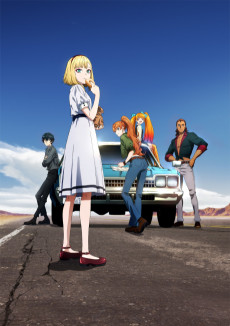
takt op.Destiny
Music is the light that illuminates people's hearts-- and that "light" was suddenly taken from the world. The world changed the night the black "Kuroya Meteorite" fell. Grotesque monsters known as D2 emerged from the meteorite and began to overrun the land and people. As the D2 were drawn to melodies people played, eventually "music" itself became taboo.
However, those who opposed the monsters appeared. They the "Musicart," girls who draw power from music. They possess the great operas and musical scores of humanity history and use them to defeat the D2.
(Source: Crunchyroll)
📺Anime Details
📝Editorial Analysis
The first time Lily raises her violin under the rain-slicked ruins of New York, bow trembling not from fear but from the sheer, unbearable weight of memory—her fingers remembering a melody her mind refuses to name—that’s when the world tilts. Not with spectacle, but with silence: the D2 pause mid-lunge, their obsidian forms catching fractured light like broken mirrors, while the city’s last streetlamp flickers and dies—not from power loss, but because the sound itself has become a wound in reality. That moment isn’t about saving the world. It’s about a girl playing a lullaby she can’t recall, for a boy who hears it like a heartbeat he forgot he had.
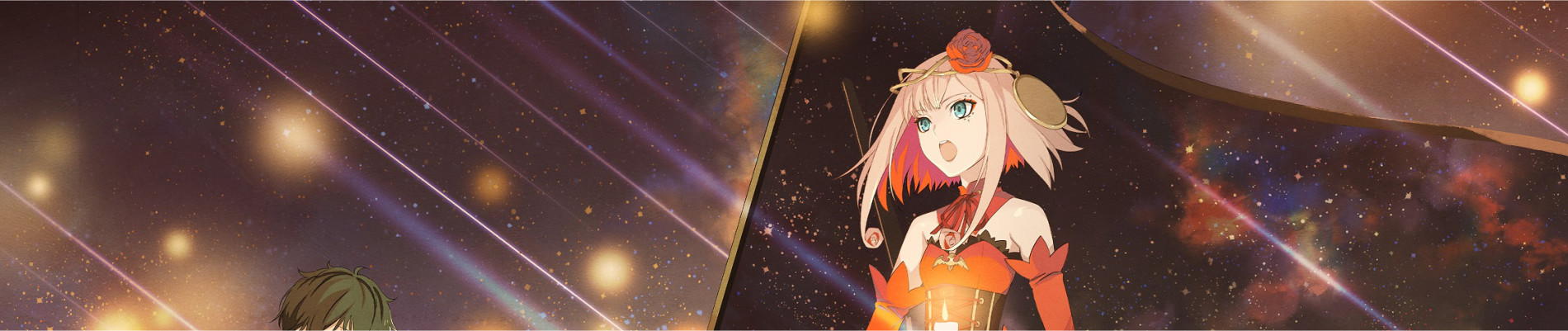
What makes takt op.Destiny ache so deeply isn’t its post-apocalyptic scaffolding or even its henshin-powered Musicarts—it’s the sacred exhaustion of beauty surviving in a world that criminalizes it. Music here isn’t background; it’s oxygen, weapon, scripture, and scar tissue all at once. You feel the tremor in Takt’s hands as he conducts not an orchestra, but a dying language. You taste the metallic tang of dust in abandoned concert halls where sheet music curls at the edges like burnt petals. This is urban fantasy stripped bare: no grand prophecies, just two people trying to hold a single note aloft while the ground dissolves beneath them. It makes you think about what persists when function collapses—how a Chopin nocturne can be both rebellion and requiem, how grief and devotion sound identical when played in minor keys.
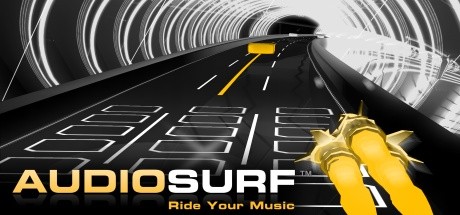
That same fragile, luminous tension lives in AudioSurf—not in its chaotic UI or crashes (as one player bluntly notes), but in its core alchemy: riding your own music. Like Lily channeling symphonies into physical force, AudioSurf transforms personal playlists into terrain—melody dictates speed, rhythm sculpts rails, dynamics shape danger. A mournful cello line becomes a slow, sinking descent; a staccato violin passage erupts into razor-sharp spikes. It’s not spectacle for spectacle’s sake—it’s embodied listening, where your emotional response to a song literally steers you through chaos. When the review calls it “superior” despite its flaws, it’s praising that raw, unfiltered connection: music as navigation, as identity, as lifeline.
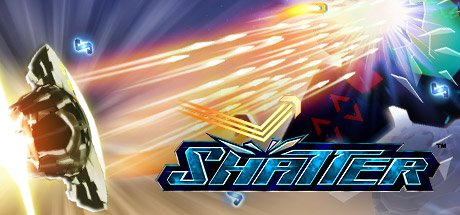
Then there’s Shatter, whose retro brick-breaking surface hides something quieter: precision as prayer. The description calls it “retro-inspired” with “unique twists,” and the player nails it—“the concept is simple but mastering it is difficult… fun even when you don’t have it mastered.” That’s Takt and Lily in microcosm. Every block shattered is a D2 repelled; every perfectly timed paddle bounce echoes Takt’s split-second baton flicks, Lily’s breath-held vibrato. There’s no story text, no exposition—just physics, timing, and consequence. The emotional resonance isn’t in narrative, but in rhythm-as-resistance: the quiet triumph of sustaining flow against entropy, of making order sing, even if only for eight seconds.
And Chains, though it looks like casual bubble-linking, carries the anime’s understated gravity. Its description frames it as “relaxing” yet “increasingly difficult physics-driven” challenge—and the player compares it to Connect 4, emphasizing linking as the core act. In takt op.Destiny, connection is everything: Lily’s amnesia fractures her ties to self and past; Takt’s role isn’t to fight, but to conduct, to bind melody to motion, emotion to action. Chains asks you to create chains—not just of color, but of continuity. Each cleared set is a tiny restoration, a refusal to let fragments scatter. That’s the show’s quietest tragedy and its softest hope: not victory, but linkage, however temporary.
This pairing isn’t for fans of “music-themed” things. It’s for the person who’s ever cried to a recording they couldn’t name, who’s practiced a phrase until their fingers remembered what their heart forgot, who understands that devotion sounds like a slightly off-key hum in an empty apartment. It’s for the listener who hears a cello and feels vertigo—not because the note is wrong, but because it’s true.
🎮16 Games That Match the Vibe


Match Dimensions Explained
❓Frequently Asked Questions
Why does takt op.Destiny feel so different from Shatter even though both are music-driven action games?
Great question — it’s all about *how* music shapes gameplay. In takt op.Destiny, music is the emotional core of story cutscenes and character arcs (like Takt conducting with Anna in the Berlin concert hall), while Shatter uses music purely as rhythmic feedback for brick-breaking: your shots sync to the beat, enemies pulse with the bassline, and the whole arena lights up like a retro arcade jukebox. They share the 'Music & Idol' dimension, but Shatter leans into kinetic spectacle without narrative weight — no characters named Anna or Destiny, just pure, tight audio-reactive action.
Is there an anime or live-action adaptation of takt op.Destiny like there is for Chains?
Nope — unlike Chains (which has zero adaptations and stays firmly in its cozy, physics-driven bubble-popping lane), takt op.Destiny *already is* an anime (co-produced by MAPPA and Madhouse) — no separate adaptation needed. Chains, meanwhile, is just a quiet match-3 game with no lore or characters beyond its bubbly UI; its player review literally compares it to Connect 4, not a story universe. So if you're craving more takt op.Destiny storytelling, rewatch the anime — or try Strong Bad's Cool Game for Attractive People, which nails that same 'Emotional Narrative + Music & Idol' blend with absurd, character-driven episodes.
How does AudioSurf compare to takt op.Destiny for someone who loves syncing movement to music and emotional highs?
AudioSurf gives you raw, personal control — load your own playlist, and watch the track morph into a neon highway where every chorus spikes the speed and every verse reshapes the path (just like Takt’s baton guiding the orchestra’s swell). It’s got that same 'Music & Idol + Action Spectacle' DNA, but swaps orchestral drama for solo rider intensity. Player reviews even call out AudioSurf 1’s janky charm — unskippable menus and crashes included — which ironically mirrors takt’s tonal whiplash between tender character moments and high-stakes battle sequences.
What’s the best game like takt op.Destiny if I’m in the mood for something melancholic but beautiful, with strong characters and quiet emotional weight?
Chains is your unexpected answer — don’t let the 'match-3' label fool you. It’s built around 'Survival & Crafting' and 'Emotional Narrative', with soft color palettes, deliberate pacing, and physics that make each chain feel like a fragile, thoughtful gesture — much like Anna’s gentle piano motifs or Destiny’s quiet resolve. One player nailed it: 'Reminds me of connect 4 in nutshell', but that simplicity carries real weight, like takt’s quieter scenes in the ruined concert halls. No aliens, no brick-busting — just calm, resonant, character-adjacent feeling.