
Prince of Stride: Alternative
📺Anime Details
📝Editorial Analysis
The air crackles—not with tension, but anticipation: sneakers slap wet pavement at dawn, breath steams in jagged white bursts, and the camera tilts low as a boy leaps—not over a hurdle, not across a track, but sideways off a concrete planter, arms wide, body arcing like a question mark drawn in motion. That’s Prince of Stride: Alternative—not a race toward a finish line, but a shared breath held mid-air, where every landing is a pact, every stumble a recalibration of trust.
This isn’t sports-as-struggle. It’s sports-as-resonance. The show pulses with the quiet electricity of bodies moving in sync—not because they’re identical, but because they’ve learned each other’s cadence: the way one runner flinches before a sharp turn, how another exhales just before a vault, when the anchor’s stride tightens two seconds before acceleration. It’s intimacy forged through repetition, not romance, not rivalry—but the deep, wordless grammar of people who’ve memorized each other’s rhythms. You don’t watch to see who wins. You watch to feel the weight of a hand clapping a teammate’s shoulder after a near-miss, the hush before a relay baton passes, the hum of fluorescent lights in an empty gym where six boys run laps alone, together. It’s warm, urgent, tender—and fiercely alive in its ordinariness.
That feeling finds kinship in games that treat competition not as conquest, but as collaborative pulse. AudioSurf, for instance—where “you ride your music” and “the shape, the speed, and the mood of each ride is determined by the song you choose”—mirrors Stride’s core alchemy: movement as direct translation of internal rhythm. Just as Stride runners don’t sprint against time but with the tempo of their own heartbeat and each other’s footfalls, AudioSurf players don’t race through tracks—they embody them, letting bass drops become gravity shifts, high notes become aerial arcs. A player’s review nails it: “I, personally, find Audiosurf 1 to be superior… despite its godawful UI, unskippable menu animations, crashing, and flashbanging wh…”—that raw, glitchy, deeply personal friction? It echoes Stride’s own imperfect energy—the stumbles, the mis-timed jumps, the way a dropped baton isn’t failure but a shared reset, a breath before the next attempt.
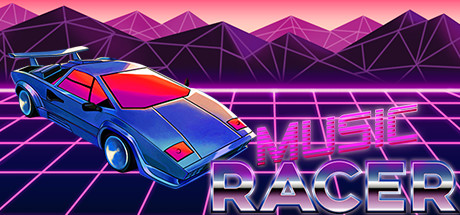
Then there’s Music Racer, scoring equally high (85) on the same dimensions: Music & Idol, Competitive Spirit. No description is given beyond the title and tags—but the pairing itself speaks volumes. “Music Racer” implies velocity shaped by sound, not rules; “Idol” here isn’t celebrity worship, but the shared spotlight—the way Stride’s ensemble cast rotates focus, never letting one hero eclipse the group’s collective glow. Like Stride’s relay exchanges—where no single runner carries the win, but each carries the weight of the others’ belief—Music Racer likely demands timing, harmony, presence. It’s not about being loudest. It’s about being in tune.
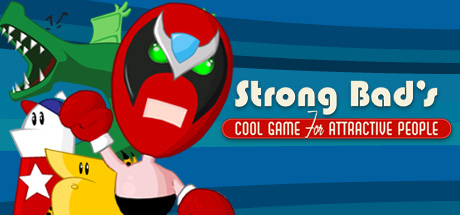
Even Strong Bad's Cool Game for Attractive People: Season 1, with its 82 score on Music & Idol, Competitive Spirit, resonates—not through sport, but through ritualized play. Its description promises “Strong Bad’s wacky comedic adventures over 5 full episodes,” and a player hopes for its return “with the recent remake of Poker Night.” That longing isn’t for nostalgia—it’s for structured absurdity, for rules bent with affection, for competition that’s less about victory and more about how loudly everyone commits to the bit. Stride’s club meetings, its impromptu rooftop drills, its exaggerated cheers—they share that same spirit: the competitive spirit isn’t hostile; it’s playful, almost ceremonial. You compete not to erase the other, but to elevate the game itself.
This pairing sings for the person who cries watching someone nail a parkour sequence not because it’s hard, but because it’s graceful, human, shared. For the player who replays a level in AudioSurf not to beat their time, but to chase the exact moment their favorite chorus lifts them off the ground. For the teen who joins a club not for the trophy, but for the weight of the jersey, the smell of rain on pavement before practice, the unspoken agreement that today, we go faster—together. Not heroes. Not idols. Just six boys, breathing in time, leaping into the same air.
🎮6 Games That Match the Vibe



Match Dimensions Explained
❓Frequently Asked Questions
Why does Prince of Stride: Alternative feel so different from Throne of Lies® despite both having Competitive Spirit?
Because Throne of Lies® leans hard into medieval backstabbing and social deduction—think whispering alliances in a castle hall, not sprinting across rooftops—while Prince of Stride thrives on synchronized team dashes and idol-stage energy. The Competitive Spirit dimension here is about rivalry and performance pressure, not political scheming; Throne of Lies® scores 61 on that axis but pairs it with JRPG Narrative, not Music & Idol like Stride.
Is there an anime or manga adaptation of AudioSurf or Music Racer?
No—neither AudioSurf nor Music Racer has ever been adapted into anime or manga. They’re purely gameplay-driven experiences: AudioSurf lets you ride your own playlist over neon rails shaped by bass drops, while Music Racer turns rhythm into high-speed lane-switching races—both rated 85 for Music & Idol, but zero official tie-ins to anime storytelling.
How does Strong Bad's Cool Game for Attractive People compare to Prince of Stride: Alternative in terms of idol energy?
Strong Bad’s game nails the 'idol' vibe through absurd, self-aware performance—like recording a terrible garage-band music video in Episode 3 ('The King of Town') or lip-syncing badly in a mock talent show—not polished stagecraft, but pure chaotic charisma. It shares Prince of Stride’s Music & Idol + Competitive Spirit combo (score: 82), but swaps athletic choreography for cartoonish improv and fourth-wall-breaking jokes.
What’s the best game like Prince of Stride: Alternative if I want that hype-team-rush feeling without needing my own music library?
Go straight to Music Racer—it delivers that same adrenaline-pumping, team-formation energy as Stride’s relay sprints, but with built-in licensed J-pop and synth tracks so you don’t need to import files. No UI crashes like AudioSurf (which *does* require your own music), and no medieval politics—just clean, competitive rhythm racing where hitting combos feels like nailing a perfect stride pass.