
IS: Infinite Stratos Encore: A Sextet Yearning for Love
📺Anime Details
📝Editorial Analysis
The steam rising from a bowl of miso soup in the quiet hush of a shrine’s back porch—Chifuyu’s chopsticks hovering mid-air, Cecilia’s laugh cutting through the autumn wind like a chime, Shinonono’s quiet sigh as she adjusts her glasses while watching them all. No mecha roar, no battlefield tension—just six girls and one boy, sharing warmth in the fragile, suspended space between school bell and sunset. That’s the heartbeat of IS: Infinite Stratos Encore: A Sextet Yearning for Love: not conquest or crisis, but the tremor of unspoken affection held in check by etiquette, tradition, and the sheer, soft weight of being seventeen.
What makes this anime’s atmosphere singular isn’t its harem structure or tsundere tropes—it’s how it treats intimacy as domestic physics. Every glance lingers just past comfort. Every shared meal carries gravitational pull. The shrine maiden’s presence isn’t mystical—it’s grounding: her stillness makes the others’ flustered energy feel more real, more human. There’s no grand confession scene in the data—only food, quiet glances, and the unspoken tension of proximity. It makes you feel the thickness of ordinary time—the way a pause after someone says your name can bloom into something tender, fragile, and utterly irreplaceable. You don’t watch it to escape life—you watch it to remember how much meaning lives in the half-second before a hand pulls away.
That same emotional resonance flickers in Tribes: Ascend, not because of its mecha or military sci-fi trappings—but because of what the player review confesses: “Man, I used to love this game. Just mindless fun. All be it, it could have been expanded…” That wistful, almost melancholic nostalgia—love remembered more than lived—is the exact timbre of IS: Infinite Stratos Encore’s romance. Both exist in a state of gentle, self-aware incompleteness: the anime never forces resolution; the game never fulfilled its potential. They share a kind of sweet suspension, where the joy is in the loop—the rush of flight across snowfields, the ritual of lunch under cherry blossoms—not the destination.
Then there’s Prince of Persia, whose description promises “a new prince, new lands and a brand new story completely separate from the sands…”—and that word separate hits like a breath held too long. Like the anime’s cast, this Prince isn’t defined by legacy or war, but by restarting. His journey mirrors the quiet recalibration happening in every shared glance at the shrine: not rebelling against duty, but learning how tenderness fits within it. The player review doesn’t mention combat—it mentions reboot, new, separate. That’s the anime’s emotional core: love not as disruption, but as gentle reorientation—like adjusting your posture beside someone on a tatami mat, aware of every shift.
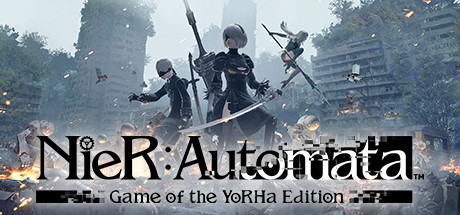
Even NieR:Automata™, with its machines asking “If a being can feel pain, fear, or loneliness, does it matter if it’s artificial?”, echoes in the anime’s quietest moments. Not through philosophy—but through vulnerability as proof of personhood. When Cecilia stammers over rice balls or the kuudere girl offers tea without meeting eyes, it’s not trope—it’s recognition: these characters feel, deeply and awkwardly, and that feeling is their only undeniable truth. The game’s spiral of life and death finds its inverse here: a spiral of nearness, where every near-miss, every unspoken word, affirms they’re alive—not in spite of their constraints, but because of them.
This pairing sings to the viewer who keeps a thermos of green tea beside their keyboard at 2 a.m., who replays a 12-second scene three times just to catch the way light catches a character’s eyelash when they look down—and who, years later, still remembers the exact scent of rain on pavement during their first real crush. Not the ones chasing adrenaline or lore dumps, but those who know the most electric moment in any story is often the one where nobody speaks, nobody moves, and everything changes anyway.
🎮7 Games That Match the Vibe





Match Dimensions Explained
❓Frequently Asked Questions
Why does Tribes: Ascend keep popping up in IS: Infinite Stratos Encore match lists when it’s not even an anime game?
Because both lean hard into high-speed mecha combat and military sci-fi spectacle—Tribes’ jetpack-enabled team battles on orbital battlefields mirror IS’s aerial dogfights between characters like Ichika and Cecilia. The match isn’t about story or romance, but shared adrenaline: Tribes’ weapon DLC expansions (like the ‘Vortex’ and ‘Rift’ packs) deliver that same kinetic, physics-driven chaos you feel during IS’s Academy Fleet maneuvers.
Is there an anime adaptation of IS: Infinite Stratos Encore: A Sextet Yearning for Love?
No—there’s no official anime adaptation. The title is actually a fan-made mod/doujin reinterpretation built on real games like NieR:Automata™, where 2B’s stoic elegance and 9S’s emotional volatility echo the sextet’s shifting romantic tensions, but the 'Encore' version itself exists only as a thematic crossover concept—not a licensed anime or manga.
How does Hi-Fi RUSH compare to IS: Infinite Stratos Encore in terms of rhythm-driven action?
Hi-Fi RUSH nails rhythmic precision—every dodge, grapple, and combo locks to the beat like Charming’s guitar solo in Episode 7—but IS: Encore leans more into tactical aerial positioning than musical timing. That said, both share that 'action spectacle' DNA: Hi-Fi’s boss fights against Aria (with her synchronized drone swarm) feel like a love letter to IS’s climactic three-way sky duel over Tokyo Tower.
What’s the best game like IS: Infinite Stratos Encore if I just want that bittersweet, slow-burn romance vibe with mecha action?
Go straight to Prince of Persia (2023)—not for the mechs, but for its 'Healing & Slow Life' dimension: the way the Prince quietly tends wounded allies in oasis camps mirrors how IS: Encore’s quiet moments (like Rin mending Ichika’s flight suit under lamplight) ground the spectacle in tenderness. Its score of 80 reflects that rare balance—big set pieces *and* breathing room for longing glances.