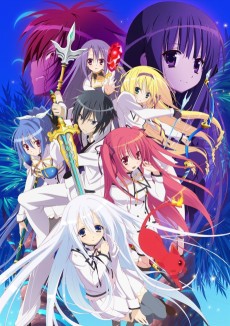
Blade Dance of the Elementalers
📺Anime Details
📝Editorial Analysis
The air smells like wet stone and burnt sugar—right after a lightning strike splits the sky over Lyrule Academy’s training grounds, and Rin stumbles back, her crimson hair plastered to her cheek, breath ragged, bare feet slipping on rain-slicked cobblestone as she raises her sword—not in defiance, but hesitation. Her blade trembles. Not from weakness. From the sheer, unguarded weight of wanting to be seen exactly as she is: fierce, flawed, furious—and terrified of being too much. That pause—half a second where magic flares but doesn’t ignite, where laughter dies mid-chuckle, where a skirt lifts just long enough to expose thigh but no one laughs, no one leers, no one looks away—that is Blade Dance of the Elementalers.
It doesn’t traffic in grand cosmic stakes or brooding prophecy. It pulses with intimacy. Not just romantic intimacy—the slow, awkward calibration of trust between girls who’ve spent lifetimes weaponizing silence—but bodily intimacy: the warmth of shared baths that aren’t titillation but respite, the way a fox spirit curls against a shoulder not for power, but because heat matters more than hierarchy. This is fantasy where magic isn’t abstract force—it’s breath, sweat, blush, the sting of a slap that lands too hard then softens into a hand held too long. You don’t watch it to escape. You watch it to remember how it feels to be sixteen and electrically, painfully alive in a world that keeps demanding you choose: warrior or girl, loyal or free, tender or sharp. The harem isn’t about conquest—it’s about witnessing. Every tsundere flare, every kuudere stillness, every animal companion nudging a palm—they’re all variations on the same question whispered in the quiet between spells: Do you see me? Really?
That’s why Prince of Persia resonates—not because of sand or time-bending, but because of its Healing & Slow Life dimension. The player review calls it “a new prince, new lands and a brand new story completely separate from the sands”—and that separation mirrors Blade Dance’s refusal to inherit trauma as identity. Like Rin choosing not to unleash her full power when rage would be easier, the Prince moves with deliberate slowness: vaulting, pausing mid-air, catching himself on a ledge not for spectacle alone, but to breathe. His action isn’t frantic—it’s rhythmic, almost meditative. The healing isn’t magical restoration; it’s the quiet return of balance after chaos. You feel it in the way he lowers his sword after a fight, shoulders dropping, gaze softening—not victory, but relief. That same relief lives in Blade Dance’s bath scenes, its shared meals, its unspoken glances across sun-dappled courtyards: slowness as resistance, as care.
Then there’s STAR WARS™ Jedi Knight - Jedi Academy™, where the description says you “take on the role of a new student eager to learn the ways of the Force”—and the player review notes how you’re “thrust into a Galaxy-spanning adventure to help…” But the emotional core isn’t the galaxy. It’s the student. The saber hum, the weight of the hilt, the way your first lightsaber duel ends not in triumph but in stumbling, breathless, staring at your trembling hands. Just like Blade Dance, Jedi Academy treats power as embodied learning: failure isn’t shame—it’s the necessary friction of growth. The tactical warfare dim isn’t about strategy grids; it’s about reading an opponent’s stance, adjusting your footwork mid-lunge, recognizing hesitation in their eyes before they do. That’s Rin’s swordplay. That’s Claire’s precise, economical strikes. That’s the tactile grammar of competence earned—not granted.
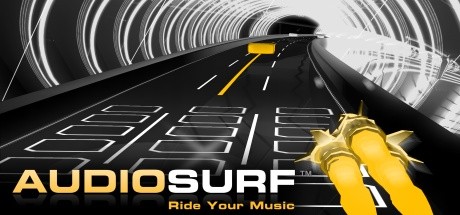
And AudioSurf, with its “music-adapting puzzle racer” where “the shape, the speed, and the mood of each ride is determined by the song you choose”—it shares Blade Dance’s rhythmic vulnerability. The anime’s battles sync to emotional cadence: a sudden swell of strings when a confession nearly escapes, silence stretching taut before a spell detonates, laughter bubbling up right as danger peaks. Like AudioSurf, Blade Dance doesn’t impose narrative—it adapts. It lets feeling dictate pace. The player review admits its UI is “godawful” and it crashes—but calls it superior anyway, because the ride is personal, visceral, inseparable from your music. Same with Blade Dance: its ecchi moments land not through objectification, but because they’re tied to character rhythm—a blush timed to a heartbeat, a stumble synced to a nervous laugh, nudity framed not as exposure but as unselfconscious presence, like skin breathing in sunlight.
This pairing isn’t for fans of “harem tropes” or “anime action.” It’s for the person who rewatched Blade Dance not for the fights, but for the way Elstein’s tail flicks when she’s pretending not to listen—or who played Prince of Persia for the way the camera lingers on the Prince’s hand brushing moss off a ruin wall. It’s for those who crave stories where softness is the hardest skill, where healing isn’t a spell but a choice to lower your guard, and where every sword swing, every lightsaber hum, every note-driven rush, carries the quiet, aching weight of being gloriously, messily, alive.
🎮7 Games That Match the Vibe

Match Dimensions Explained
❓Frequently Asked Questions
Why does Blade Dance of the Elementalers match with Prince of Persia despite having no magic system?
Great question — it’s all about the 'Action Spectacle' + 'Healing & Slow Life' overlap. Like Blade Dance’s intense, fluid swordplay during the Labyrinth Tournament finals (think Kirin’s acrobatic dual-wielding against Rinslet), Prince of Persia delivers cinematic parkour combat and time-bending dodges that feel equally rhythmic and emotionally charged. Both emphasize graceful movement, high-stakes arena-style encounters, and quiet, character-driven downtime between battles — exactly why it scores an 84 on the match list.
Is there an anime adaptation of Blade Dance of the Elementalers that’s worth watching?
Yes — the 2012–2014 TV anime (two seasons) adapts the light novels faithfully through the 'Labyrinth Arc' and 'Festival Arc', with standout scenes like the elemental contract ceremony and the rooftop duel between Ellis and Kamito. While it doesn’t go as deep into tactical team mechanics as STAR WARS™ Jedi Knight - Jedi Academy™ (which lets you customize your Padawan’s Force powers and lightsaber style mid-mission), the anime nails the romantic tension and elemental spectacle fans love — just like how Jedi Academy balances personal growth with galaxy-scale stakes.
How does Blade Dance of the Elementalers compare to Pirates Vikings & Knights II in terms of combat pacing?
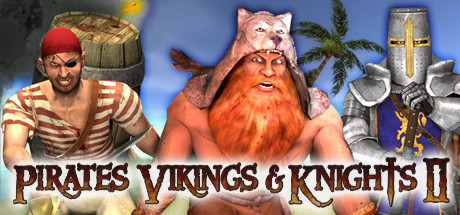
Blade Dance is tightly choreographed and intimate — think one-on-one duels in misty shrines or close-quarters elemental clashes where timing a 'Contract Burst' matters more than raw damage. PVKII, by contrast, is pure chaotic 32-player mayhem: imagine Vikings swinging axes in a muddy tavern brawl while pirates grapple onto ships mid-fight. Both share 'Action Spectacle' and 'Tactical Warfare', but PVKII trades precision for hilarious, physics-driven improvisation — hence its 66 match score and that player review calling it 'very goood' when played on community-run servers.
What’s the best game like Blade Dance of the Elementalers if I want healing vibes and emotional downtime after intense fights?
Go straight to AudioSurf — seriously. Its 'Healing & Slow Life' + 'Action Spectacle' match (72 score) means you get meditative, music-synced flow states (like riding a melancholy piano track through glowing neon tunnels) that mirror Blade Dance’s quieter moments — say, Kamito reflecting under the cherry blossoms with Fianna after a hard-won match. It’s not story-driven, but that soothing rhythm + visual calm hits the same reset button as Blade Dance’s post-battle tea ceremonies or campfire scenes.