
Slow Loop
Nervous to meet her new stepdad, Hiyori heads to the place she always feels at home—the ocean. When a curious girl named Koharu shows up, Hiyori decides to teach her how to fish, just like her father did before he died. But after Koharu reveals she’s also meeting her new family that night, the girls come to a startling realization. Their friendship is about to reach a whole new level!
(Source: Funimation)
📺Anime Details
📝Editorial Analysis
The salt air clings to Hiyori’s skin as she kneels on the sun-warmed dock, line taut, breath held—not in tension, but in stillness. Her fingers rest lightly on the rod, not gripping, just holding space. A gull cries overhead. The water shivers. Koharu sits beside her, small legs swinging, silent except for the soft plink of a pebble dropped into the tide pool below. No dialogue. No urgency. Just two girls watching ripples spread and fade, waiting—not for a bite, but for the quiet to settle deeper.

That’s the heartbeat of Slow Loop: not plot propulsion, but presence. It doesn’t ask you to solve anything—it invites you to unclench. The ocean isn’t a backdrop; it’s a breathing entity—cool, patient, endlessly returning. Fishing here isn’t sport or spectacle. It’s ritual: the coil of line, the weight of the sinker, the way light fractures on wet rope. The grief for Hiyori’s father isn’t shouted—it lives in the way she adjusts Koharu’s grip just so, mirroring how he once did. That tenderness isn’t performative. It’s tactile, unhurried, anchored. You don’t watch Slow Loop to escape life—you watch to remember how it feels to be in your body, barefoot on warm wood, wind lifting a strand of hair, time stretching like taffy pulled slow and warm.
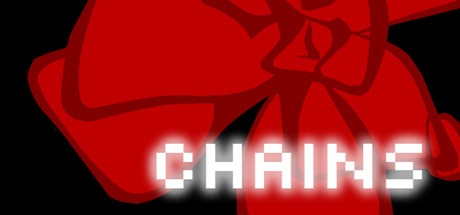
Which is why Chains lands with such uncanny resonance. Its description calls it “a relaxing arcade match 3 casual game” where you “link adjacent bubbles of the same color into chains”—but the player review cuts deeper: “Reminds me of connect 4 in nutshell… link 3 or more… clear enough till you can proceed.” That’s the rhythm: deliberate, tactile, low-stakes connection. No timers blaring, no penalties snapping shut—just the soft pop of alignment, the gentle physics of bubbles settling, the satisfaction of a clean chain forming because you paused, observed, and chose. Like Hiyori showing Koharu how to feel the subtle tug—not force the rod, but listen to the line—you’re not conquering chaos. You’re cooperating with it. The healing isn’t in victory; it’s in the repetition, the micro-ritual of matching, releasing, breathing, repeating. It’s the same kind of embodied calm as winding a reel at dusk.
Then there’s AudioSurf, described as “a music-adapting puzzle racer where you use your own music to create your own experience”—and its player review confesses: “I, personally, find Audiosurf 1 to be superior… despite its godawful UI, unskippable menu animations, crashing, and flashbanging wh…” What survives that friction? The mood. The way a song’s swell becomes a rise in the track, its hush a dip into shadow, its tempo dictating your glide—not your panic. That’s Slow Loop’s emotional grammar too: emotion isn’t narrated; it’s embodied through environment. Koharu’s nervousness before meeting her new family isn’t shown in a monologue—it’s in how she grips her lunch bento tighter, how her eyes dart to the horizon where the ferry will appear. Her relief isn’t a cheer—it’s her shoulders dropping as she watches the water, her breath syncing with the tide. Both AudioSurf and Slow Loop trust sensory translation: grief, hope, belonging—they don’t name them. They let them resonate in the curve of a wave, the pulse of a bassline, the weight of silence between two girls on a dock.
This pairing isn’t for people who crave escalation. It’s for the ones who keep a thermos of green tea just in case they spot a good bench. For the reader who underlines sentences about light falling across a floorboard. For the player who replays the same gentle level of Chains three times—not to beat it, but to feel the bubbles settle again. For the one who loads AudioSurf, picks a song with rain in the piano, and rides the slowest lane just to watch the colors bleed at the edges of the screen. They know healing isn’t loud. It’s the warmth of shared miso soup after a long day fishing. It’s the weight of a well-balanced rod in your palm. It’s the hush right before the bubble pops—and the deep, slow breath you take afterward.
🎮3 Games That Match the Vibe


Match Dimensions Explained
❓Frequently Asked Questions
Why does Chains feel so calming compared to other match-3 games?
Because Chains ditches timers, penalties, and aggressive scoring—it’s all about gentle physics-driven chaining (think linking three blue bubbles near the water’s edge in Level 12, where they ripple softly before clearing). Unlike Candy Crush’s frantic combos, Chains leans hard into its 'Healing & Slow Life' dimension, with soft chimes and unhurried pacing that reviewers say ‘feels like watching sunlight move across a pond’—exactly the vibe Slow Loop fans love.
Is there an anime adaptation of Chains or AudioSurf?
Nope—neither Chains nor AudioSurf has been adapted into an anime. Chains is purely a mobile/PC puzzle game with no narrative characters or lore to adapt, while AudioSurf is built around *your* music library and abstract racer visuals—no story, no cast, just you riding waveform hills to your playlist. Slow Loop’s charm lies in its slice-of-life character moments (like Hiyori teaching Miu to tie fishing knots), which neither game attempts to replicate.
How is Chains different from AudioSurf when it comes to chill vibes?
Chains is pure tactile calm—slow dragging, soft color-matching, zero pressure—while AudioSurf leans into 'Healing & Slow Life' *and* 'Competitive Spirit', meaning even its mellow rides (like cruising through a lo-fi hip-hop track on Easy mode) still have speed shifts, near-misses, and leaderboards. One reviewer called AudioSurf ‘a zen garden with rollercoaster rails’—whereas Chains is just the garden, quietly blooming.
What’s the best game like Slow Loop if I just want to unwind after work without thinking?
Go straight to Chains—it’s the top match for that exact mood. With its 83 score and strong 'Healing & Slow Life' focus, it gives you quiet focus (linking bubbles like Hiyori patiently untangling fishing line), zero notifications, and no fail states—just gentle progression and warm ambient sounds. AudioSurf, while lovely, asks you to curate playlists and react to tempo spikes, making it less ‘blanket-and-tea’ and more ‘headphones-and-intention’.