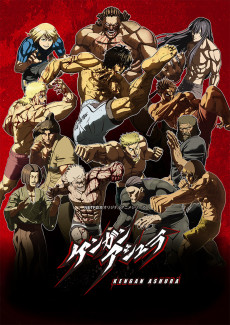
KENGAN ASHURA Part I
Since the Edo periods of Japan, gladiator arenas exist in certain areas. In these arenas, wealthy business owners and merchants hire gladiators to fight in unarmed combat where winner takes all. Toki Taouma, nicknamed "Ashura", joins these arenas and devastates his opponents. His spectacular ability to crush his enemies catches the attention of the big business owners, including the Nogi Group chairman, Nogi Hideki.
(Source: MangaHelpers)
📺Anime Details
📝Editorial Analysis
The roar isn’t from a crowd—it’s the crack of knuckles grinding into jawbone, the wet thud as Toki Taouma—“Ashura”—drops a seasoned fighter like a sack of rice onto blood-slicked arena stone. No music swells. No slow-motion close-up. Just the raw, unbroken rhythm of impact, breath, and silence after the fall. You feel your own pulse jump—not in fear, but in recognition: this isn’t sport. It’s ritual. A brutal, elegant contract between violence and consequence, sealed in sweat and splintered cartilage.
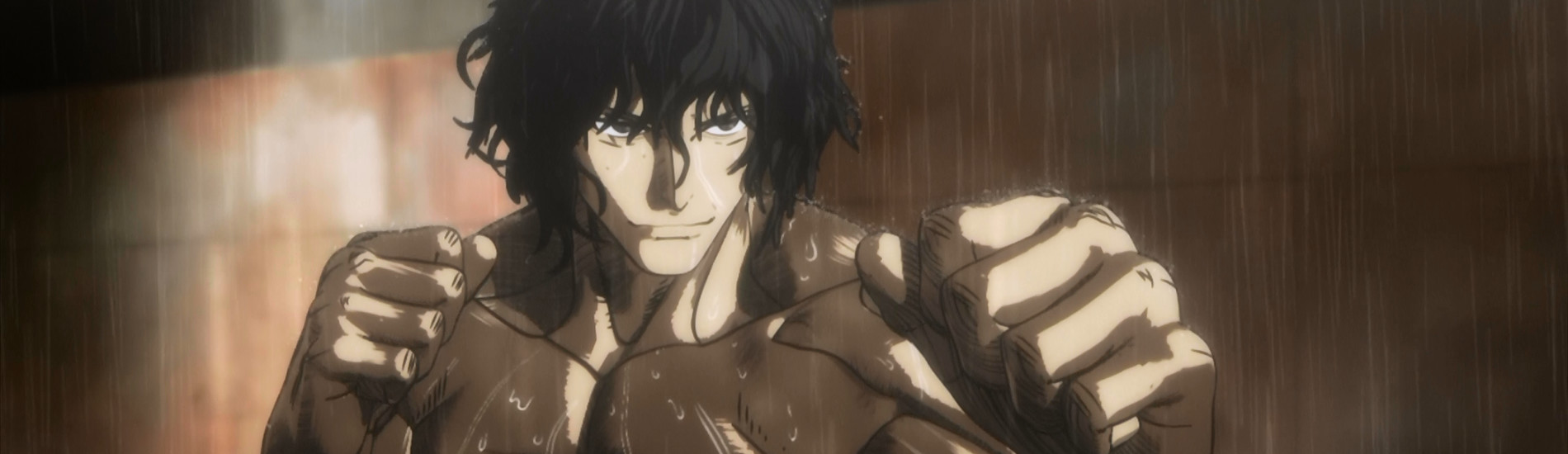
What makes KENGAN ASHURA Part I vibrate at this frequency isn’t its CGI or its revenge plot—it’s the weight of presence. Every fighter enters the ring already carrying history: scars, debts, loyalties carved deeper than muscle. The arena isn’t spectacle for spectacle’s sake—it’s a crucible where men are measured not by titles or trophies, but by how long they stay upright when every bone in their body begs them to kneel. There’s no moral ambiguity here, only clarity: power is real, consequences are immediate, and dignity is earned one devastating blow at a time. It makes you think about legacy—not as something inherited, but as something forged in the space between two fighters’ exhales.
That same electric clarity lives in Team Fortress Classic, where nine distinct archetypes—Medic, Spy, Demolition Man—don’t just occupy roles; they embody irreducible identities locked in perpetual, high-stakes negotiation. Like Ashura stepping into the ring against a veteran who’s fought thirty matches in that same pit, TFC’s classes carry inherited weight: the Heavy’s minigun isn’t just a weapon—it’s a promise of overwhelming force, just as Ashura’s stance isn’t posture—it’s a vow of annihilation. A player’s review nails it: “simply the best nostalgic game, i have dreams about this game.” That’s the resonance—not nostalgia for pixels, but for certainty. For knowing exactly what your role demands, and delivering it with absolute, unflinching commitment.
Then there’s Quake III Arena, where “the greatest warriors of all time and space have been summoned to battle for the amusement of an ancient alien race.” That premise isn’t fantasy—it’s mythic framing, identical to the Edo-era gladiatorial arenas in KENGAN ASHURA Part I, where business titans like Nogi Hideki aren’t mere sponsors—they’re modern-day patrons, watching combatants test the outer limits of human capability. The alien race doesn’t judge morality; neither do the Nogi Group executives. They watch for dominance, for control, for the split-second decision that turns momentum into victory. And the player review echoes that primal thrill: “Exelent game, just smush in ioquake3 and your good to go. There are still internet mp game servers out there…” — proof that, decades later, people still seek that unmediated, high-velocity test of self against other.
Even the fractured legacy of the Unreal Tournament series fits—especially Unreal Tournament 2004, described as combining “the kill-or-be-killed experience of gladiatorial combat with cutting-edge technology.” Ten game modes, team-based or free-for-all—each a different arena, each demanding a different kind of mastery, just as Ashura must adapt his style against a grappler, a striker, a counter-fighter. One reviewer writes: “Wish I'd played the storyline version of this at release. Was fun 20+ years later, but would have blown my mind at that time.” That awe isn’t about graphics—it’s about encountering a system so tightly wound, so alive in its rules and rhythms, that it feels less like software and more like a living contest—one that rewards instinct, memory, and nerve in equal measure.
This pairing sings for the person who watches Ashura land a palm strike that snaps a man’s head sideways—and doesn’t flinch, but leans in, heart pounding not with horror, but with recognition. For the player who boots up Quake III at 2 a.m., not to win, but to feel the clean, lethal geometry of movement and aim click into place like a lock turning. For the one who remembers TFC’s chaotic symphony—the Medic’s scream, the Spy’s knife, the sudden silence before a rocket jump—and knows that noise wasn’t chaos. It was order, expressed in velocity and consequence. These aren’t stories about heroes saving worlds. They’re about men—flawed, focused, terrifyingly present—meeting in the center of the circle, and proving, again and again, that some truths can only be spoken in impact.
🎮26 Games That Match the Vibe



Match Dimensions Explained
❓Frequently Asked Questions
Why does the Kengan Ashura Part I match between Ohma and Kure Raian feel like Quake III Arena?
Because both hinge on lightning-fast, high-stakes one-on-one duels where movement, timing, and weapon mastery (like Quake's rocket jump + railgun combo) mirror Ohma’s explosive footwork and Raian’s precise, overwhelming offense. Quake III Arena’s arena-based, no-health-regen combat—where every second counts and mistakes are punished instantly—captures that same breathless, gladiatorial tension you feel in their rooftop clash.
Is there a Kengan Ashura Part I video game adaptation?
No official Kengan Ashura Part I game exists—but Unreal Tournament: Game of the Year Edition (1999) is the closest spiritual cousin: it’s literally built around elite warriors battling for supremacy in stylized arenas, just like the Kengan matches. Its raw, unfiltered competitive spirit and emphasis on skill over story make it the go-to when fans ask 'Where’s the game version of this tournament?'
Team Fortress Classic vs. Unreal Tournament 2004: which better captures the Kengan Ashura Part I vibe?
Unreal Tournament 2004 wins for pure Kengan energy—it’s all about solo dominance, flashy finishers, and arena-based honor duels (think Ohma vs. Kure), with ten distinct modes including Duel and Assault that mirror the show’s escalating stakes. Team Fortress Classic leans more into chaotic team roles (Medic healing, Spy backstabbing), which feels closer to *Kengan*’s later faction warfare than Part I’s focused, personal confrontations.
What’s the best game like Kengan Ashura Part I if I want that intense, no-nonsense, old-school tournament rush?
Quake III Arena—hands down. It drops you straight into alien-organized deathmatches with zero fluff: just you, your railgun, and opponents who move like fighters trained by Kengan Association masters. As one player put it, ‘There are still internet mp game servers out there as of typing this’—so that relentless, skill-only, sweat-on-the-keyboard tournament adrenaline is alive and kicking.