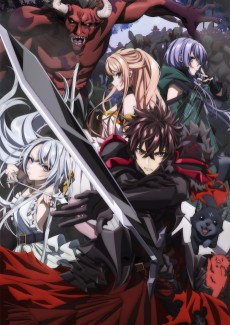
I Got a Cheat Skill in Another World and Became Unrivaled in The Real World, Too
📺Anime Details
📝Editorial Analysis
The first time Renya’s hand burns—not with pain, but with the sudden, searing certainty of a spell igniting in his palm while standing in a sunlit high school hallway—it’s not spectacle. It’s quiet shock. A flicker of gold light pulses beneath his skin like a second heartbeat, and for half a second, the fluorescent hum of the classroom drops out. His breath catches—not because he’s overpowered, but because he remembers. Not the fantasy world’s battles, not the assassins’ whispers, but the sting of being shoved into lockers, the silence after a teacher looked away. That burn isn’t just magic—it’s memory made physical.
What makes I Got a Cheat Skill in Another World and Became Unrivaled in The Real World, Too vibrate at this particular frequency isn’t its harem or swordplay—it’s how relentlessly it ties power to reclamation. Every time Renya deflects a bully’s shove with a shimmering barrier, every time he calms a panicked stray cat with a whispered incantation that feels like breathing again, the anime insists: mastery isn’t escape—it’s returning, fully, to your own life. There’s no triumphant “now I’m strong!” catharsis. Instead, there’s the slow, tender weight of choosing kindness because you’ve known violence, of using time-manipulation magic not to win tournaments, but to rewind a classmate’s spilled lunch tray—just enough to spare their embarrassment. It’s healing, yes—but healing that’s earned through friction, not granted by plot armor. It’s memory as muscle memory, not nostalgia.
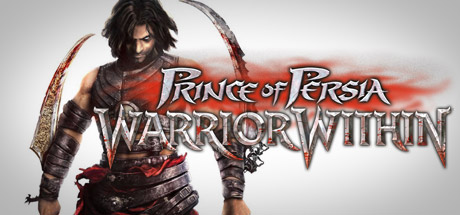
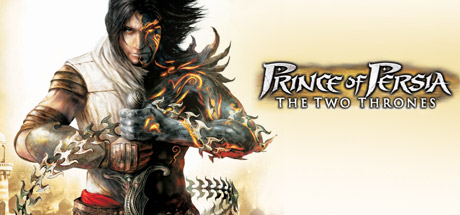
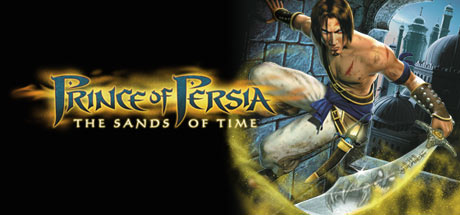
That same emotional architecture lives unmistakably in the Prince of Persia series. Take Prince of Persia: Warrior Within: the Dahaka chase isn’t just a boss fight—it’s a relentless, personal pursuit through time itself, where every corridor echoes with consequences Renya would recognize. The player review calls it “a journey,” and that’s the key: not victory, but endurance. Like Renya walking past the same locker where he was once trapped, now radiating quiet calm instead of flinching—the Prince doesn’t outrun Dahaka; he learns to move with time’s weight, just as Renya learns to hold space for both his fantasy-world reflexes and his real-world shame. Then there’s Prince of Persia: The Two Thrones, where the Prince returns home only to find Babylon “ravaged by war”—a kingdom fractured, much like Renya’s own sense of self before the cheat skill anchored him. The review calls it “one of my best childhood games… still plays great”—that enduring resonance mirrors how the anime treats trauma: not as something to be erased, but as terrain you learn to navigate without losing your way. And Prince of Persia®: The Sands of Time, with its “tactical platforming” and “locked directions” that make every jump *satisfying due to the locked directions, which helps”—that precision, that deliberate, almost meditative control? It’s the exact feeling of Renya casting a spell mid-swing during sword practice: no flashy explosion, just perfect timing, breath held, body remembering what the mind has rehearsed. The game’s “scorched sands” aren’t just setting—they’re emotional topography, just like Renya’s school corridors are lined with ghosts he chooses to walk beside, not flee.
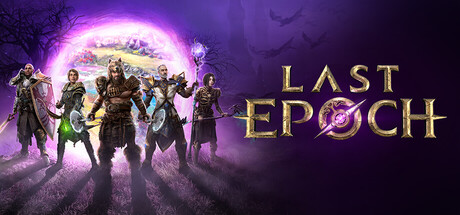
Even Last Epoch, tagged with Time & Memory and Action Spectacle, fits—not because of loot or builds, but because its core loop mirrors Renya’s rhythm: layering past choices (skills, relics, timelines) into present combat with intentional slowness. You don’t spam abilities—you weave them, letting cooldowns breathe, letting memory guide timing. That’s Renya pausing mid-argument with a classmate, not to dominate, but to choose the word that heals instead of wounds.
This pairing sings loudest for someone who’s ever stood in a too-bright hallway, heart pounding—not from fear, but from the sudden, dizzying realization that they remember how to stand straight. Someone who finds poetry in restraint, who feels relief not in explosions, but in the quiet click of a spell stabilizing a trembling hand—or the Prince landing a vault exactly right, breath steady, time bending just enough to let him land on his feet. Not invincible. Just here. Finally, unshakably here.
🎮12 Games That Match the Vibe



Match Dimensions Explained
❓Frequently Asked Questions
Why does the Dahaka chase in Prince of Persia: Warrior Within feel so intense compared to other boss pursuits?
Because the Dahaka isn’t just scripted—it’s a persistent, adaptive stalker that learns your movement patterns and closes in faster the more you die or stall; it’s literally hunting you through crumbling ruins and time-warped corridors, which nails that ‘unstoppable cheat skill’ escalation vibe from the anime. Players still call it 'goated' decades later—just read that review quoting the heart-pounding chase as unmatched in the series.
Is there an anime or game adaptation of 'I Got a Cheat Skill in Another World and Became Unrivaled in The Real World, Too'?
No official anime or game adaptation exists yet—but the *Prince of Persia* trilogy (Sands of Time, Warrior Within, Two Thrones) hits the same core fantasy: a protagonist who gains reality-bending time powers (like rewinding, freezing, slowing) and uses them not just to survive, but to dominate combat and exploration with god-tier precision. That ‘cheat skill’ energy? It’s all there in how the Prince manipulates time mid-swordfight or backflips off collapsing walls.
How is Prince of Persia: The Two Thrones different from Last Epoch for someone who loves overpowered progression?
Two Thrones gives you visceral, cinematic power via the Dark Prince persona—think rage-fueled wall-runs, brutal finishers, and time-rewind combos that make you feel like an unstoppable force in Babylon’s war-torn streets. Last Epoch, meanwhile, leans into deep RPG systems where you build god-tier skills across five classes and timelines—like stacking temporal rifts and memory echoes to erase enemies in seconds. Both score 84 and share ‘Time & Memory’ + ‘Action Spectacle’, but Two Thrones is spectacle-first, Last Epoch is build-obsession-first.
What’s the best Prince of Persia game if I want that ‘calm but secretly overpowered’ vibe—like quietly mastering time while everyone else struggles?
Go straight to *Prince of Persia®: The Sands of Time*. Its rewind mechanic feels like a subtle, elegant cheat—you slip up on a spike trap? Rewind. Mess up a sword parry? Rewind. No fanfare, no cutscenes—just quiet, total control over causality, exactly like the protagonist quietly flexing his cheat skill in low-key real-world moments. That player review even calls out the ‘tactical platforming’ and ‘satisfying locked directions’—it’s mastery disguised as grace.