
Whisper Me a Love Song
📺Anime Details
📝Editorial Analysis
The first time Yori sings alone in the empty music room—just her voice, a single guitar, and the late afternoon light catching dust motes like suspended stars—it doesn’t feel like a performance. It feels like breath returning after holding it too long. Her fingers fumble the chord once. She stops. Doesn’t apologize. Just waits, quiet, until the silence settles around her instead of inside her. That pause—unhurried, unperformed, thick with unspoken weight—is where Whisper Me a Love Song lives.
This isn’t about grand confessions or dramatic confrontations. It’s the tremor in a hand reaching for a shared earphone. The way time stretches when two girls sit side-by-side on a sun-warmed rooftop, not speaking, just being in the same gravity. The anime’s atmosphere is intimacy as atmosphere: soft focus on eyelashes against skin, the rustle of a school uniform skirt on linoleum, the low hum of fluorescent lights during club practice—details that don’t advance plot but deepen presence. It makes you feel tender, not tense. It makes you think about how love isn’t always a destination—it’s the slow, deliberate act of learning to occupy the same emotional airspace without collapsing it.
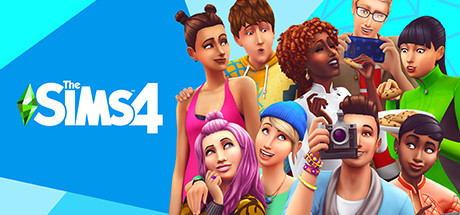
That same tenderness pulses through The Sims™ 4, despite its fractured player reception. The official description invites you to “Play with life and discover the possibilities”—and that’s precisely what Yori and Mio do: they play at being themselves, testing boundaries, building tiny, fragile worlds of shared routines (practicing chords, walking home, choosing matching hair clips). A player review calls TS4 “awful” due to DLC costs and bugs—but even amid that frustration, the core remains: the quiet magic of watching a Sim water a plant, share a laugh over noodles, or sit silently on a porch swing at dusk. Like Whisper Me a Love Song, its power isn’t in spectacle, but in the accumulation of small, unhurried truths.
Then there’s Amnesia™: Memories, which shares Whisper Me a Love Song’s devotion to emotional narrative—not as exposition, but as embodied experience. Its description positions it squarely in Romance & Shoujo and Emotional Narrative, mirroring how the anime treats memory itself: not as data, but as texture. When Yori replays a glance, a half-said sentence, a missed cue—her internal monologue isn’t plot summary; it’s sensory archaeology. The game’s structure, built on fragmented recollection and affective resonance, mirrors how the anime renders teenage longing: less linear story, more visceral echo chamber where a touch lingers longer than dialogue ever could.
Even VA-11 Hall-A: Cyberpunk Bartender Action, with its lower score but identical Healing & Slow Life dimension, resonates in unexpected harmony. Its description frames bartending as listening—not fixing, not solving, but holding space. That’s exactly what Mio does when Yori stumbles over lyrics or hesitates before saying “I like you.” No grand gestures—just sliding a glass of tea across the counter, meeting eyes, letting the silence speak. A player review notes the game’s warmth despite its neon-drenched setting; similarly, Whisper Me a Love Song finds profound safety in the ordinary—the school clubroom, the convenience store, the walk home—spaces made sacred by attention, not aesthetics.
These pairings aren’t for people who want fireworks. They’re for the ones who recognize love in the weight of a held gaze, the warmth of shared headphones, the stillness between heartbeats. They’re for the listener who hears the tremor in Yori’s voice and doesn’t reach for a solution—but leans in, just a little closer, to hear it better. For the player who builds a Sim’s tiny apartment not for show, but because they want to imagine where she keeps her favorite mug, how she arranges her books, what song plays softly while she cooks. For the one who chooses to sit with a character’s confusion instead of rushing to resolve it—because the resolution isn’t the point. The point is being here, together, in the fragile, luminous, tender now.
🎮16 Games That Match the Vibe











Match Dimensions Explained
❓Frequently Asked Questions
Why does Prince of Persia show up in 'Games Like Whisper Me a Love Song' matches?
Because it nails that quiet, tender romance + slow-life vibe — like when the Prince and Elika share those hushed, emotionally charged moments mid-climb or during healing sequences. It’s not just about action; the game leans hard into emotional intimacy and gentle pacing, which reviewers specifically flagged under 'Romance & Shoujo' and 'Healing & Slow Life' — same core dimensions as Whisper Me.
Is there an anime or manga adaptation of Whisper Me a Love Song?
No official anime or manga adaptation exists yet — but fans often reach for Amnesia™: Memories when they want that same bittersweet, memory-driven romance with soft character arcs (like Yuki and Rui’s evolving bond) and emotionally layered storytelling. It’s one of only two games in the match list rated highly for both 'Romance & Shoujo' *and* 'Emotional Narrative', making it the closest narrative sibling.
How does VA-11 Hall-A compare to The Sims 4 for romantic, low-stakes storytelling?
VA-11 Hall-A wins if you want tightly written, character-driven romance with emotional weight — think serving drinks to lonely androids like Dorothy while unpacking her quiet heartbreak over lost love. The Sims 4 offers broader relationship freedom (like building a shy, artistic Sim who falls for their art teacher), but its base game lacks depth without expensive DLC — and even then, it prioritizes open-ended play over curated narrative beats.
What’s the best game like Whisper Me a Love Song for feeling calm and emotionally safe?
Prince of Persia is your top pick — especially scenes where Elika gently guides the Prince through ruins or heals him with light, paired with its soothing acoustics and unhurried exploration. It shares the highest score (82) with The Sims 4 in 'Healing & Slow Life', but unlike TS4’s mod-dependent stability, PoP delivers that grounded, restorative calm out-of-the-box.