
Kuma Kuma Kuma Bear
Yuna's not your typical 15-year-old. First, she's crazy rich from playing the stock market. Second, she's a recluse obsessed with a VRMMO game, and she's really good at that too. Her life is pretty much perfect—until she wakes up one day inside the game she loves and back at level one. She has to start over, but this time, she has a powerful bear suit that's guaranteed to take her places!
(Source: Funimation)
Note: The first episode was streamed on Abema TV on September 19, 2020. The regular TV broadcast started on October 7, 2020.
📺Anime Details
📝Editorial Analysis
The first time Yuna pulls on the bear suit—not as armor, not as disguise, but as home—the world softens. Her fingers brush the plush brown fur; the suit hums faintly, warm and weightless, like sunlight held in fabric. She doesn’t roar or strike a pose. She just breathes. And for the first time since waking in this medieval world—since leaving her silent apartment, her glowing VR headset, her stock charts scrolling like quiet rivers—she exhales all the way down. That moment isn’t about power. It’s about permission: to be small, safe, and unapologetically soft in a world that usually demands sharp edges.
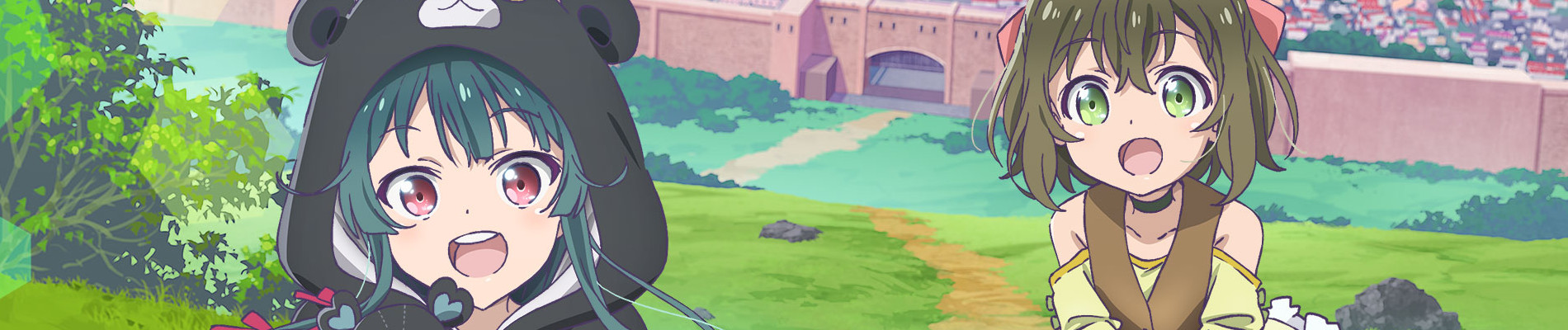
That’s the heart of Kuma Kuma Kuma Bear: not escapism as flight, but as recentering. It’s the feeling of slipping into worn slippers after a long walk—not because the journey ended, but because your feet remember how to hold themselves. The fantasy isn’t dragons or dungeons; it’s the unhurried rhythm of baking honey buns with a village elder, the tactile joy of stitching a new paw-pocket onto the suit, the quiet pride in teaching a child to cast a harmless light spell—not to win, but to share. This isn’t isekai-as-ascension. It’s isekai-as-pause button: gentle, grounded, deeply healing. You don’t watch it to feel bigger. You watch it to remember how good it feels to be held—by fabric, by food, by friendship, by time itself.
Which is why Prince of Persia resonates so fiercely—not the sand-wraith chaos of old, but this reboot: built by Ubisoft Montreal, “an all-new epic journey” rooted in Healing & Slow Life alongside Action Spectacle. Player reviews call it “a new prince, new lands, a brand new story completely separate”—and that separation matters. Like Yuna stepping out of her VRMMO into a world without leaderboards or loot tables, this Prince trades relentless momentum for breath-held stillness: a hand on a sun-warmed wall, a pause mid-leap to watch dust motes swirl, a moment where gravity bends just enough to let you linger. It’s spectacle that serves serenity—not the other way around.
Then there’s AudioSurf, with its raw, almost stubborn Healing & Slow Life dimension wedded to Action Spectacle. Its description says it plainly: “Ride your music.” Not conquer it. Not master it. Ride it—let the song’s shape, speed, and mood dictate your path. That’s Yuna in the bear suit gliding down a forest path while humming off-key, letting the world’s tempo sync to hers instead of the reverse. Player reviews admit its flaws—“godawful UI,” “unskippable menu animations,” crashes—but praise its soul: “I, personally, find Audiosurf 1 to be superior… despite its…” That “despite” is key. Like Kuma Kuma Kuma Bear, it refuses to polish away its gentle imperfections. Its magic lives in the wobble—the slight lag before a note hits, the way a sad piano loop makes the whole grid feel tender, the way you keep playing because the feeling is worth the friction.
The darker matches—Sacred Gold, Two Worlds Epic Edition, Dark Messiah of Might & Magic—don’t resonate despite their Dark Fantasy tags, but because of the stark contrast they highlight. Their descriptions drip with blood-thirsty orcs, banished demons, ferocious combat in “dark and immersive” worlds. Player reviews fixate on jank, instability, patches needed to run properly. They’re games that demand constant repair—of systems, of expectations, of self. Kuma Kuma Kuma Bear doesn’t reject that energy; it holds it at arm’s length, then offers something else: a steaming mug held both hands, a bear-paw pat on the head, the quiet certainty that you don’t have to fix anything right now. The darkness in those games isn’t threatening—it’s just proof of how radical softness can be.
This pairing is for the person who keeps a half-finished knitting project in their bag not to finish it, but to touch the yarn when the world gets loud. For the player who restarts Prince of Persia just to walk the palace gardens at dawn, no objectives blinking, no timer counting down. For the one who queues up AudioSurf, picks a fragile lo-fi track, and lets the grid rise and fall like breathing—and smiles when the game stutters, because that’s part of the ride. It’s for anyone who’s ever worn comfort like armor, baked bread just to smell the warmth, or whispered “I’m okay” into a plush bear’s ear—and meant it, deeply, gently, and for real.
🎮4 Games That Match the Vibe

Match Dimensions Explained
❓Frequently Asked Questions
Why does Prince of Persia keep showing up in 'Games Like Kuma Kuma Kuma Bear' lists?
Because both lean hard into that cozy-yet-spectacular contrast: think Kumako’s gentle bear-hugging moments alongside sudden, dazzling action set-pieces—just like the Prince’s fluid parkour leaps and time-bending sword duels in the desert temples. It’s not about plot similarity, but how both use Healing & Slow Life vibes *alongside* Action Spectacle to create that warm-but-thrilling rhythm fans love.
Is there an anime or manga adaptation of AudioSurf?
Nope—AudioSurf has zero anime or manga adaptations. It’s a purely gameplay-driven experience where *your own music* shapes the neon-lit rails, enemy patterns, and emotional pacing (like riding a melancholy Sigur Rós track into a quiet canyon or blasting through a high-BPM J-pop song with Kumako-level energy). The charm is entirely in its personal, wordless synergy—not licensed lore.
How does Sacred Gold compare to Dark Messiah of Might & Magic for dark fantasy vibes?
Sacred Gold leans into chaotic, janky charm—think orc hordes swarming you in muddy valleys while your character glitches mid-swing—but it’s got that earnest, old-school ‘quest-giver in a dusty tavern’ warmth. Dark Messiah, meanwhile, goes full grimy realism: brutal melee combos, blood-slicked corridors, and morally grey choices that hit harder than Kumako’s accidental chaos—though both share that ‘Action Spectacle + Dark Fantasy’ DNA, just with wildly different execution.
What’s the best game like Kuma Kuma Kuma Bear if I just want that soothing, low-stakes ‘healing & slow life’ feeling?
Go straight to Prince of Persia—it nails the gentle pacing between action bursts: wandering sun-dappled ruins, solving quiet environmental puzzles, and watching light shift across ancient mosaics feels *exactly* like Kumako napping under the cherry blossoms… before flipping a sand-timer and diving into a gravity-defying combat sequence. AudioSurf can also hit that vibe, but only if you pick calm, flowing tracks—no frantic dubstep needed.