
Initial D 2nd Stage
Following his victory over RedSuns leader Ryosuke Takahashi, AE86 driver Takumi Fujiwara is challenged by the Lancer EVO-based "Emperor," a group known for taking decals of racing teams they defeat, cutting them up and placing them on their cars like a fighter plane kill board. Takumi's undefeated streak is on the line as his AE86 is virtually no match against the more powerful and more agile four-wheel-drive EVOs of the Emperor team.
(Source: Anime News Network)
📺Anime Details
📝Editorial Analysis
Rain lashes the Akina mountain pass—cold, sharp, relentless. Takumi’s knuckles whiten on the AE86’s wheel as the rear slides out, not in defiance, but obedience: the car breathes with him, tires whispering against wet asphalt like a language older than gears. He doesn’t roar. He listens. And in that silence between downshifts—no engine scream, no crowd, just the hiss of hydroplaning rubber and the low thrum of a 4A-GE waking up—he’s not racing the Emperor. He’s holding space for something fragile: skill that isn’t loud, victory that doesn’t need trophies, mastery that lives in the pause before correction.

That’s what Initial D 2nd Stage does—it makes you feel weight, not speed. Not adrenaline, but consequence. The rural roads aren’t backdrops; they’re tactile, humid, layered with mist and memory. The CGI isn’t flashy—it’s functional, almost documentary: headlights cut through fog like knives, suspension compresses with audible thud, gear changes land with mechanical finality. This isn’t about power—it’s about precision under duress, about a boy whose greatest weapon is how deeply he knows one road, one car, one rhythm. It’s seinen not because it’s violent or cynical, but because it treats labor—tuning, driving, waiting, watching—as sacred. You don’t root for Takumi to win. You root for him to stay true, even when the Lancer EVOs hum past him like predators who’ve already won.
Which is why Prince of Persia (2008) lands with such quiet resonance. Its description calls it “an all-new epic journey” built by Ubisoft Montreal—“adult & dark seinen,” “healing & slow life.” Player reviews note its new prince, new lands, brand new story—a deliberate break from legacy, much like Takumi stepping into battles where his AE86 is technically obsolete. Both reject spectacle-as-substance: the Prince doesn’t shout; he flows, recovers, reorients mid-fall—his power is restraint, not rage. That “healing” dimension? It’s the same breath Takumi takes at the top of Akina before descending—not recovery from injury, but recalibration. Both works treat time not as a resource to burn, but as terrain to move through, deliberately.
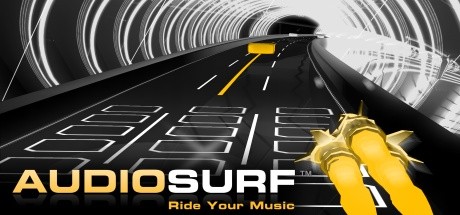
Then there’s AudioSurf, tagged with “healing & slow life” and “competitive spirit”—a contradiction that feels ripped from Initial D 2nd Stage’s DNA. Its description says: “Ride your music. Audiosurf is a music-adapting puzzle racer where you use your own music to create your own experience. The shape, the speed, and the mood of each ride is determined by the song you choose.” A player admits: “I, personally, find Audiosurf 1 to be superior… despite its godawful UI, unskippable menu animations, crashing…” That friction—the jank, the imperfection, the way the game resists polish to serve raw, personal rhythm—is pure Takumi. His AE86 isn’t a showroom piece. It’s dented, overheating, held together by duct tape and intuition. Like AudioSurf, it asks you to sync yourself—not to a leaderboard, but to a pulse only you can feel. Competition isn’t about beating others first. It’s about matching the tempo of your own hands, your own history.
And finally, Team Fortress Classic, described as “one of the most popular online action games… enlisted in a unique style of online team combat,” tagged “competitive spirit” and “adult & dark seinen.” A player writes: “simply the best nostalgic game, i have dreams about this game. Ive played this since i was 9…” That devotion—rooted not in graphics or lore, but in muscle memory, in knowing exactly how a Medic’s Ubercharge syncs with a Heavy’s spin-up, in reading teammates’ movement like dialect—mirrors how Takumi reads Ryosuke’s line choice before the apex. Both are team sports disguised as solo acts: Takumi drives alone, but every decision echoes his father’s lessons, his friends’ warnings, the ghosts of past races. TFC’s classes don’t exist in vacuum—they interlock, like gears. So does Initial D 2nd Stage: the Emperor isn’t just rivals. They’re mirrors—each EVO driver exposing a different flaw in Takumi’s instinct, forcing him to evolve in real time, not in training montages.
This pairing isn’t for fans of “fast cars” or “cool fights.” It’s for the person who rewinds a lap three times to see exactly where the weight transfer shifts. For the player who still has muscle memory for a 20-year-old netcode quirk. For the adult who finds catharsis not in winning, but in showing up, precisely calibrated, on rain-slicked asphalt—or in a server lobby where everyone knows your class, your timing, your why. It’s for those who understand that the most electric moment isn’t the finish line—it’s the stillness right before the throttle opens, heart steady, hands ready, world reduced to one road, one rhythm, one yes.
🎮16 Games That Match the Vibe




Match Dimensions Explained
❓Frequently Asked Questions
Why does Need for Speed Undercover feel like the closest thing to Initial D 2nd Stage’s street-racing tension?
Because Undercover nails that 'hunted-but-hunting' vibe — just like Takumi drifting down Akina’s downhill in his AE86, you’re constantly evading cops while pulling off precision drifts and high-speed chases through rain-slicked city streets. The pursuit mechanics, real-time traffic AI, and that gritty, cinematic camera work (especially during heat spikes) mirror 2nd Stage’s adrenaline-fueled realism far more than arcade racers like Burnout.
Is there an Initial D anime or game adaptation with competitive multiplayer like Team Fortress Classic?
No official Initial D game has TFC’s class-based team combat, but Team Fortress Classic shares its DNA with Initial D’s *rivalry culture* — think of TFC’s Spy vs. Scout cat-and-mouse as the tactical cousin of Ryosuke’s strategic drafting or Keisuke’s brake-tapping mind games. Both reward deep map knowledge, role-specific mastery (Medic healing = pit crew support vibes), and that same late-90s/early-2000s competitive spirit fans love.
How does AudioSurf compare to Quake III Arena for someone who loves Initial D’s rhythm-based driving?
AudioSurf is way closer — it turns your music into literal track geometry, so a fast-paced J-rock track (like Initial D’s BGM) creates tight, high-speed lanes you *must* flow through, just like reading a mountain pass’ camber and grip. Quake III Arena is pure twitch FPS chaos: no rhythm, no pacing — it’s about snap-turning and rocket-jumping, not syncing throttle to beat drops like AudioSurf’s ‘Rhythm Drift’ mode.
What’s the best game like Initial D 2nd Stage if I want that slow-burn, atmospheric tension — not just speed?
Prince of Persia (2008) — seriously. It’s got that same ‘quiet before the storm’ pacing: long, moody stretches through crumbling temples and misty canyons, punctuated by sudden, precise acrobatic bursts — like how 2nd Stage lingers on Takumi’s breath before a corner, then explodes into a perfect drift. Its Healing & Slow Life dimension matches Initial D’s focus on patience, timing, and emotional weight over raw velocity.