Call of Duty® 4: Modern Warfare® (2007)
The new action-thriller from the award-winning team at Infinity Ward, the creators of the Call of Duty® series, delivers the most intense and cinematic action experience ever. Call of Duty 4: Modern Warfare arms gamers with an arsenal of advanced and powerful modern day firepower and transports them to the most treacherous hotspots...
🎮Game Details
💬What Players Say
"To me, this is the best CoD game ever made. I used to play the cracked version and probably have around 6,000 hours in it. I highly recommend the campaign, and if you can find servers, the multiplayer is really fun as well...."
"---{ Graphics }--- ☐ Beautiful ☐ Good ☑ Decent (Aged but Clean) ☐ Rough ☐ MS-DOS ---{ Gameplay }--- ☐ Masterpiece ☑ Incredibly Responsive ☐ Serviceable ☐ Clunky ☐ Unplayable ---{ Audio }--- ☐ Immersive 3D ☑ Punchy & Iconic ☐ Clear ☐ Muffled ☐ Deaf ---{ Difficulty }--- ☐ Brainless ☐ Casual Friendly ☑ Perfectly Balanced ☐ Old-School Tough ☐ Unfair & Cheap ---{ Story }--- ☐ Life-Changing ☑ Hooked From Start to Finish ☐ Predictable ☐ Boring ☐ Non-Existent ---{ Game Time (Story/Campaign) }--- ☐ Endless Replay ☐ Deep Value ☑ Short & Sweet ☐ Disappointing ☐ Don't Sneeze ---{ Multiplayer }--- ☐ Competitive Perfection ☐ Pure Casual Fun ☐ Stale and Repetitive ☑ Unbalanced and Toxic (Aged) ☐ Dead or Unplayable ---{ Price }--- ☐ It's free! ☑ Worth the price ☐ If it's on sale ☐ If u have some spare money left ☐ Not recommended ---{ ?"
"Call of Duty 4: Modern Warfare is pure peak gaming — fast, action‑packed, and carried by the absolute GOAT, Captain Price. The campaign still slaps today with iconic missions, clean gunplay, and nonstop intensity that makes it super replayable. But the multiplayer?..."
📝Editorial Analysis
The muzzle flash—white-hot, blinding, gone in a blink—hits your retinas just as the bass thump of the explosion rattles your ribs. You’re crouched behind a crumbling concrete barrier in Call of Duty® 4: Modern Warfare® (2007), breathing hard, not from fatigue but from velocity: the world compresses into crosshair, breath-hold, and the incredibly responsive recoil you feel in your fingers—not simulated, but registered, like muscle memory snapping awake. That’s the game’s first truth, confirmed by real players: it doesn’t ask you to suspend disbelief—it enforces presence. The official description calls it “cinematic,” but what it really delivers is immediacy: clean gunplay, iconic missions, and Captain Price—not as lore, but as gravitational center, voice low and unbroken even when the sky rains fire. Six thousand hours in a cracked version? That’s not nostalgia—that’s muscle memory etched deep.
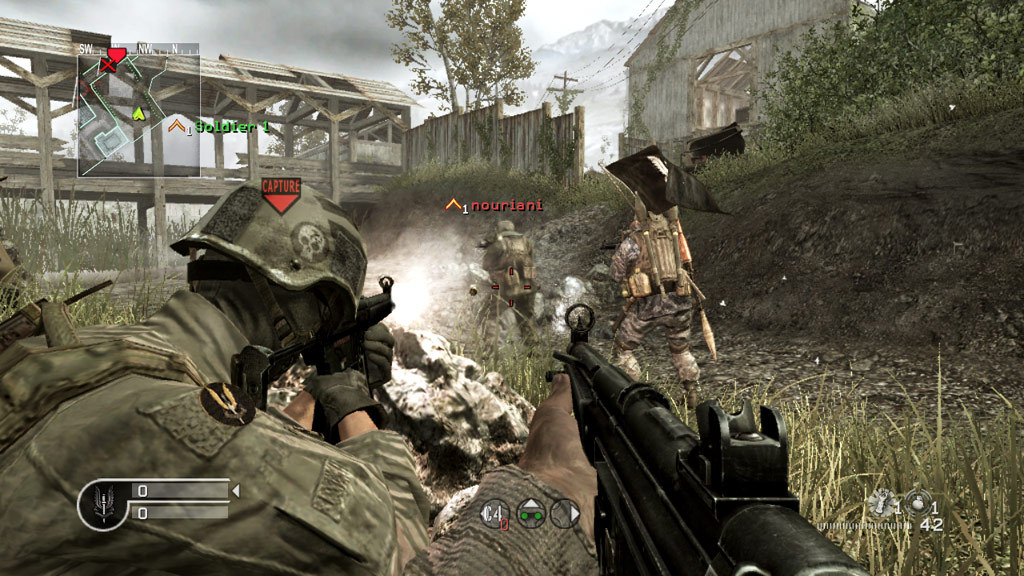
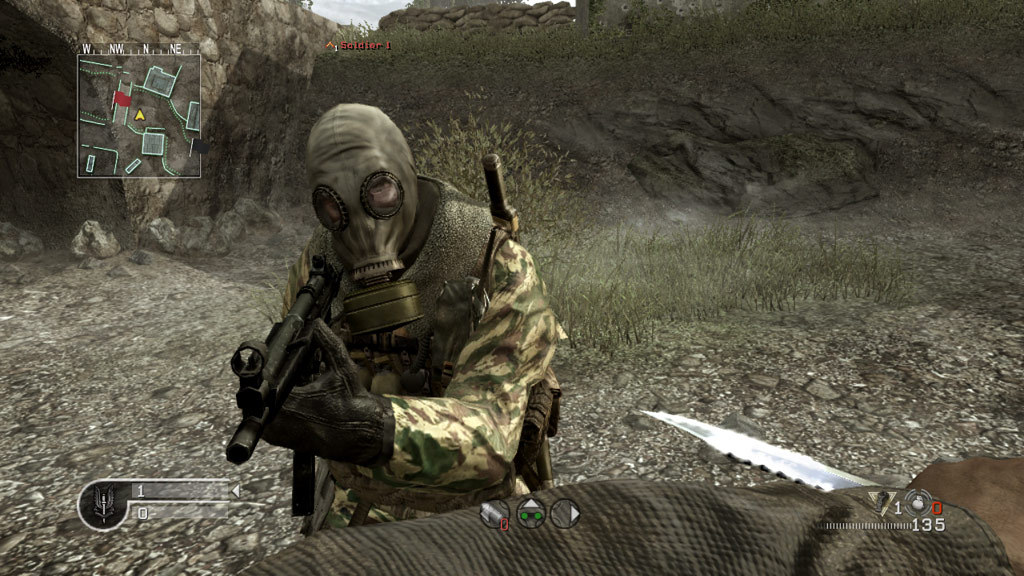
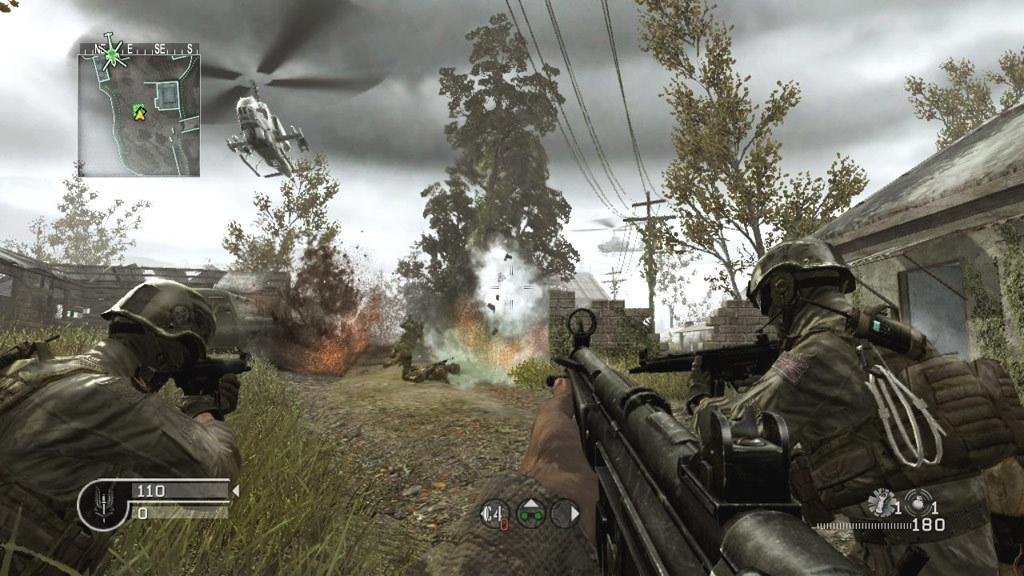
This isn’t war-as-philosophy or war-as-spectacle. It’s war as pulse. The atmosphere thrums with tactical urgency—not the slow burn of strategy, but the split-second calculus of cover, reload, reposition. Even the graphics—decent (aged but clean)—serve that feeling: no visual noise to distract, no bloom or blur to soften impact. Every texture reads instantly. Every gunshot has weight because the audio design locks sound to consequence—no delay, no flourish. You don’t think about consequences—you feel them in your wrists and jaw. It makes you think about control—not over narrative or morality, but over your own reaction time, your own breath, your own trembling finger on the trigger. It’s visceral discipline: the kind forged in repetition, honed under pressure, stripped of ornament. There’s no hand-holding, no exposition dumps mid-firefight—just mission, motion, and the quiet, iron certainty of Captain Price’s command.
That same visceral discipline lives in Hikaru no Go, where the board isn’t abstract—it’s a battlefield of trembling hands, of seconds stretching under silence before a move lands. The competitive spirit here isn’t about glory—it’s about the body horror of focus: sweat on the lip, dry mouth, the way your vision tunnels onto a single intersection. The occult isn’t supernatural—it’s the uncanny precision of intuition, the ghost of Shusaku’s hand guiding Hikaru’s—felt, not explained. Like Price’s voice cutting through chaos, Sai’s presence isn’t backstory—it’s pressure, immediate and inescapable.
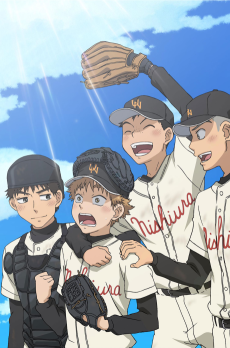
Then there’s Aoashi, where every pass, every feint, every collapse of defensive shape carries the adult weight of consequence—no montage, no easy win. The dark seinen dimension isn’t blood or betrayal—it’s the exhaustion in Ashito’s knees after sprinting the same flank for the 17th time, the way his coach’s silence after a mistake hits harder than any yell. Like Call of Duty 4’s campaign, it trusts you to read tension in posture, in timing, in the clean, unvarnished execution of a skill pushed to its limit. No filler. No mercy. Just the next play—and the next—and the next.
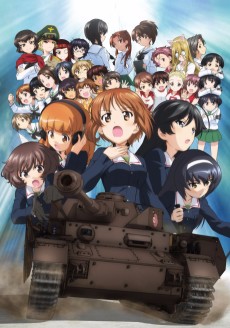
And Girls und Panzer—yes, tanks instead of rifles, school uniforms instead of fatigues—but same DNA: tactical warfare as bodily language. The clank of treads, the hiss of hydraulics, the precise millisecond a commander’s shout syncs with a turret rotation—all incredibly responsive, all demanding total somatic alignment. This isn’t fantasy combat; it’s physics made urgent, geometry made felt. When Miho adjusts her glasses before calling out a flank maneuver, it’s the same beat as Price tapping his watch before the nuke countdown—calm, precise, inevitable.
These pairings aren’t for casual fans. They’re for the ones who replay the Crew Exfil mission not for story, but for the rhythm of the stairwell breach—left, right, flash, sweep. For the ones who watch Aoashi’s 3rd match against Fujisawa and hold their breath at the exact frame Ashito shifts his weight—that’s the pivot. For the ones who pause Girls und Panzer mid-battle to trace tank trajectories like sheet music. They love control, not power. They love clarity, not flash. And above all—they love the rare, electric hum when human reflex, mechanical precision, and unwavering focus lock into one undeniable, unblinking moment.
→43 Anime That Match the Vibe
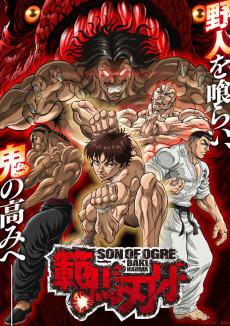
Connected through 2 aesthetic dimensions.
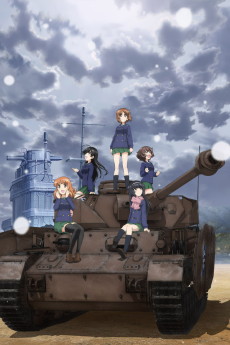
Connected through 2 aesthetic dimensions.

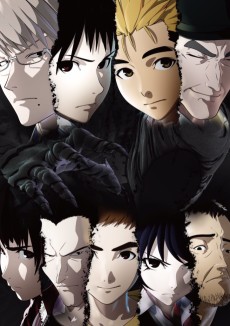
Fujiwara-no-Sai’s spectral possession—his fingers twitching with autonomous, centuries-old precision as he guides Hikaru’s hand across the Go board—mirrors the uncanny body horror of Call of Duty 4’s “All Ghillied Up,” where Captain Price’s calm command overrides MacMillan’s trembling limbs in a lethal, choreographed crawl. Unlike most war games or sports anime, both weaponize the Competitive Spirit not through brute force or willpower alone, but through *surrender*: to a ghost, to a mission, to something larger than the self. That shared tension—between control and violation, discipline and possession—makes their resonance startlingly intimate.

Connected through 2 aesthetic dimensions.

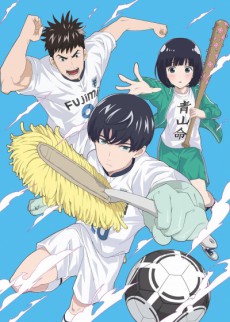
Ashito Aoi’s trembling hands after missing a decisive penalty—raw, silent, sweat-soaked—echo Captain Price’s hollow stare in the rain-soaked ruins of Pripyat. Unlike most sports anime, *Aoashi* leans into the **Adult & Dark Seinen** weight of consequence: failure isn’t a stepping stone but a fracture in identity, just as *COD4*’s “All Ghillied Up” strips spectacle to breathless vulnerability and moral erosion. This shared commitment to psychological gravity—where competition isn’t uplifting but existentially demanding—makes their resonance startlingly precise.

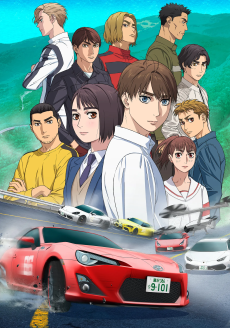
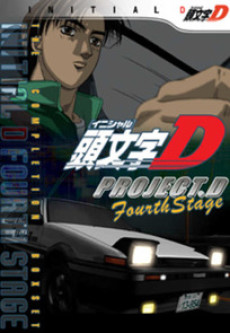
Takumi’s pre-dawn tofu deliveries down Akina’s treacherous mountain pass—silent, precise, pulse-locked—echo Captain Price’s breath-controlled sniper shot on the rooftop in “All Ghillied Up.” Unlike most action narratives that glorify spectacle, both *Modern Warfare* (2007) and *Initial D 1st Stage* channel tension through restraint: a shared **Competitive Spirit** rooted in mastery under extreme stakes. That quiet intensity—where skill speaks louder than dialogue—makes their resonance startlingly intimate, not explosive.

Tanks rumble across Oarai’s sun-baked training grounds just as the AC-130’s targeting reticle locks onto a rooftop in Call of Duty 4’s “One Shot, One Kill”—both moments pulse with the same taut, breath-held precision of 🎯 Tactical Warfare. Unlike most war stories that glorify chaos, these works treat combat as a disciplined, almost ritualized contest: Sgt. Jackson’s squad coordinates under fire like Sensha-do teams executing synchronized flanking maneuvers during the National Tournament finals. That shared reverence for skill, timing, and split-second decision-making makes their resonance feel startlingly authentic—not cartoonish, but rigorously earned.
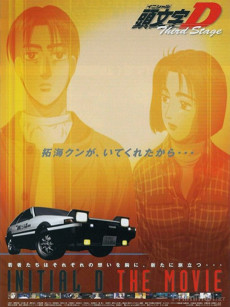
Takumi’s rain-slicked, headlights-cutting-dark descent of Akina’s mountain in *Initial D 3rd Stage* mirrors the suffocating tension of Call of Duty 4’s “All Ghillied Up”—both hinge on hyper-focused control amid chaos. Unlike most sports anime or military shooters, they channel their 🏆 Competitive Spirit through quiet, almost ritualistic precision: a drift line held millimeters from disaster, a breath-held sniper shot in radioactive ruins. That shared 🖤 Adult & Dark Seinen gravity—where victory demands psychological endurance, not just skill—makes their resonance startlingly intimate.

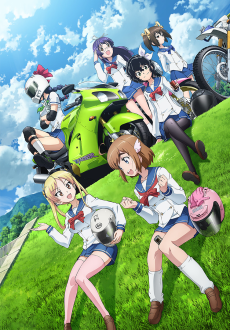
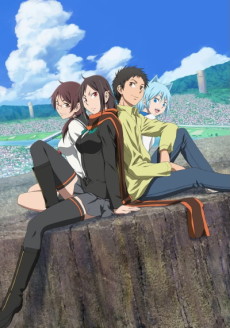
Hotaru Tachibana’s first airsoft skirmish—kneeling behind a rusted school fence, breath steady, finger hovering—mirrors Price’s sniper perch in the Chernobyl sequence: both transform civilian spaces into high-stakes tactical theaters. Unlike most comedies that mock military precision, *Aoharu x Machinegun* treats airsoft with the same visceral respect *Modern Warfare* gives real combat—honoring the 🎯 Tactical Warfare dimension through choreographed reloads, comms discipline, and split-second risk calculus. That shared reverence for craft, not just chaos, makes their resonance unexpectedly profound.
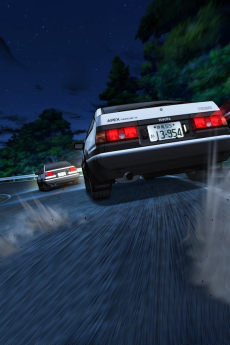
Connected through 2 aesthetic dimensions.






















Match Dimensions Explained
❓Frequently Asked Questions
Why does Girls und Panzer keep popping up in 'Anime Like Call of Duty 4: Modern Warfare' lists?
Because its tank warfare is shockingly grounded—like CoD 4’s campaign, it treats tactics as visceral and consequential. Think of the Ooarai vs. Kuromorimine match: tight comms, real-time terrain adaptation, and Captain Miho’s calm, Price-style command under fire—not flashy superpowers, just split-second decisions with weight. The score (72) and ‘Tactical Warfare’ dimension directly mirror CoD 4’s emphasis on squad coordination, clean gunplay, and mission-critical precision.
Is there an anime adaptation of Call of Duty 4: Modern Warfare?
No official anime adaptation exists—Infinity Ward hasn’t licensed one, and no studio has produced a canonical version. That said, fans often point to Initial D 3rd Stage (score: 73) as the *closest spiritual cousin*: both hinge on hyper-competent specialists (Ryosuke’s calculated drifts ↔ Price’s sniper overwatch), high-stakes ‘missions’ with cinematic pacing, and that same ‘Incredibly Responsive’ feel—every gear shift or bullet pull lands with tactile, immediate feedback.
How does Aoashi compare to Initial D for CoD 4 vibes?
Aoashi nails CoD 4’s ‘Adult & Dark Seinen’ grit better than Initial D—think Ashito’s raw, unglamorous training montage in Episode 5, where fatigue and doubt hit like CoD 4’s ‘All Ghillied Up’ tension. Initial D leans into adrenaline and style; Aoashi mirrors CoD 4’s grounded intensity: clean, responsive action (‘Incredibly Responsive’ gameplay), morally complex coaching dynamics (like MacMillan mentoring Price), and zero hand-holding—just relentless, earned progression.
What’s the best anime like Call of Duty 4 if I want that ‘pure peak gaming’ rush?
Go straight to Initial D 1st Stage (score: 73)—it’s got CoD 4’s same ‘pure peak gaming’ energy: fast, action-packed, and driven by a GOAT-level tactician (Ryosuke) who reads the battlefield like Price reads a compound. The downhill races have that same cinematic, mission-focused urgency—clean execution, zero fluff—and the ‘Competitive Spirit’ dimension delivers the same nonstop, adrenaline-fueled clarity you get from CoD 4’s ‘iconic missions’ and ‘clean gunplay’.