
Umamusume: Cinderella Gray
Unbeknownst to those around her in the destitute countryside of Kasamatsu, the staggering potential of this ashen-haired "Beast” will soon rock Japan with her feet and catapult her to the national stage—down the path of a legend.
Follow Oguri Cap and her insatiable appetite as the starting gates open on this Umamusume's hot-blooded Cinderella story!
(Source: It's Anime powered by REMOW, edited)
📺Anime Details
📝Editorial Analysis
The starting gate slams shut behind her—not with a clack, but a raw, guttural inhale. Dust kicks up in Kasamatsu’s dry wind as Umamusume: Cinderella Gray’s Oguri Cap crouches low, ash-blond hair whipping across her kemonomimi ears, muscles coiled like springs buried in red clay. She doesn’t hear the crowd. She doesn’t hear the announcer. She hears only the thrum—a vibration in her jaw, her heels, her ribs—as if her own pulse is syncing with the track’s ancient, unyielding rhythm. That moment isn’t about speed yet. It’s about containment: the unbearable pressure of something immense, barely held, about to detonate.

That’s the atmosphere—not inspiration, not triumph, but feral discipline. This isn’t a story draped in glitter or staged idol choreography; it’s soaked in sweat, grit, and the quiet violence of self-demand. The “Beast” label isn’t metaphorical fluff—it’s earned in calloused palms, trembling quads after 3 a.m. hill sprints, the way her breath rasps like gravel dragged over concrete. The historical setting isn’t backdrop—it’s weight: Meiji-era expectations pressing down on a girl whose body refuses to obey polite limits. The yuri tag isn’t romance-as-plot-device—it’s the electric, wordless intensity of shared exhaustion between rivals who push each other past collapse. You don’t watch this anime to relax. You watch it to feel your own tendons tighten, to remember what it means to be unforgivingly alive in your own skin.
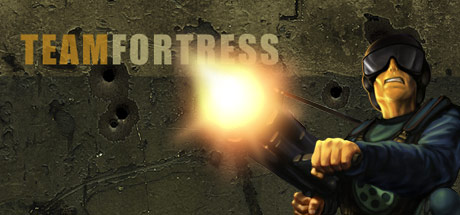
Which is why Team Fortress Classic hits with such startling resonance. Its description calls it “a unique style of online team” combat—but the player review nails the soul: “simply the best nostalgic game, i have dreams about this game.” Not nostalgia for graphics or lore—but for the physical memory of frantic, tactile chaos: the thwip of a Spy’s knife, the Medic’s frantic beep-beep-beep as you sprint toward resurrection, the sheer bodily urgency of holding a control point while your health bleeds out. Like Oguri Cap’s races, TFC isn’t won by theory—it’s won by nerve-endings firing faster than thought, by instinct forged in repetition until movement becomes animal. Both demand that same hot-blooded, almost reckless commitment to the immediate, visceral now.
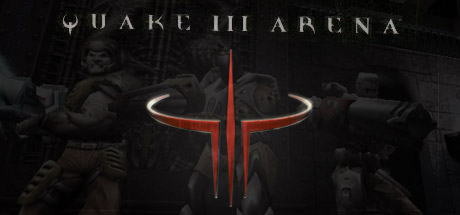
Then there’s Quake III Arena, summoned “to battle for the amusement of an ancient alien race”—a description dripping with adult & dark seinen gravity. The player review doesn’t praise story or characters; it praises ioquake3 compatibility and the stubborn persistence of “internet mp game servers out there as of typeing this…” That’s the key: endurance. Not legacy as monument, but legacy as living circuitry. Oguri Cap’s legend isn’t carved in stone—it’s etched in the tremor of her hamstring mid-stride, in the way her name still echoes in Kasamatsu’s wind decades later because people still run that route, still feel that same burn. Quake III’s servers persist—not out of corporate upkeep, but because players refuse to let the pulse die. Both are artifacts of competitive spirit so raw it outlives context.
Even Need for Speed Undercover—described as “an all-out chase where you’re the hunted. And the hunter”—mirrors this duality. The player review dismisses its polish (“Black Box was gassed out… very mid”), but the core tension remains: risk everything. Oguri Cap doesn’t race for trophies. She races to prove her body isn’t a cage. Undercover’s protagonist doesn’t drive for glory—they drive because stopping means erasure. Both exist in that razor’s edge between control and surrender, where every gear shift, every lean into a curve, is a defiance whispered at oblivion.
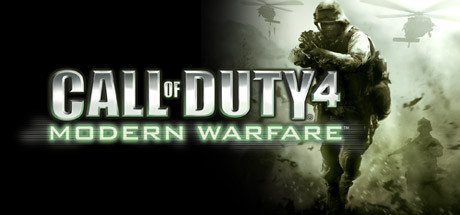
This pairing isn’t for casual fans. It’s for the ones who’ve woken up at 4 a.m. to run before the world stirs. For the players who still boot up cracked CoD 4 servers just to hear that first gunshot echo—not for nostalgia, but because that sound still makes their heart skip. For the people who understand that yuri here isn’t about romance—it’s about the terrifying, beautiful intimacy of two bodies pushing past breaking point together. They’re the ones who recognize the ash in Oguri Cap’s hair not as color, but as evidence: of fire, of friction, of something real burned down to its essential, blazing core.
🎮9 Games That Match the Vibe





Match Dimensions Explained
❓Frequently Asked Questions
Why does Umamusume: Cinderella Gray feel so different from Team Fortress Classic even though they're both in the Competitive Spirit category?
Great question — it's all about *how* that competitive energy lands. Umamusume leans into high-speed racing, character-driven drama, and rhythmic training mechanics (think Special Week’s iconic sprint finish or Tokai Teio’s emotional comeback arcs), while Team Fortress Classic delivers chaotic, class-based team combat where a well-timed Spy backstab or Medic ubercharge creates totally different kinds of adrenaline. Both score 75 in Competitive Spirit, but TF Classic’s nine distinct classes (like the gruff Heavy or sneaky Spy) and its 90s-era arena pacing make it feel more like a rowdy LAN party than a horse-racing anime drama.
Is there an anime or live-action adaptation of Quake III Arena like there is for Umamusume?
Nope — zero anime, no live-action, not even a manga spin-off. Quake III Arena stays gloriously pure as a raw, physics-defying arena shooter: ancient alien overlords watching warriors like the Razorback or Jaguar duke it out with railguns and quad damage in maps like 'The Edge' or 'Q3DM17'. Unlike Umamusume’s sprawling multimedia universe (with its anime seasons, music CDs, and even stage plays), Quake III’s lore lives entirely in its HUD, weapon sounds, and those legendary ioquake3 community servers still running today — no adaptations needed when the gameplay *is* the story.
How does Need for Speed Undercover compare to Umamusume: Cinderella Gray in terms of racing intensity and character progression?
They’re both about high-stakes racing, but Undercover trades Umamusume’s heartfelt idol-racing hybrid for gritty undercover cop drama — think evading Interpol in a modified Nissan Skyline while juggling faction loyalty, not building up your mare’s bond level with trainer NPCs. You won’t find character arcs like Mejiro McQueen’s redemption arc here; instead, you get Black Box’s 'very mid' open-world structure (per that player review), where progression feels more like unlocking new paint jobs and heat levels than emotional growth. Still, both nail that white-knuckle 'hunted-and-hunter' rush — just one uses hooves, the other uses nitrous.
What’s the best game like Umamusume: Cinderella Gray if I’m craving that intense, cinematic, late-game adrenaline rush — like Tokai Teio’s final stretch at Kyoto Racecourse?
If you want that same heart-pounding, cinematic climax energy, go straight to Call of Duty 4: Modern Warfare (2007). Remember that iconic 'All Ghillied Up' stealth mission? Or the gut-punch finale where Price and MacMillan take down Zakhaev? That tightly directed, high-stakes storytelling — paired with 6,000-hour veteran love ('best CoD ever made', per the review) — mirrors Umamusume’s most emotionally charged races beat-for-beat. Neither relies on open worlds or grinding; both deliver razor-sharp, scripted intensity where every second feels earned — whether you're dodging bullets or pushing past your stamina limit at the wire.