
Saki
Miyanaga Saki is a first year high school girl whose family would get angry if she won the family mahjong games. But losing would also have its consequences. Because of this she develops a new way of playing that allows her to stay on the thin line between winning and losing, the plus/minus zero score, an almost impossible score. In a game that relies mainly on luck, the plus/minus zero score is harder than winning, but Saki can achieve this every time.
Having always hated the game, her friend from middle school, Suga Kyotoro, forces her to play in the schools mahjong club. Her developed skill and superhuman luck has made her a worthy mahjong opponent, even to the middle school's national mahjong champion.
(Source: Anime News Network, edited)
📺Anime Details
📝Editorial Analysis
The quiet snap of a mahjong tile settling into place—just so—on a lacquered table in the dim, hushed light of the school clubroom. No cheers, no groans, no dramatic reveals—just Saki’s fingers stilling, her breath even, her expression unreadable as the scoreboard flickers: +0. Not victory. Not defeat. A perfect, trembling equilibrium. That silence isn’t emptiness—it’s tension, thick and humming, like the pause before a bowstring releases.
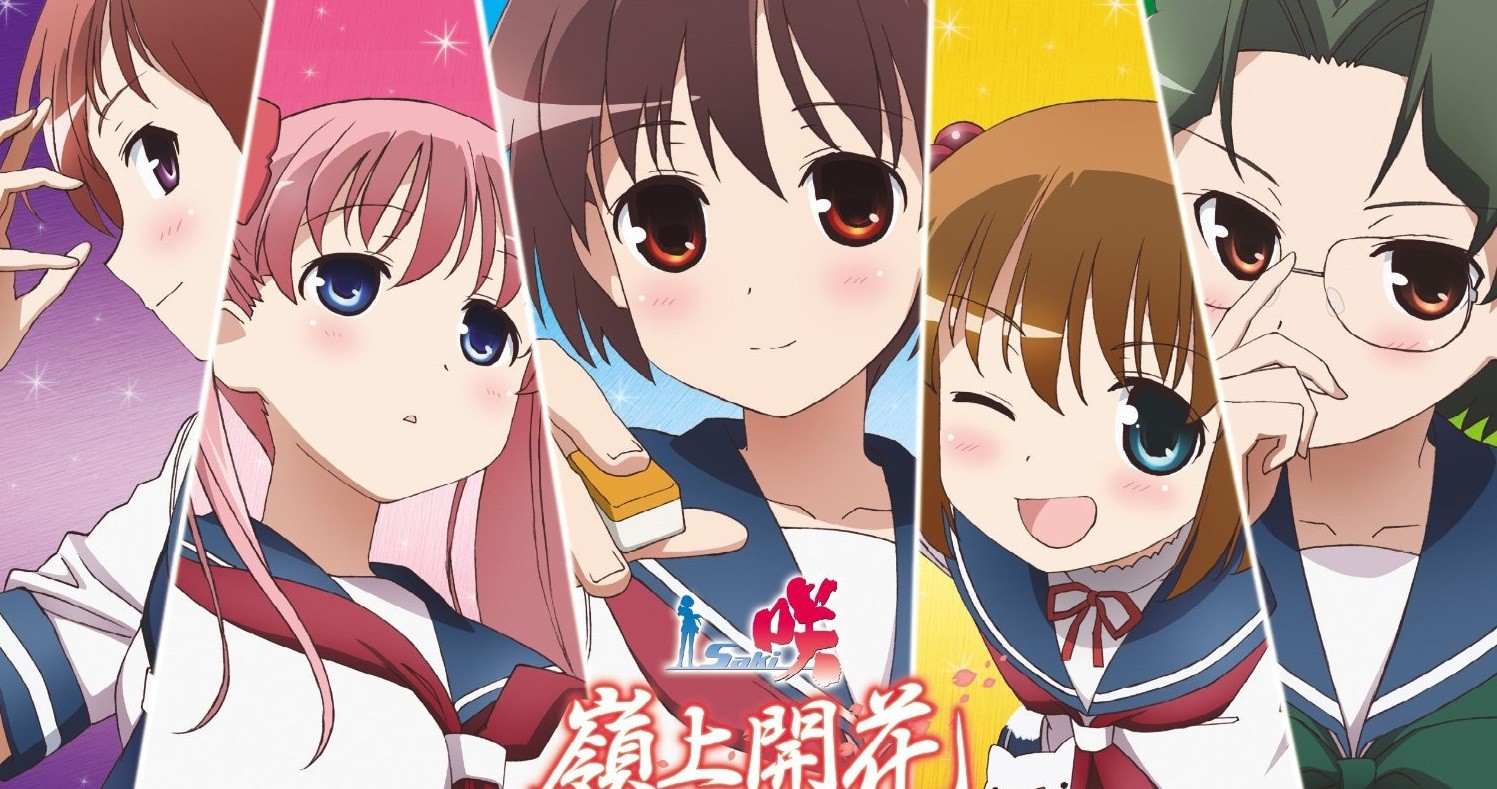
Saki doesn’t thrill with explosions or confession scenes. It thrums with control—not over others, but over self. Over impulse. Over the crushing weight of expectation. Saki’s “plus/minus zero” isn’t a trick; it’s a discipline so precise it borders on asceticism—a way to exist within the game without being consumed by it. The atmosphere isn’t warm or cozy; it’s contained, like air held just beneath the surface of water. You feel the weight of unspoken family history in every discarded tile, the exhaustion of emotional labor in every calculated discard, the quiet pride in mastering a system that demands you erase yourself to survive it. This isn’t about winning hearts or trophies—it’s about preserving inner space in a world that insists on measuring you by your score.
That same resonance lives in Persona 5 Royal, where the daily rhythm of school life, part-time jobs, and confidant-building isn’t filler—it’s structure as sanctuary. The player review calls out “the seamless transition between daily life…”—exactly the kind of deliberate, almost ritualistic pacing that makes Saki’s mahjong matches feel like breathing exercises disguised as sport. Both demand patience, repetition, and emotional calibration: choosing when to speak, when to withdraw, when to let a moment pass unclaimed. The “Adult & Dark Seinen” dimension isn’t about grit or gore—it’s about the quiet exhaustion of performing competence while guarding vulnerability. In both, power isn’t flashy—it’s the stamina to show up, day after day, and choose your posture.
Then there’s Thrillville®: Off the Rails™, where the player review celebrates “20 death-defying rides” and building coasters that “leap from one track to another, launch through the air like cannonballs.” On surface, it’s pure kinetic joy—but dig into its DNA: it’s about precision engineering disguised as play. Every loop, drop, and launch point is a calculation—balancing thrill against safety, speed against stability, spectacle against structural integrity. Just like Saki’s +0, it’s not about maximum height or fastest drop—it’s about hitting the exact threshold where exhilaration and control kiss without collapsing into chaos. The “Competitive Spirit” tag isn’t about beating others—it’s about the fierce, private satisfaction of nailing the perfect arc, the exact timing, the unbroken flow. That’s the same pulse running under Saki’s calm hands as she reads the wall—not for dominance, but for fidelity to her own impossible standard.
Even Team Fortress Classic and Quake III Arena, with their “Competitive Spirit” and “Adult & Dark Seinen” dimensions, echo this. Their player reviews don’t praise storylines—they praise nostalgia, rhythm, muscle memory. “I have dreams about this game.” That’s the feeling of deep, embodied familiarity—the kind built not through narrative, but through repetition, pattern recognition, and split-second calibration. In Saki, watching Saki calculate discard probabilities mid-game isn’t about stats—it’s about witnessing someone move through complexity with the same intuitive fluency a Spy uses to time a backstab, or a Quake player uses to strafe-jump across a void. It’s not aggression—it’s mastery as meditation, combat as choreography, competition as communion with form.
This pairing speaks to the viewer who finds catharsis not in catharsis, but in constraint—to the player who replays a level not to win faster, but to land the jump exactly right, every time. To the person who watches Saki’s eyes flicker—not with excitement, but with recognition—as the wall reshuffles, and feels that same quiet certainty rise in their own chest: I know this shape. I can hold this line.
🎮24 Games That Match the Vibe










Match Dimensions Explained
❓Frequently Asked Questions
Why does Saki feel so different from Persona 5 Royal even though both have romance and dark seinen vibes?
Great question—it’s all about *how* those vibes land. Persona 5 Royal leans hard into stylish, cinematic social sim rhythms (think bonding with Ann or Ryuji during rainy-day confessions in Shibuya), while Saki’s tension comes from high-stakes mahjong psychology—reading opponents’ tells like a spy, not a confidant. The 'dark seinen' in Saki is cold, precise, and cerebral; in P5R, it’s theatrical and emotionally charged. They share dimensions, but their engines are totally different.
Is there an anime or manga adaptation of Saki that captures the same intensity as the games on this list?
No official anime or manga adaptation exists for *any* of the games listed here—including Saki itself—but the closest tonal match is how *Persona 5 Royal* adapts its own source material: it keeps the sharp dialogue, moral ambiguity, and slow-burn character reveals (like Futaba’s arc) that fans of Saki’s psychological depth love. That said, nothing beats playing the actual game—especially since P5R’s dungeon design mirrors Saki’s escalating stakes: early matches feel like practice, but by the National Tournament arc? You’re sweating like you’re at Kiyosumi High’s final table.
How does Thrillville: Off the Rails compare to Team Fortress Classic for competitive multiplayer energy?
They’re both high-octane, but in wildly different ways—Thrillville’s competitive spirit is playful and creative (building a coaster that launches riders *into* a rival park’s gift shop just to sabotage their ratings), while TFC is pure, unfiltered team-based chaos: think Spy backstabbing your Medic mid-fight or Heavy’s minigun roar echoing across Dustbowl. Both scored 73–74 and share ‘Competitive Spirit’, but Thrillville rewards clever engineering + timing, whereas TFC rewards split-second reads and class synergy—more like reading a hand in Saki than building one.
What’s the best game like Saki if I want that quiet, intense focus—no flashy combat or loud music, just me, my strategy, and a ticking clock?
Go straight to *Prince of Persia* (2024)—not the parkour spectacle you might expect, but the way it forces hyper-attentive timing: dodging blade traps in the Hourglass Temple, pausing time *just* before a falling pillar crushes you, or reading enemy attack patterns like they’re mahjong tiles. It’s got that same ‘one-mistake-and-you’re-out’ tension as Saki’s yakuman hands—and unlike P5R’s jazz soundtrack or Quake III’s metal riffs, Prince of Persia uses near-silence and ambient wind to keep your pulse locked in. Reviewers called it ‘a meditation in motion’, which nails the vibe.