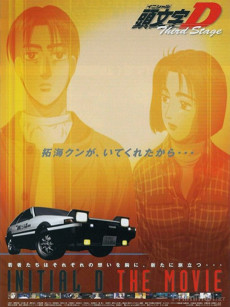
Initial D 3rd Stage
Takumi is approached by RedSuns leader Ryosuke Takahashi and offered to join him in forming a professional racing team. Before coming up with an answer to the proposal, Takumi seeks retribution by issuing a rematch to Emperor leader Kyouichi Sudou, who previously defeated him due to an engine failure. He is also challenged by Kai Kogashiwa, a second-generation street racer whose father was once a fierce rival of Takumi's father Bunta.
📺Anime Details
📝Editorial Analysis
The crunch of snow under worn tires. Not the clean, cinematic shush of a studio foley artist—but the brittle, uneven crack-squeal of rubber biting into icy asphalt on Mount Akina’s back roads at dawn, breath pluming in the headlight glare as Takumi downshifts, his knuckles white on the wheel, eyes locked on Kyouichi Sudou’s taillights vanishing into the fog. No music swells. Just engine whine, wind, and the low, guttural vibration of the AE86’s failing transmission—a sound that isn’t failure, but testimony. That moment isn’t about winning. It’s about answering a debt written in exhaust smoke and silence.
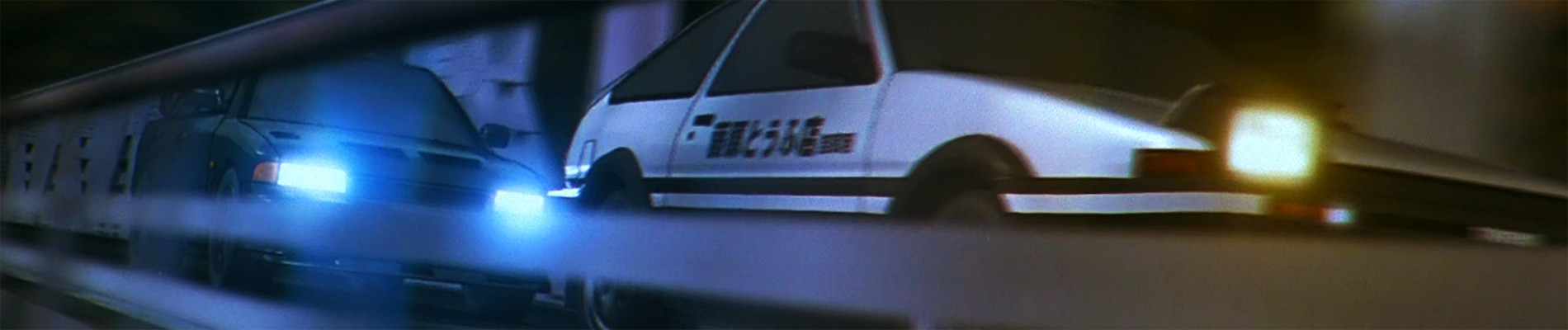
Initial D 3rd Stage doesn’t trade in triumph—it trades in weight. The snowscapes aren’t picturesque; they’re resistant, demanding respect, slowing time, making every gear change deliberate, every mistake consequential. This is seinen not because of blood or sex, but because it treats adolescence like terrain: steep, unrelenting, shaped by fathers you can’t outrun and rivals whose names echo before you even meet them. The rural setting isn’t quaint—it’s isolating, intimate, charged with history whispered through garage doors and cold mountain air. Romance flickers, yes—but it’s secondary to the quiet, almost sacred tension between driver and machine, between past and present, between what broke and what holds. You don’t watch it to escape. You watch it to feel the strain—the kind that settles in your shoulders after a long drive home alone, radio off, thinking about what you owe.
That same weight, that same fiercely focused Competitive Spirit fused with Adult & Dark Seinen gravity, lives in Team Fortress Classic. Its nine classes aren’t archetypes—they’re roles carved from exhaustion and irony: the Medic stitching up teammates mid-firefight while muttering German curses, the Spy pretending to be your friend before the knife goes in. Player reviews call it “nostalgic,” but the nostalgia isn’t for childhood—it’s for the raw, unvarnished intensity of early online combat: laggy servers, voiceless coordination, the sheer effort of holding a point against coordinated chaos. Like Takumi’s rematch against Sudou, victory here isn’t flashy—it’s earned in seconds of perfect timing, in knowing when to push and when to wait, in trusting someone you’ve never met to cover your flank. It’s adult because it assumes you understand consequence—not just death, but the cost of miscommunication, of ego, of rushing in without reading the terrain.
Then there’s Quake III Arena, where ancient alien gods watch warriors fight not for ideology, but for glory—a word that lands with the same hollow ring as “Emperor” or “RedSuns.” Its arenas are stripped bare: no story, no cutscenes, just geometry, speed, and the brutal physics of rocket-jumping off walls. The player review notes servers still run “as of typing this”—proof that its pulse hasn’t faded. That endurance mirrors Initial D 3rd Stage’s own refusal to romanticize growth: Kai Kogashiwa doesn’t arrive with fanfare—he arrives with his father’s ghost in the rearview mirror, and his challenge isn’t about speed, but legacy. Both Quake III and Takumi’s world operate on a code older than rules: precision over power, discipline over spectacle, mastery as quiet defiance against entropy.
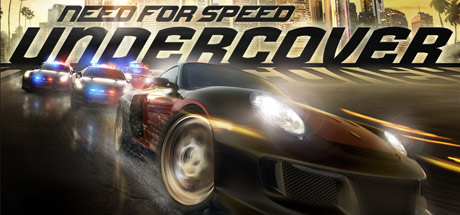
Even Need for Speed Undercover taps that same nerve—not in its plot (a “ruthless international crime syndicate”), but in its hunted/hunter duality. The review calls it “mid,” but that mediocrity is part of its texture: it’s a game built on risk, not reward—on near-misses, busted suspensions, cops closing in as your engine screams redline. Like Takumi pushing the AE86 past its limits on ice, it makes you feel the fragility of control. You’re not invincible. You’re tested. And sometimes, the most honest moment isn’t crossing the finish line—it’s the split-second before the crash, where everything narrows to throttle, brake, and breath.
This pairing isn’t for fans of racing fantasy. It’s for the ones who remember the first time they drove a manual car in winter—and how their hands shook not from fear, but from recognition. For players who still log into a 20-year-old Quake III server just to hear that rocket launcher whump echo in an empty map. For viewers who rewatch Takumi’s silent walk back to the gas station after the Sudou rematch—not for closure, but for the way his coat flaps in the wind, heavy with everything unsaid. These are stories and systems built for people who know that respect isn’t shouted. It’s measured in tire marks, in server uptime, in the space between one gear and the next—and in the quiet, snow-heavy breath before you go again.
🎮10 Games That Match the Vibe
Match Dimensions Explained
❓Frequently Asked Questions
Why does Initial D 3rd Stage feel so different from Need for Speed Undercover even though both have street racing?
Because Undercover trades Initial D’s grounded, physics-driven mountain pass duels (like Takumi’s battle against Keisuke on Akina) for Hollywood-style cop chases and scripted set-pieces — you’re dodging helicopters in Miami, not drifting through misty Tochigi passes. It’s got the same 'Competitive Spirit' vibe, but its tone leans into Black Box’s flashy, mid-2000s action-thriller energy, which one player called 'very mid' compared to the tighter focus of Initial D.
Is there an anime or live-action adaptation of Quake III Arena like there is for Initial D?
No — unlike Initial D, which spawned multiple anime seasons and movies, Quake III Arena has zero official adaptations. Its lore is pure sci-fi arena spectacle: ancient aliens summoning warriors like the Ranger or Jaguar across maps like 'Q3DM17' for no story reason beyond raw combat. That’s why fans still fire up ioquake3 today — it’s all about the twitch gameplay, not cutscenes or character arcs.
How does Team Fortress Classic compare to Call of Duty 4: Modern Warfare (2007) for team-based competitive play?
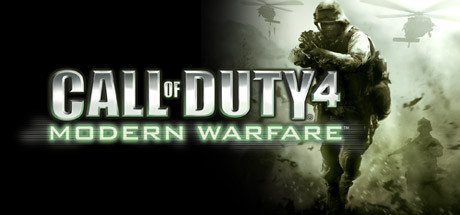
TF Classic is pure class-based chaos — think Medic healing while Spy backstabs, all in tight, objective-light maps like '2fort', whereas CoD4 dials in tactical realism with killstreaks, weapon attachments, and maps like 'Backlot' built for coordinated push-and-flank. Both score 73–77 and share that 'Adult & Dark Seinen' edge, but TFC’s humor and asymmetry (Demoman’s sticky bombs vs. CoD4’s M16A4) make it feel like a rowdier, more chaotic cousin.
What’s the best game like Initial D 3rd Stage if I just want that intense, high-stakes 'hunted/hunter' adrenaline rush?
Need for Speed Undercover is your pick — it drops you straight into that exact vibe: you’re an undercover racer infiltrating a crime syndicate, dodging spike strips and SWAT helicopters while pulling off near-misses on coastal highways. One player nailed it: 'You never thought it would turn out like this. An all-out chase where you’re the hunted. And the hunter.' It nails the tension, even if it’s less about pure drifting and more about cinematic evasion.