
Hikaru no Go
With a two-tone hairstyle and a streak of immaturity, Hikaru Shindou finds an old Go board with a hidden surprise - trapped within the Go Board is Fujiwara-no-Sai, the ghost of an ancient Go master! In the blink of an eye, Sai becomes part of Hikaru's consciousness and soon begins to learn the true essence behind this ancient game of skill and strategy.
(Source: VIZ Media)
📺Anime Details
📝Editorial Analysis
The silence before the first stone clicks onto the board—that silence. Not empty, but thick with held breath, the faint creak of Hikaru’s chair as he leans forward, fingers hovering over the black stone, Sai’s presence a warm pressure behind his eyes like sunlight through thin paper. It’s not tension—it’s recognition. A heartbeat syncing to something older than memory, something that hums in the grain of the wood and the weight of the stone. That moment isn’t about winning. It’s about the game answering back.
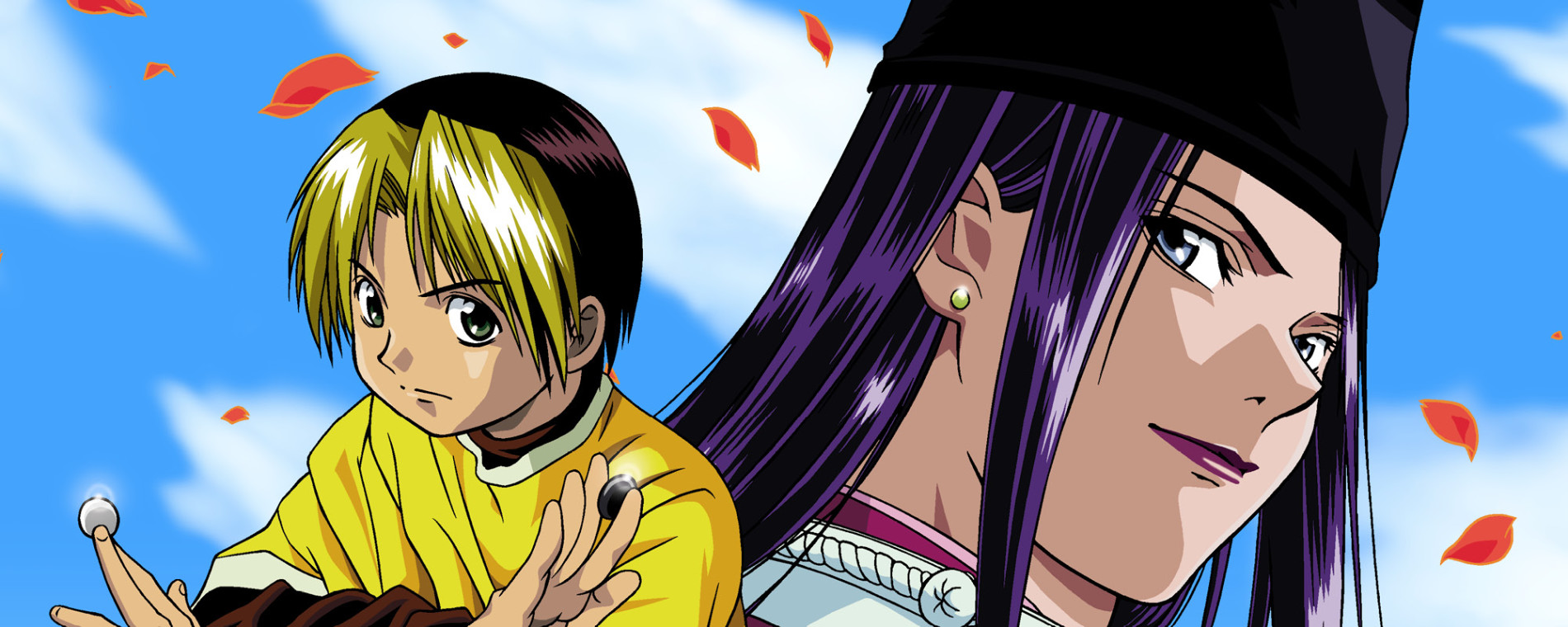
Hikaru no Go doesn’t trade in spectacle or speed. Its atmosphere is built on stillness that vibrates, on the quiet intensity of focus so deep it blurs time—where a single move can echo across centuries, where a ghost doesn’t haunt, but guides, not with fear, but with reverence for pattern, for consequence, for the unspoken language between hands and board. It makes you feel the weight of legacy—not as burden, but as inheritance passed hand-to-hand, mind-to-mind. You don’t watch Hikaru play Go—you feel the geometry of respect taking shape in real time. The supernatural isn’t spooky; it’s ceremonial. The coming-of-age isn’t loud; it’s measured in stones placed, in silences held, in the slow, irreversible shift from playing to belonging.
That same electric stillness lives in the arena—not as quiet, but as its inverse: the hyper-focused calm inside chaos. Quake III Arena’s description names it outright: “the greatest warriors… summoned to battle for the amusement of an ancient alien race.” That framing mirrors Sai’s own origin—not a curse, but a summons across time, a purpose reawakened. The player review notes servers still running “as of typing this”—a living, breathing continuity, just like the Go world in Hikaru no Go, where tradition isn’t museum-piece nostalgia but a live wire humming with current players, past masters, and ghosts who refuse to fade. The competitive spirit isn’t ego-driven; it’s ritualistic, a shared language of precision, timing, and spatial truth—stones and rockets both demand absolute presence in the now.
Then there’s Unreal Tournament 2004: Editor's Choice Edition, whose description boasts “ten game modes—both team-based and…” — that trailing ellipsis feels telling. Like Go’s infinite variations (joseki, tesuji, life-and-death), UT2004’s depth isn’t in spectacle, but in structured possibility. The player review calls it “fun 20+ years later,” echoing how Hikaru discovers Sai’s moves not as relics, but as living tools—timeless because they’re functional, not frozen. Both reward mastery that accumulates invisibly: muscle memory in flick-shots, intuition in reading opponent’s rhythm, the same way Hikaru learns to feel the board’s balance before calculating it.
And Deathmatch Classic, though sparsely populated now (“no players at ALL”), carries its own haunting resonance. Its description calls it “Valve’s tribute to the work of id software”—a deliberate act of homage, much like Hikaru’s entire journey: a modern boy channeling an ancient master not to replicate him, but to converse with him. The review’s frustration—“barely any maps (like 4–5 maps)”—mirrors the Go board’s starkness: minimal elements, maximal implication. Four corners, nineteen lines, two colors—and infinite stories. The scarcity isn’t lack; it’s focus. Just as Sai’s presence shrinks Hikaru’s world to the board’s grid, DMC’s stripped-down arenas force attention onto pure movement, reaction, consequence—the same razor-thin edge where Hikaru’s nervous sweat meets Sai’s serene certainty.
This pairing sings for the player who lingers in the pause before the jump, who replays a deathmatch clip not for the kill, but for the dodge—the split-second read, the instinct forged in repetition and respect. For the viewer who watches Hikaru trace Sai’s old game records with a finger, not to memorize, but to feel the hand that moved before him. Not for those chasing flash, but for those drawn to the hum beneath the surface: the ghost in the machine, the master in the memory, the ancient rules holding space for something fiercely, tenderly alive.
🎮17 Games That Match the Vibe




Match Dimensions Explained
❓Frequently Asked Questions
Why does the 'Competitive Spirit' dimension show up for both Quake III Arena and Unreal Tournament games when they're so different from Hikaru no Go?
Great question — it's not about *subject matter*, but about the *emotional core*: that white-knuckle, high-stakes tension of mastering a skill under pressure, where every decision matters and reputation hangs on split-second reads. Just like Hikaru sweating through a life-or-death goban match against Akira or Sai, Quake III Arena drops you into arena duels where predicting opponent movement (like reading a feint in Go) and controlling power-up timing feels like a mental chess match — only with rockets and railguns.
Is there an anime or live-action adaptation of Quake III Arena like there is for Hikaru no Go?
Nope — unlike Hikaru no Go, which got a beloved 2001 anime and multiple manga adaptations, Quake III Arena has *zero* official anime, manga, or live-action versions. It’s pure gameplay-first: no Sai whispering strategy in your ear, no emotional montage before the final round — just raw, uncut fragging, as confirmed by its description ('summoned warriors battle for alien amusement') and player reviews calling it 'excellent to jump into with ioquake3'.
How do Unreal Tournament 2004 and Deathmatch Classic compare for someone who loves the intense focus and ritual of Go matches?
UT2004 gives you deep, structured intensity — think of its ten distinct game modes (like Assault or Bombing Run) as formal opening josekis: layered, strategic, and richly mapped, just like Hikaru’s early training with Koyo Toya. DMC, meanwhile, is more like a frantic, stripped-down blitz game: only 4–5 maps, buggy, and nearly dead online (per its review: 'no players at ALL'), so it lacks the sustained rhythm and reverence UT2004’s Editor’s Choice Edition delivers — including those mind-bending, arena-based 'reads' that mirror Go’s spatial intuition.
What’s the best game like Hikaru no Go if I want that quiet, focused, almost meditative tension — but with guns instead of stones?
Go with Unreal Tournament: Game of the Year Edition — it’s the OG 1999 classic that built the template for competitive FPS ritual. Like Hikaru staring at the board before placing his first stone, UT’s arenas demand stillness, anticipation, and perfect spacing — whether you’re waiting for the shock combo to charge or predicting where an opponent will strafe. Its 'Competitive Spirit' dimension isn’t hype; it’s baked into every duel, just like the hushed silence before a vital move in the Honinbo title match.