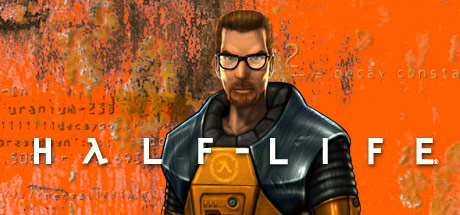
Half-Life
Named Game of the Year by over 50 publications, Valve's debut title blends action and adventure with award-winning technology to create a frighteningly realistic world where players must think to survive. Also includes an exciting multiplayer mode that allows you to play against friends and enemies around the world.
🎮Game Details
💬What Players Say
"Somehow managed to play this game for the first time 28 years after it's release and I went in totally blind. Nostalgia was not a factor for me here, but this relic is a legend. This game is a sci-fi TRIP, man...."
"One of my favorite games because it has great gameplay, atmosphere, and storytelling. The game keeps things interesting by mixing combat, puzzles, and exploration without feeling repetitive. I also like how the story happens during gameplay instead of long cutscenes...."
"Half-Life and its incredible demo Uplink prove that, even after all these years, they are not museum pieces, but masterpieces that still play like absolute beasts today. One of the game’s most groundbreaking aspects for its time was its seamless storytelling that never takes control away from the player, alongside the HECU military AI that still outclasses many modern FPS games. Soldiers flanking you from behind and flushing you out of cover with grenades was absolutely insane for that era...."
📝Editorial Analysis
The air in the Black Mesa test chamber tastes like ozone and burnt coffee. You’re holding a crowbar—not as a weapon, but as weight, as proof you’re still human while the walls bleed physics, the lights stutter into silence, and something unfolds in the air—not with a bang, but with a wet, resonant tear. No cutscene. No exposition dump. Just your boots on cracked tile, your breath fogging the HUD’s edge, and the sudden, gut-deep understanding that you are not safe here anymore—and no one is coming to fix it. That’s Half-Life: not a story told at you, but a world that happens around you, relentless and unblinking—exactly as the player review says: “a frighteningly realistic world where players must think to survive.” Not shoot. Not jump. Think. And feel—dread, urgency, isolation—before you even know why.
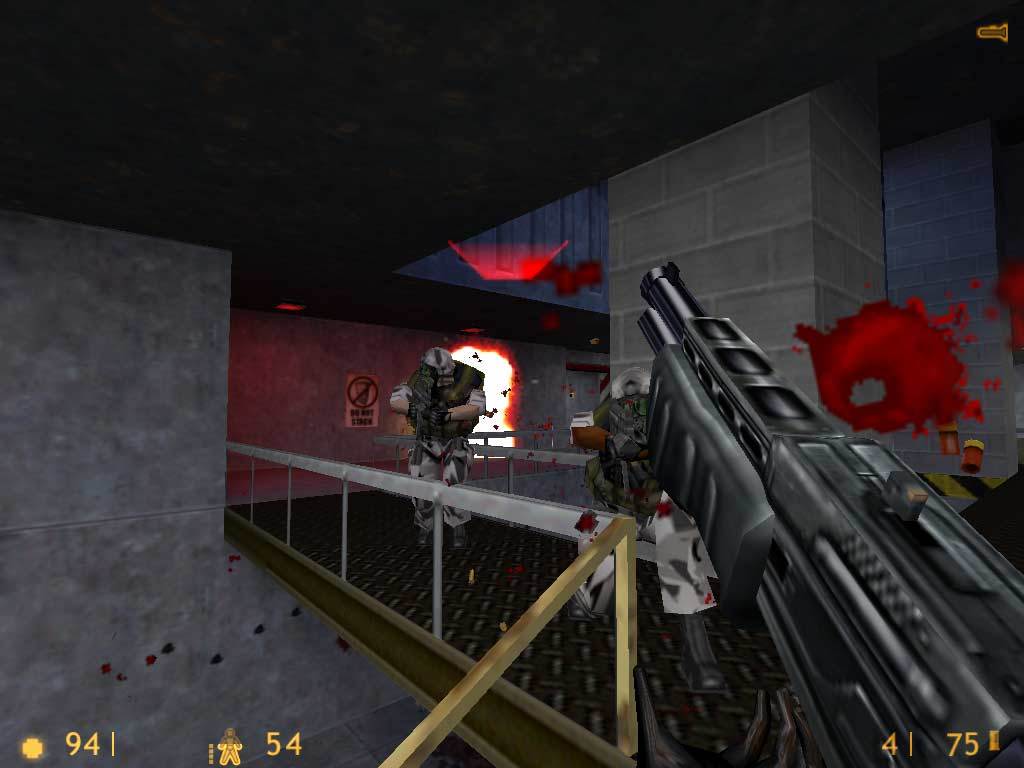
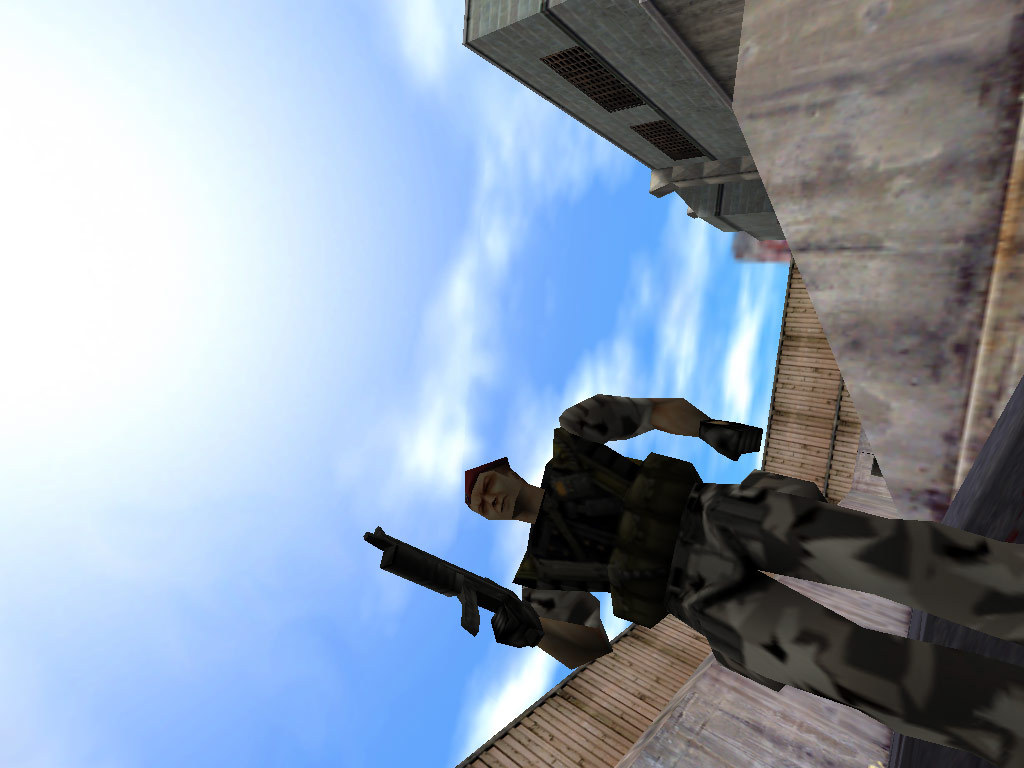
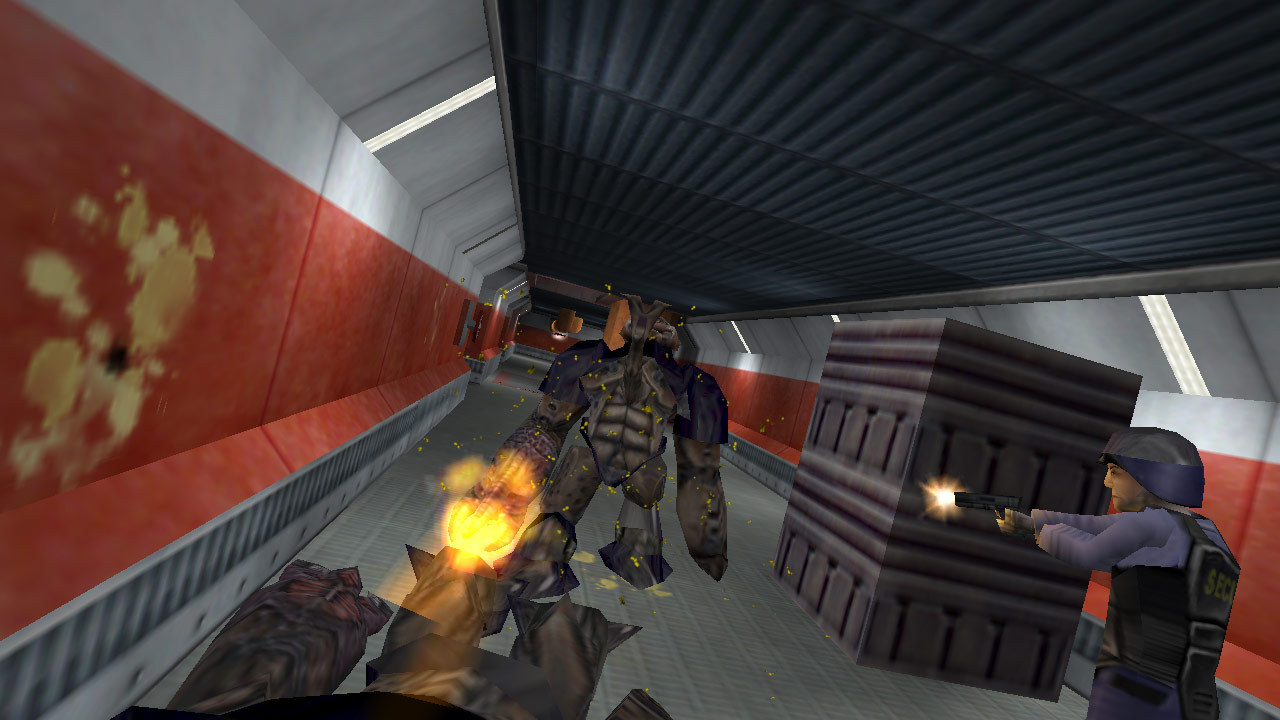
What makes Half-Life’s atmosphere singular isn’t its sci-fi setting or its alien invasion—it’s how it withholds. It never explains the resonance cascade; it subjects you to its aftermath. The silence between gunshots isn’t empty—it’s thick with the hum of failing infrastructure, the distant skitter of something not quite biological, the muffled panic over broken comms. You don’t learn lore from logs—you infer it from a scientist’s abandoned notes, a flickering monitor showing corrupted data, the way your own reflection warps in a cracked lab window. As one reviewer insists, it “keeps things interesting by mixing combat, puzzles, and exploration without feeling repetitive”—because every corridor, every vent, every paused moment before turning a corner carries consequence, not choreography. It’s not horror-as-scare; it’s horror-as-continuity. The world doesn’t reset. Your fatigue, your ammo count, your growing sense of wrongness—they accumulate. You don’t just play in the game—you endure it. And that endurance feels real, not nostalgic—just as the blind 28-year-later player confirms: “Nostalgia was not a factor… this relic is a legend.”
That same endurance pulses through Redline, where the racetrack isn’t a stage—it’s a hostile biome. Its sci-fi isn’t about exposition; it’s about velocity, friction, and the physical cost of pushing past limits. Like Half-Life, it trusts you to feel the stakes before naming them: the scream of engines, the shudder of hulls tearing, the way light bends at Mach-10—no dialogue needed, just sensation as narrative. Then there’s Terra Formars, whose body horror isn’t grotesque for shock, but systemic: biology weaponized, evolution weaponized, survival itself weaponized. Its dark seinen tone mirrors Half-Life’s refusal to comfort—the scientists aren’t heroes; they’re compromised, desperate, fallible. When a character’s arm mutates mid-conversation, it lands with the same quiet, horrifying inevitability as that first headcrab latching onto a guard’s face: no music swell, no pause—just change, immediate and irreversible. And Gintama.: Slip Arc—yes, really—shares that same destabilizing blend: sci-fi scaffolding (alien occupation, advanced tech) fused with visceral, almost biological unease (the Slip virus warping perception, identity, flesh). Its tonal whiplash—from absurd banter to sudden, silent close-ups of trembling hands—echoes Half-Life’s rhythm: levity collapsing into dread, not for contrast, but because that’s how reality fractures.
This isn’t for fans who want lore bibles or power fantasies. It’s for the person who replays the Lambda Core sequence not for the ending—but to re-feel the weight of that final elevator descent, the way the lights dim just so, the silence before the portal opens. It’s for the viewer who watches Space Brothers not for rocket science, but for the tremor in Mutta’s voice when he recalibrates a thruster manually—same focus, same quiet stakes. It’s for the one who pauses Hikaru no Go, not at the climax, but at the moment Hikaru’s hand shakes over the board—not from fear, but from the sheer, physical pressure of thought made manifest. These pairings resonate because they all treat tension as tactile, consequence as inescapable, and wonder—not as spectacle—but as something that happens to your nerves first, your mind second. They demand presence. Not attention. Presence. And if you’ve ever held your breath in a dark hallway, waited for a sound that never came, or felt your pulse sync to the rhythm of a failing generator—that’s where Half-Life lives. And that’s where these anime do too.
→18 Anime That Match the Vibe

Connected through 2 aesthetic dimensions.
Connected through 2 aesthetic dimensions.

JP’s white-knuckle drift through Redline’s neon-drenched asteroid belt mirrors Gordon Freeman’s silent sprint through Black Mesa’s collapsing test chambers—both hurtling through hostile, physics-bent space where split-second choices mean survival. Unlike most sci-fi spectacles, neither work pauses for exposition; they weaponize momentum, turning competitive spirit into visceral, breathless propulsion. That shared commitment to spatial realism within chaotic, high-stakes environments makes their resonance deeply physical—not just thematic, but kinetic.

Connected through 2 aesthetic dimensions.

Mars’ rust-colored dust chokes the air as cockroaches—mutated, intelligent, *hungry*—swarm through breached habitats in *Terra Formars*’ opening arc; that same claustrophobic dread of biology turned hostile echoes the Black Mesa quarantine breach in *Half-Life*, where headcrabs latch onto human necks with wet, organic finality. Unlike most sci-fi, both weaponize **Body Horror & Occult** not for shock alone, but as visceral metaphors for失控 scientific hubris—Valve’s resonance chamber hums with unstable physics, while *Terra Formars*’ terraforming experiment literally rewrites flesh into weaponized evolution. The pairing surprises because their terror emerges not from aliens *out there*, but from life we invited in—and then catastrophically misread.

Hibito’s quiet awe gazing at the Moon through a telescope—before his astronaut dreams ignite—mirrors Gordon Freeman’s first silent, disorienting steps into the Black Mesa test chamber: both moments pivot on fragile human wonder confronting vast, indifferent cosmic scale. Unlike most sci-fi that romanticizes space, *Space Brothers* (especially its grounded, mid-career Season 2 arcs) and *Half-Life* share a dark seinen realism—where ambition collides with institutional failure, bureaucracy, and existential dread in meticulously textured worlds. That resonance isn’t hopeful; it’s hauntingly precise.

Ryoma Nagare’s grotesque reanimation—his prison cell walls bleeding black ichor as Saotome’s corpse reassembles—hits with the same visceral dread as Black Mesa’s first headcrab leap. Unlike most mecha fare, *Getter Robo: Armageddon* leans into body horror and occult sci-fi, mirroring *Half-Life*’s fusion of quantum instability and biological violation. That shared commitment to physics-defying terror in grounded spaces makes their resonance unnervingly precise.

Connected through 2 aesthetic dimensions.

Porori’s watery onomatopoeia echoes the viscous, biomechanical ooze of Black Mesa’s mutated test subjects—both works weaponize sci-fi not for spectacle but as a vector for body horror that unsettles through texture and violation. Unlike most comedies masking dread with absurdity, *Gintama.: Slip Arc* leans into porous boundaries between human and alien, much like *Half-Life*’s headcrabs fuse biology with invasive technology. This shared obsession with the uncanny permeability of flesh makes their resonance startlingly physical—not just thematic, but tactile.

A drifting space debris collector’s quiet focus amid orbital silence mirrors Gordon Freeman’s wordless traversal of Black Mesa’s ruined corridors—both grounded in 🚀 Sci-Fi & Space realism where technology serves labor, not spectacle. Unlike most sci-fi, neither flinches from the weight of consequence: Planetes’ Tanabe confronting a dead astronaut’s frozen body echoes Half-Life’s harrowing descent into the Anomalous Materials lab, where wonder curdles into dread. This shared 🖤 Adult & Dark Seinen sensibility—treating space as workplace and wound—makes their resonance startlingly humane.






Match Dimensions Explained
❓Frequently Asked Questions
Why is Redline considered similar to Half-Life despite being a racing anime?
Redline nails Half-Life’s 'frighteningly realistic world where you must think to survive' vibe—not through guns, but through its hyper-detailed, physics-driven racing in hostile alien environments like the treacherous Roboworld circuit. The way JP and his crew adapt mid-race to sudden environmental hazards (like sandstorms that blind sensors or gravity shifts mid-turn) mirrors Gordon Freeman’s real-time problem-solving under pressure—no cutscene saves, just instinct, tech awareness, and split-second decisions.
Is there an anime adaptation of Half-Life?
No official anime adaptation exists—but Terra Formars comes closest in spirit: it’s got that same grounded sci-fi dread, body horror escalation (like the Martian cockroach mutations mirroring Half-Life’s headcrab infestations), and a desperate, tactical survival tone. When the crew on Mars starts getting infected and fighting *while* trying to repair failing life support or reroute power—just like Gordon jury-rigging HEV suit systems mid-combat—it feels ripped from the same ‘think to survive’ playbook.
How does Terra Formars compare to Gintama.: Slip Arc for Half-Life fans?
Terra Formars delivers the oppressive, adult sci-fi tension and visceral body horror that matches Half-Life’s atmosphere—think the Black Mesa resonance cascade’s irreversible consequences mirrored in the irreversible mutations aboard the BUGS 2. Gintama.: Slip Arc shares the sci-fi setting and body horror (like the Shinsengumi’s cybernetic overhauls), but wraps it in satire and absurdity; if you want Half-Life’s relentless stakes and dread, go with Terra Formars. If you want its tech-and-horror DNA *winked at* while still delivering genuine tension? Slip Arc’s your dark horse.
What’s the best anime like Half-Life for someone who loves the ‘grounded sci-fi + real-time problem solving’ vibe?
Space Brothers is your top pick—it captures Half-Life’s ‘award-winning technology creating a frighteningly realistic world’ feel through its obsessive attention to real orbital mechanics, spacecraft failures, and astronaut training. When Mutta’s team scrambles to diagnose a solar array malfunction during a live ISS docking sequence—or when he manually calculates re-entry angles after comms blackout—it’s pure Half-Life: no magic fixes, just knowledge, calm pressure, and physics you can *feel*. It’s not about shooting aliens—it’s about surviving because you *understand* the machine.