
Planetes
In the year 2075, mankind has reached a point where journeying between Earth, the moon and the space stations is part of daily life. However, the progression of technology in space has also resulted in the problem of the space debris, which can cause excessive and even catastrophic damage to spacecrafts and equipment. This is the story of Technora's Debris Collecting section, its EVA worker, Hachirota "Hachimaki" Hoshino, and the newcomer to the group, Ai Tanabe.
(Source: Anime News Network)
📺Anime Details
📝Editorial Analysis
The silence after the EVA suit’s oxygen alarm blares—then cuts out. Hachimaki floats, tethered to the Toy Box, staring at a single shard of shattered satellite glass drifting past his visor. Sunlight glints off its edge, sharp and indifferent. Below, Earth hangs, blue and swollen, impossibly serene. He doesn’t reach for it. He just watches. His breath fogs the inside of his helmet—not from exertion, but from holding it too long. That pause—not action, not despair, but quiet witness—is where Planetes lives.
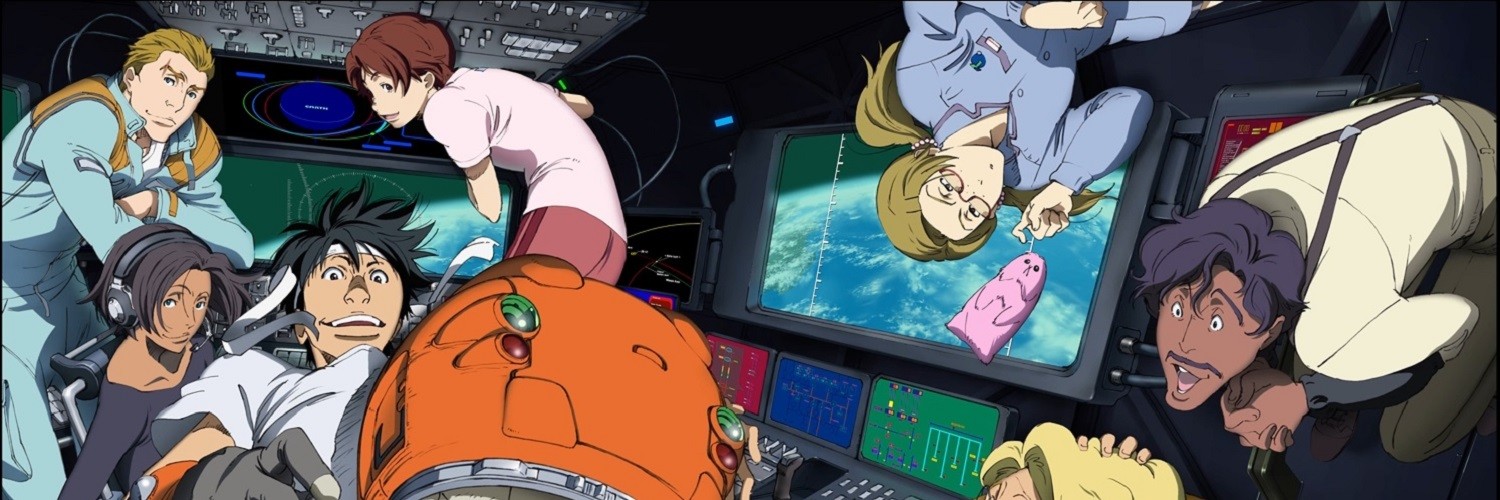
This isn’t space as spectacle. It’s space as workplace, as weight, as weathered metal and recycled air. The feeling isn’t awe—it’s tenderness. Tenderness for the fragile choreography of human labor orbiting a planet we’ve both cherished and cluttered. You feel the grit under fingernails after an EVA, the low hum of station vents at 3 a.m., the way Ai Tanabe’s voice catches—not in melodrama, but when she misjudges torque on a bolt and nearly spins free. There’s no grand villain, no chosen one. Just adults showing up, day after day, to clean up what humanity left behind—while trying, haltingly, to understand each other. It makes you think about stewardship, not conquest; about repair, not revolution; about how love blooms not in fireworks, but in shared coffee breaks between debris sweeps.
That emotional DNA—the slow-burn gravity of adult responsibility wrapped in quiet wonder—echoes in surprising places. Chains, despite being a match-3 arcade game, lands with uncanny resonance. Its description calls it “relaxing” and “physics-driven,” and player reviews highlight its meditative rhythm: “link 3 or more… clear enough till you can proceed.” That’s Planetes’ heartbeat—methodical, cumulative, grounded in cause-and-effect physics and patient repetition. No flashy combos, no time pressure that screams; just the satisfying click of alignment, the gentle escalation of complexity, the calm insistence that meaning accrues through sustained attention. It’s not about winning. It’s about maintaining flow—just like Hachimaki calibrating a thruster nozzle or Ai recalculating orbital decay vectors over lukewarm tea.
Then there’s BioShock, whose description positions it as a shooter “loaded with weapons and tactics never seen,” yet player reviews call it “one of the most revolutionary games ever!”—not for its gunplay, but for how it interrogates ideology in enclosed, decaying spaces. Its dimensions include “Political Thriller” and “Adult & Dark Seinen,” matching Planetes’ unflinching look at corporate bureaucracy, orbital jurisdiction disputes, and the quiet terrorism of neglect—like when a derelict fuel tank, ignored by regulators, becomes a bullet aimed at a supply shuttle. Both refuse easy binaries: BioShock’s Rapture isn’t just fallen utopia—it’s a warning etched in leaking brass and flickering neon; Planetes’ space isn’t hostile frontier—it’s a mirror, reflecting our compromises, our blind spots, our stubborn, tender persistence.
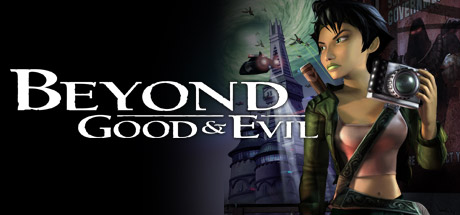
And Beyond Good and Evil™, described as a game where you “expose a terrible government conspiracy” as reporter Jade, shares Planetes’ moral texture. Its dimensions include “Emotional Narrative” and “Sci-Fi & Space,” and player reviews praise its heart: “Crazyyy game!”—not for spectacle, but for loyalty, urgency rooted in care. Like Ai digging into classified debris logs to prove negligence, or Hachimaki refusing to sign off on a rushed repair because “it’ll hold—for now, maybe”—this is activism as daily practice, not monologue. Both stories treat truth as something gathered slowly, cross-referenced, carried in notebooks and hard drives, defended not with slogans but with precise, weary, human insistence.
These pairings aren’t for fans of space opera or power fantasies. They’re for the person who re-watches the scene where Hachimaki fixes a leaky valve twice, because the first time he missed a hairline fracture—and feels a lump in their throat both times. For the player who pauses mid-game in Chains just to watch bubbles settle, or replays Beyond Good and Evil™’s radio transmissions not for plot, but for the timbre of Pey’j’s voice. For anyone who’s ever cleaned up after others—not out of duty, but because the mess matters, and so do the people breathing the same thin, shared air. They’re for those who find beauty in maintenance, courage in continuity, and love in the stubborn, sunlit act of showing up—again, and again, and again.
🎮96 Games That Match the Vibe











































Match Dimensions Explained
❓Frequently Asked Questions
Why does Chains keep coming up when I search for games like Planetes?
Because Chains nails the quiet, contemplative sci-fi vibe of Planetes—think floating in zero-G while solving puzzles slowly, not rushing into combat. Its 'Healing & Slow Life' and 'Emotional Narrative' dimensions directly mirror Planetes’ focus on human moments amid space travel, like watching debris drift past a station window while piecing together a chain of colored bubbles—very much like how Planetes lingers on small, meaningful gestures between characters like Hoshino and Tanabe.
Is there a Planetes video game adaptation?
No—there’s never been an official Planetes game adaptation, which is why fans lean hard into titles like Beyond Good and Evil™ that share its soul: investigative storytelling in a lived-in sci-fi world, with Jade and Pey’j uncovering systemic lies just like the CNS crew exposing corporate cover-ups in asteroid mining ops. The game’s 'Emotional Narrative' + 'Sci-Fi & Space' dimensions (79 score) make it the closest emotional cousin, especially in scenes where quiet dread builds before a reveal—like Jade’s first glimpse of the DomZ labs.
How does BioShock compare to Beyond Good and Evil for Planetes fans?
BioShock leans harder into philosophical dread and adult political critique (81 score, 'Political Thriller' + 'Adult & Dark Seinen'), whereas Beyond Good and Evil matches Planetes’ hopeful-yet-weary tone—Jade’s scrappy journalism and empathy-driven choices feel closer to Ai Tanabe’s idealism than Jack’s descent in Rapture. Both have sci-fi settings, but only Beyond Good and Evil shares Planetes’ emphasis on found family and gentle pacing, like riding the hoverbike across the jungle with Pey’j instead of descending into Fontaine’s underwater hellscape.
What’s the best Planetes-like game if I want something calming but still sci-fi?
Chains is your best bet—it’s literally built for slow, meditative focus (82 score, 'Healing & Slow Life' + 'Sci-Fi & Space'), where linking bubbles feels like tending to orbital mechanics: precise, unhurried, and quietly profound. Unlike BioShock’s intensity or Assassin’s Creed’s parkour chaos, Chains mirrors Planetes’ serene weightlessness—imagine clearing a chain during a quiet scene like Hoshino repairing a satellite, no alarms, no timers, just color, physics, and calm.