
Oddworld: Stranger's Wrath HD
You're the Stranger, a mysterious bounty hunter on a mission to bag the ultimate prize. And you need that money like no one else because there is something very wrong with your health and the only way to fix it is a very costly operation.
🎮Game Details
💬What Players Say
"This game is a genuine classic, its the best Fantasy-SciFi-Western game about being a bounty hunter ever made. Solid Fps and 3rd person 3d platforming, pretty rad story and set pieces, dope visuals and voice acting, this shi has it all. A little on the shorter side if your decently skilled at a fast-paced boomer shooter gameplay loop, I recommend the game on hard mode its pretty fun minus a couple notorious mini bosses...."
"Excellent Music and world building, and of course very enjoyable to play. I highly recommend it."
"it's fun but my monitor is having a problem and is acting funny :/ overall, a 10/10 game."
📝Editorial Analysis
The dust kicks up in slow, gritty spirals as the Stranger crouches behind a rusted freight car on the edge of Dusty Gulch—his breath shallow, his left hand pressed tight against his ribs where something wrong hums beneath the skin. Not pain exactly, but a deep, insistent wrongness, a biological debt ticking louder with every bounty missed. You’re not just hunting outlaws—you’re racing a failing body toward a surgery you can’t afford, and the only currency that matters is live flesh in a cage. That’s the weight in your gut when you cock your crossbow, load a live wriggling Scrab, and aim—not to kill, but to capture, to trade. It’s all right there: the official description’s quiet desperation, the player review calling it “the best Fantasy-SciFi-Western game about being a bounty hunter ever made,” the raw, unglamorous urgency buried under rad set pieces and dope visuals.
This isn’t frontier myth-making—it’s frontier exhaustion. The world feels sun-baked and slightly frayed at the seams: saloons hum with uneasy silence between gunshots; townsfolk eye you not with awe, but calculation—how much will you pay for water? How much will you take for a head? The music swells with melancholy strings and twangy, off-kilter percussion, echoing what one reviewer called “excellent world building”—not through exposition, but through texture: peeling paint on adobe walls, the wheeze of a broken-down steam rig, the way shadows stretch long and thin at dusk like tired limbs. You don’t feel heroic. You feel accountable. Every shot, every leap across crumbling rooftops, every negotiation with a wary shopkeeper—it all orbits that single, desperate truth: your body is failing, and mercy is a luxury you’ve already spent.
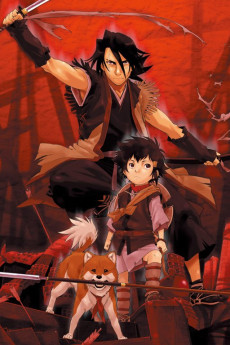
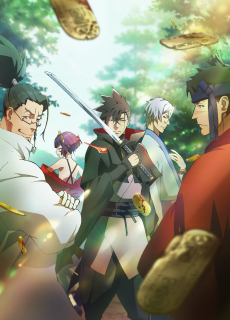
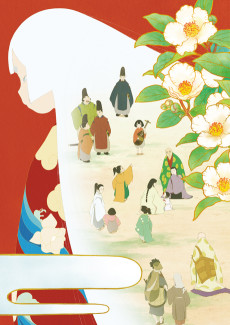
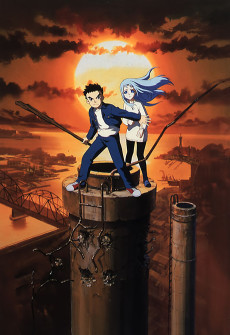
House of Five Leaves shares that same hushed, weighted stillness—the kind where silence isn’t peace, but suspension. Like the Stranger, Akitsu moves through a lawless, morally porous frontier not for glory, but survival—and quietly, for dignity. Both are adults navigating systems rigged against them: one by biology and bounty boards, the other by Edo-era class rot and hidden violence. The Western & Frontier dimension isn’t about horses and hats—it’s about liminal space, where rules dissolve and ethics must be forged, not inherited. And the Adult & Dark Seinen layer? It’s in how neither story flinches from consequence: a captured bounty doesn’t vanish into a jail cell—it squirms, bleats, stares back. A surrendered ronin doesn’t get absolution—he gets a meal, a bed, and the slow, quiet erosion of his own certainty.
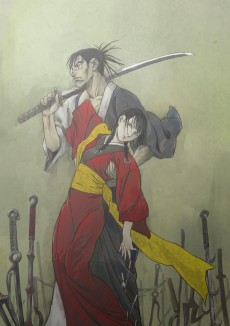
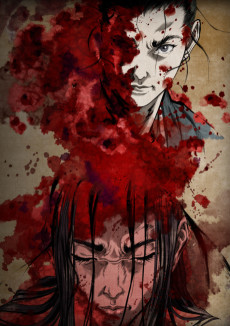
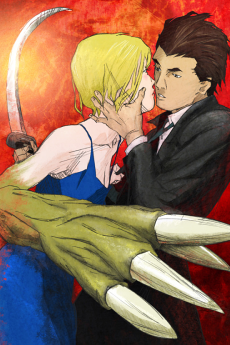
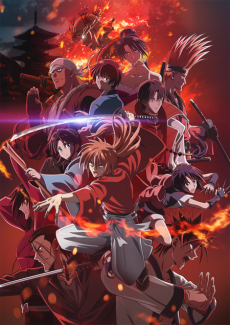
Blade of the Immortal (ONA) hits with similar resonance—not in flash, but in grit. Manji doesn’t wield immortality like a weapon; he carries it like a curse he’s too tired to drop. The Stranger’s condition mirrors that: not superhuman, but compromised, forcing him into morally tangled transactions just to stay upright. Both exist in worlds where justice is transactional, where “right” is measured in coin, captives, or severed limbs—and where every fight leaves residue: blood on leather, guilt in the throat, exhaustion in the joints. Their shared Western & Frontier DNA isn’t aesthetic shorthand—it’s structural: vast, indifferent landscapes that amplify isolation; towns where everyone has a price, and few speak plainly.
And then there’s Gintama.: Slip Arc, which cracks open the same frontier with absurdity—but never empties it of weight. The sci-fi clutter (floating billboards, alien barflies, malfunctioning mechs) doesn’t cancel the ache—it frames it. Like the Stranger’s crossbow firing living ammunition, Gintama’s jokes land because they’re fired from the same cracked foundation: a world where capitalism, colonialism, and bodily decay have all gone feral. The Comedy & Parody dimension isn’t relief—it’s pressure release, the laugh that comes right before the cough. When the Stranger swaps a live Slog for clean water and three bullets, it’s not whimsy—it’s economics as dark farce. Exactly what Slip Arc does when it pivots from slapstick to a silent shot of Kagura’s knuckles bleeding on a rusted pipe.
This pairing isn’t for fans of “cool guns” or “epic battles.” It’s for the person who watches a bounty poster flutter in the wind and wonders who posted it—and what they’ll do with the money. For the one who hears a lone harmonica in a desert town and feels the loneliness before the melody resolves. For the reader who pauses mid-page in House of Five Leaves because Akitsu’s hesitation feels more real than any sword swing. They’re the ones who play Oddworld: Stranger's Wrath HD, not to win—but to endure, to bargain, to keep breathing just five minutes longer. They don’t want heroes. They want people who haven’t quit yet.
→58 Anime That Match the Vibe

Wide-open spaces and the freedom to forge your own path.

Wide-open spaces and the freedom to forge your own path.
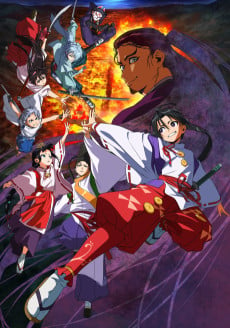
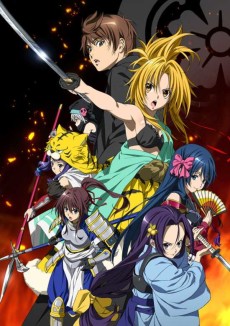
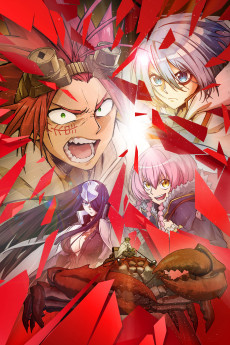
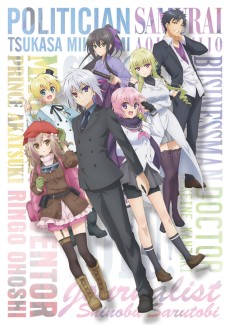
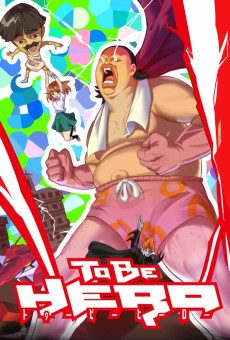
Stranger’s lasso-and-live-ammunition takedowns in Dusty Gulch mirror Houjou Tokiyuki’s improvised, almost slapstick battlefield improvisations amid collapsing shogunate banners. Where the bounty hunter’s “🤠 Western & Frontier” grit meets absurd biological urgency, Tokiyuki’s supernatural resilience amid 1333’s political chaos weaponizes comedy as tactical camouflage—both treat survival as a darkly farcical tightrope walk. This pairing surprises by revealing how frontier lawlessness and feudal betrayal alike forge heroes who fight not for glory, but sheer, ragged continuity.

Wide-open spaces and the freedom to forge your own path.

Wide-open spaces and the freedom to forge your own path.
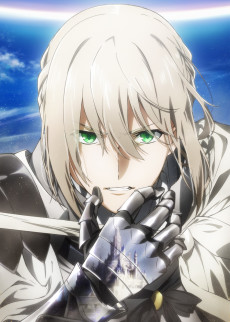
Wide-open spaces and the freedom to forge your own path.
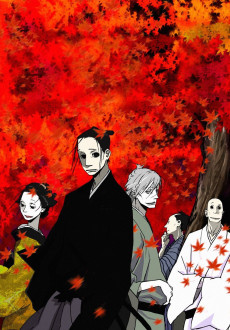
Stranger’s coughing fit mid-chase through Rockworm Canyon—blood spotting his duster—mirrors Masanosuke’s trembling hands as he sheathes his sword after failing to draw it in time. Unlike most frontier tales that glorify stoicism, both *Stranger’s Wrath HD* and *House of Five Leaves* (2010 TV series) weaponize vulnerability: the Western & Frontier setting becomes a crucible where physical decay and moral uncertainty erode mythic self-reliance. That shared, aching sincerity—strange, dark, and deeply human—is what makes their resonance so quietly devastating.

Wide-open spaces and the freedom to forge your own path.

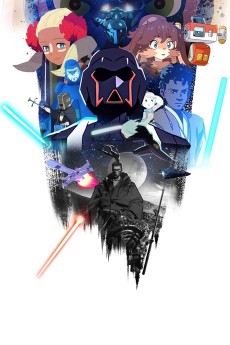
Stranger’s dusty, sun-baked bounty posters and Aladdin’s labyrinthine ruins share a frontier grit—where 🤠 Western & Frontier isn’t just setting but moral terrain: lawless, improvised, thick with consequence. Unlike most fantasy epics, *Magi*’s second season leans into tactical warfare as Aladdin and friends coordinate layered, terrain-aware battles—mirroring Stranger’s deliberate, ammo-conscious skirmishes in canyons and shantytowns. That shared tension—between survival instinct and reluctant idealism—makes their resonance startlingly human, not just stylistic.
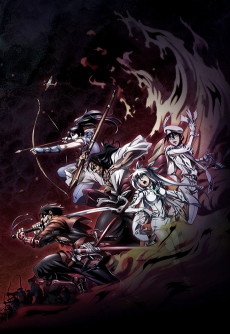
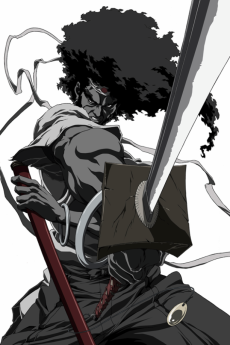
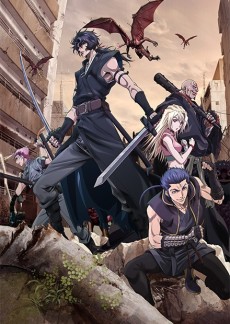
Stranger’s grimy, dust-choked bounty runs across Oddworld’s frontier—where a wounded mercenary swaps live ammo for wriggling critters—echo Shimazu Toyohisa’s brutal, tactical warlord pragmatism in DRIFTERS’ fractured magic wasteland. Unlike most fantasy action, both weaponize the 🤠 Western & Frontier ethos not for mythos, but for visceral, morally frayed survival: one man stitches his failing body with credits, another unites samurai and monsters to hold a line against annihilation. That shared, unsentimental grit makes their resonance startlingly coherent—not genre mimicry, but kinship in exhausted resolve.








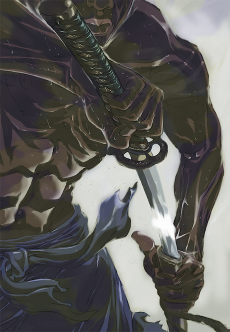
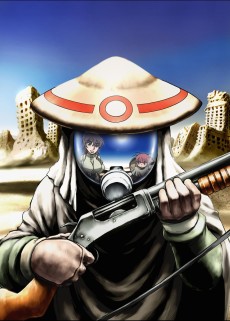
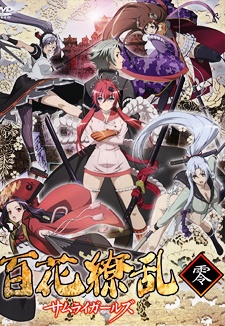
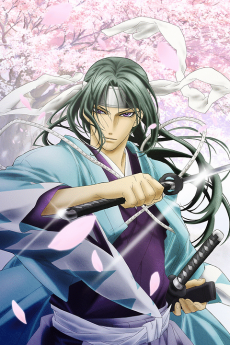








Match Dimensions Explained
❓Frequently Asked Questions
Why is House of Five Leaves recommended for fans of Oddworld: Stranger's Wrath HD?
Because both lean hard into that morally gray Western frontier vibe—Stranger’s bounty-hunting desperation mirrors Akitsu’s quiet, principled struggle in a lawless town, and the dusty, lived-in worldbuilding in House of Five Leaves (like the tense standoff at the Kaga-ya teahouse) hits the same atmospheric sweet spot as Stranger’s gritty, rain-slicked Outpost or the claustrophobic tunnels of the Gabbit Warrens.
Is there an anime adaptation of Oddworld: Stranger's Wrath HD?
Nope—there’s never been an official anime adaptation. But if you’re craving that exact blend of sci-fi weirdness, frontier grit, and darkly comedic bounty-hunting, Gintama.: Slip Arc nails it: Kagura’s ‘Alien Hunter’ arc has literal alien bounties, absurd tech like the Yato-enhanced prosthetics, and that same sardonic, genre-mashing tone Stranger brings to its ammo-as-creatures mechanic and the Stranger’s coughing, time-pressured mission.
How does Blade of the Immortal (ONA) compare to The Elusive Samurai for Stranger’s Wrath HD fans?
Blade of the Immortal leans into the *dark, adult* side—Manji’s cursed immortality and brutal, rain-soaked duels (like the rooftop fight with Rin’s assassins) mirror Stranger’s physical decay and high-stakes survival. The Elusive Samurai, meanwhile, swaps grimness for sharp satire and tactical chaos—think the ‘Bounty Hunt’ episode where Hojo’s crew uses decoys and terrain like Stranger’s grappling hook + pepper-bullet combos in the Dusty Gulch ambush.
What’s the best anime like Stranger’s Wrath HD if I want that lonely, urgent, ‘running out of time’ vibe?
House of Five Leaves—it’s got that same quiet intensity and ticking-clock tension. Just like Stranger’s worsening cough and the ever-present countdown to his surgery, Akitsu carries unspoken trauma and walks through mist-shrouded streets knowing every choice could cost him everything. That scene where he silently shoulders the weight of the gang’s fate while the wind stirs dead leaves? Pure Stranger energy.