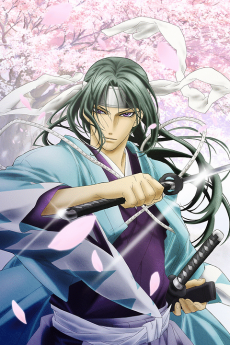
Hakuoki ~Demon of the Fleeting Blossom~
The protagonist, Yukimura Chizuru, is the daughter of a doctor who works in Edo. The father leaves Edo to work as a volunteer doctor and moves to Kyoto without his daughter. As time passes by, Chizuru starts worrying about losing contact with her father, so she decides to go to Kyoto in search of him. On the way, Chizuru is attacked by few criminals and witnesses a fight between an oni and the Shinsengumi. Taking her into custody and saving her, the Shinsengumi debate on what to do with Chizuru when they discover that she is the daughter of the doctor they are also looking for. So they decide to become Chizuru's protectors and help her look for her father (the doctor). Lots of events happen while she stays with the Shinsengumi, as they discover mysterious secrets and also fight against the Bakumatsu group. The story is overall romantic with a historical and political background.
(Source: Hakuouki official website)
📺Anime Details
📝Editorial Analysis
Rain slicks the cobblestones of Kyoto’s narrow alleys—not gently, but in cold, insistent sheets that turn dust to mud and blood to rust-colored smears. Chizuru stumbles backward, breath ragged, her sleeve torn and damp with someone else’s warmth. She watches—not as a witness, but as a hinge—as an oni’s claw tears through mist and men alike, and then, just as suddenly, the Shinsengumi descend: blades flashing not with triumph, but with exhaustion, their uniforms already stained, their eyes older than their years. That moment isn’t about rescue. It’s about being pulled into gravity—a world where loyalty is fraying at the seams, where honor bleeds into pragmatism, and every sword draw carries the weight of a man who’s already decided how he’ll die.
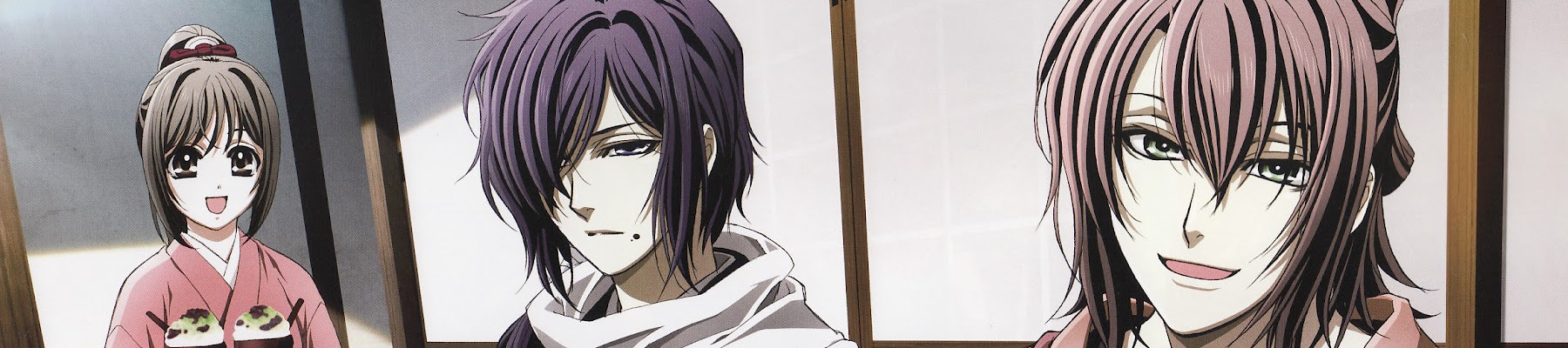
What makes Hakuoki ~Demon of the Fleeting Blossom~ ache so deeply isn’t its vampire lore or swordplay—it’s the quiet dread of inevitability. This is history not as monument, but as wound: Edo collapsing, Kyoto burning at the edges, samurai clinging to codes while their bodies mutate, their loyalties fracture, their deaths grow too beautiful, too final. You don’t feel heroic here—you feel unmoored, like Chizuru herself: a girl stepping into war not for glory, but because her father’s silence has become louder than cannon fire. The gore isn’t spectacle—it’s intimacy: the way a severed hand still curls, the way a dying man’s last words are half apology, half confession. It’s melancholy dressed in silk and steel, where every cherry blossom falls just before you can catch it.
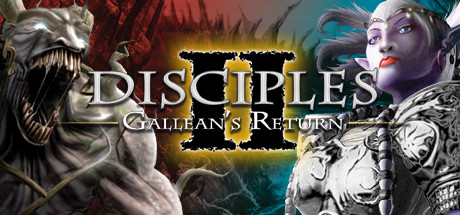
That same emotional resonance hums in Disciples II: Gallean's Return, where the description names its core truth: “Dark Fantasy, JRPG Narrative, Tactical Warfare.” Not just battles—but choices made in shadow, where alliances shift like smoke and every victory tastes faintly of ash. The player review nails it: “Best Disciples ever… Awesome atmosphere and gameplay!” — that “atmosphere” isn’t mood music; it’s the slow suffocation of a kingdom rotting from within, where even your champions bear scars that never fully heal. Like Chizuru walking among men who’ve already lost something irreplaceable, you command units whose backstories whisper of betrayal, exile, quiet despair—not villains, not heroes, but survivors counting down to the end.
Then there’s Sacred Gold, tagged “Dark Fantasy, Action Spectacle,” its description invoking orcs, ogres, and a kingdom choked by “a shadow of evil.” But read between the lines: this isn’t mindless slaughter—it’s ritualized collapse. The player review calls it “full of jank, bugs and is not very stable on modern systems…”—and yet, that instability mirrors Hakuoki’s own tonal fragility: a world held together by fraying threads, where spectacle exists because the foundations are crumbling. When Chizuru sees a Shinsengumi captain transform mid-battle—fangs emerging, eyes turning gold—not as horror, but as tragedy wearing fangs—that’s Sacred Gold’s essence: action as lament, power as curse, spectacle as sorrow made visible.
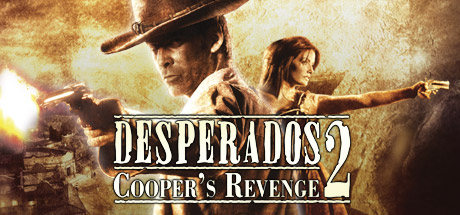
Even the Western pairings vibrate with this same frequency—not through genre, but through emotional architecture. Helldorado, described as “1883, SANTA FE. Peace… shattered by a shocking kidnapping,” echoes Hakuoki’s central tension: order dissolving into chaos, with ordinary people caught in the gears of larger, merciless forces. Its player review confirms it’s “a standalone expansion to the second game in the Desperados series,” meaning it inherits that series’ obsession with precision under pressure—the same razor’s-edge calm Chizuru must master when negotiating between warring factions, her voice steady even as her hands shake. And Desperados 2: Cooper's Revenge, tagged “Western & Frontier, Tactical Warfare,” doesn’t just mirror Hakuoki’s ensemble cast—it mirrors its moral calculus: every mission demands weighing lives against ideals, every stealth takedown echoing the Shinsengumi’s whispered debates over whether to execute a traitor—or let him live, knowing he’ll kill again.
This is for the viewer who watches Chizuru kneel beside a wounded soldier and feels not pity, but kinship—for the player who pauses mid-battle in Disciples II not to optimize damage, but to reread a unit’s journal entry about his sister’s grave; for the one who boots up Helldorado not for gunfights, but to feel the weight of a six-shooter in a trembling hand, knowing the real enemy isn’t outlaws—it’s time, memory, and the unbearable lightness of fading loyalty. They don’t seek escapism. They seek recognition: that flicker in the dark where beauty and brutality share the same breath—and where every fleeting blossom, every last stand, every loaded revolver, whispers the same fragile, urgent truth: we are all running toward the same ending, trying to make it mean something on the way.
🎮33 Games That Match the Vibe

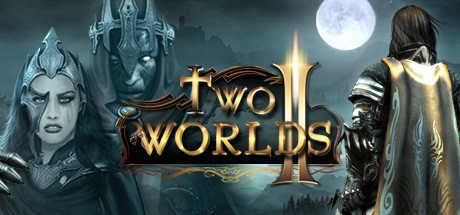





Match Dimensions Explained
❓Frequently Asked Questions
Why is Desperados 2: Cooper's Revenge listed as similar to Hakuoki despite being a Western tactical game?
It’s matched on the 'Tactical Warfare' dimension — like Hakuoki’s branching dialogue choices that pivot entire story paths (e.g., choosing between Okita or Hijikata in the Shinsengumi arc), Desperados 2 forces precise, consequence-heavy decisions: one misstep during Cooper’s revenge mission can get your whole squad ambushed near Santa Fe Station. Both hinge on timing, loyalty trade-offs, and high-stakes faction tensions — just swapped for samurai codes vs. outlaw codes.
Is there a live-action or anime adaptation of Disciples II: Gallean's Return like there is for Hakuoki?
No — unlike Hakuoki, which got multiple anime seasons (like *Hakuoki: Kyoto Winds* covering the Ikedaya incident) and even a live-action film, Disciples II has zero adaptations. Its rich JRPG narrative — think Gallean’s grim resurrection cutscene or the morally gray choices in *Guardians of the Light* — lives entirely in-game, praised by fans for its 'awesome atmosphere' but never expanded beyond the PC release.
How does Sacred Gold compare to Hakuoki in terms of romance and character depth?
It doesn’t — Sacred Gold is pure Dark Fantasy Action Spectacle: you’re smashing orcs with a hammer, not sharing sakura-viewing scenes with Chizuru or debating loyalty with Sannan. Hakuoki’s emotional intimacy (like the quiet tea ceremony with Shinpachi before battle) is totally absent here; player reviews even call it 'full of jank', confirming it prioritizes spectacle over storytelling or relationship arcs.
What if I love Hakuoki’s melancholy, historically-tinged romance but hate turn-based combat — what’s the best match for that vibe?
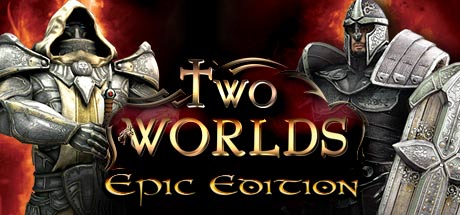
Go straight to *Two Worlds Epic Edition*: its somber tone — Kyra’s sudden disappearance echoing Chizuru’s isolation — and layered lore (300 years of buried conflict, like Hakuoki’s Bakumatsu political decay) nail the mood, while its real-time swordplay and magic feel visceral, not methodical. It’s got that same 'fleeting blossom' weight, just swapping Edo-period poetry for Orcish ruins and ancient curses.