
Sabikui Bisco
Japan’s post-apocalyptic wasteland replete with dust can only be saved by one thing—fungus. Bisco Akaboshi, a wanted criminal and skilled archer, searches for a legendary mushroom, known as Sabikui, said to devour any and all rust. Joining him on this epic saga to save the country is a giant crab and a young doctor. Can this unlikely trio find the fabled fungi and save the land?
(Source: Funimation)
📺Anime Details
📝Editorial Analysis
The wind doesn’t whistle in Sabikui Bisco—it grinds. Fine rust-dust, the color of dried blood and old iron, scours the cracked earth, catching in your throat like ground glass. You feel it in Bisco’s knuckles, white on his bowstring as he looses an arrow not at a person, but at a rust-clogged irrigation valve—pfft, a puff of ochre powder, then steam hissing free from beneath the corrosion. That moment isn’t spectacle. It’s relief. A tiny, hard-won breath in a world where metal doesn’t age—it rots, and rot is contagious.
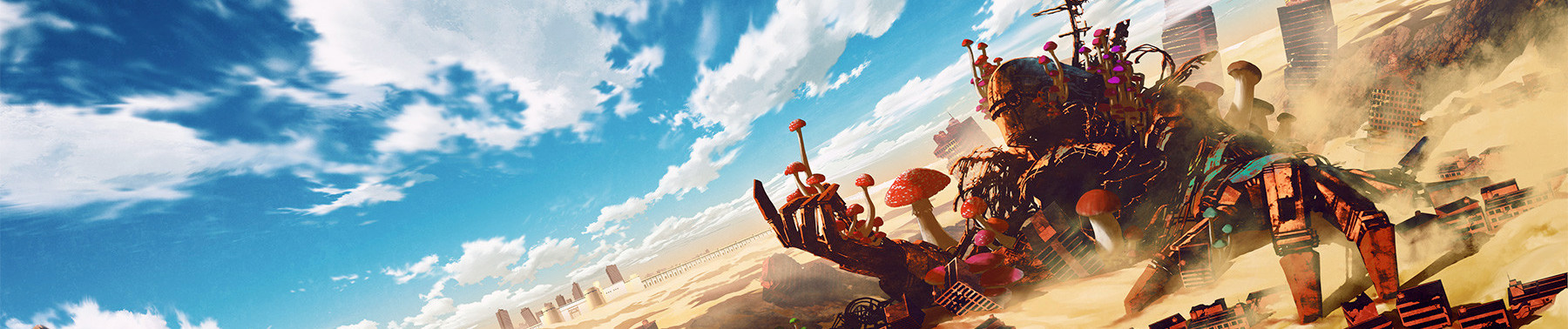
What makes Sabikui Bisco ache so deeply isn’t its post-apocalyptic setting—it’s the tenderness of repair. This isn’t a story about rebuilding cities or toppling warlords. It’s about kneeling in the dust to examine a crumbling gear, about the quiet concentration of a young doctor pressing a fungal spore onto rusted steel, about the giant crab’s slow, deliberate claws shifting sand to uncover something fragile and vital beneath. The atmosphere hums with urgency, yes—but also with care. Every archery shot is precise, not flashy; every desert crossing is arduous, not glamorous; every dose of medicine is measured, not magical. You don’t feel like a savior. You feel like a steward—weary, focused, hopeful in increments.
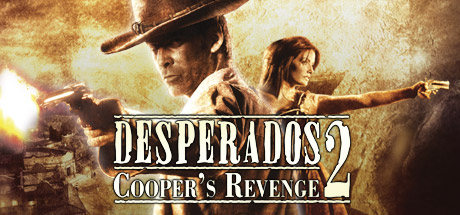
That emotional DNA—the weight of responsibility carried across broken land, the intimacy of small acts against vast decay—resonates sharply with Desperados 2: Cooper's Revenge. Its description calls it “tactical warfare” set in the “Western & Frontier” — but read between the lines: this is a game where you don’t storm a saloon. You wait. You time a distraction, slip past a guard’s blind spot, use terrain like a surgeon uses a scalpel. A player review notes it was “made during a time when everything…” — that trailing ellipsis feels exactly right. Like Sabikui Bisco, it’s a work shaped by constraint, valuing patience over power, observation over force. Both ask you to move through danger, not dominate it.
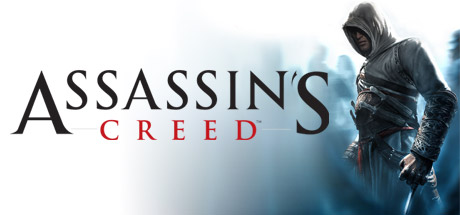
Then there’s Assassin's Creed™: Director's Cut Edition, tagged “Political Thriller, Melancholic Exploration, Tactical Warfare.” Its description promises a redefinition of action—but what lingers is the melancholy. You climb not for glory, but because the city below is sick, layered with corruption that seeps like rust through stone. A player review admits the models are “dated,” yet finds no issue—because the emotion isn’t in the polish, but in the weight of the walls, the hush before a leap, the solitude of the rooftops. Like Bisco walking alone at dawn, bow slung, scanning dunes for the faintest silver sheen of Sabikui, Assassin's Creed makes exploration feel like diagnosis. Every ledge, every alley, every whispered conversation is part of a larger, failing system—and your role is to navigate it, not fix it all at once.
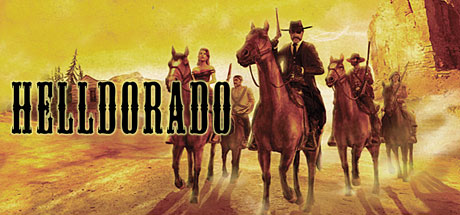
And Helldorado, described as a “standalone expansion” to Desperados 2, carries the same lineage: 1883, Santa Fe, peace shattered—not by monsters, but by kidnapping, by betrayal, by systems collapsing from within. A player review calls it “Desperados 2… so you can think about it as Desper…” — that unfinished thought mirrors Sabikui Bisco’s own narrative rhythm: not grand declarations, but continuations, quiet inheritances of duty. The trio doesn’t ride into town guns blazing; they arrive dusty, tired, asking questions, checking water supplies, treating blisters. Their frontier isn’t lawless—it’s overburdened, and their tactics are born of that exhaustion.
This pairing isn’t for fans of spectacle or salvation arcs. It’s for the person who replays the Red Dead Redemption 2 campfire scenes not for the dialogue, but for the way Arthur’s hands move—rough, capable, resting on his knees as he watches the fire dim. It’s for the player who, reading that GUN™ review calling it a “cult classic… better than most AAA titles,” nods—not because of the gunplay, but because Colton White’s grief is textured, his vengeance slow-burning, his world physically heavy to move through. These are stories for those who find poetry in maintenance, courage in persistence, and profound emotion not in the explosion—but in the hiss of steam breaking free, the soft click of a vial sealed, the crunch of rust under a boot as you take one more step across the wasteland—careful, resolute, alive.
🎮49 Games That Match the Vibe


























Match Dimensions Explained
❓Frequently Asked Questions
Why is Desperados 2: Cooper's Revenge often compared to Sabikui Bisco?
Because both lean hard into tense, small-team tactical warfare in harsh frontier settings—think Bisco’s ragtag scavenger crew navigating toxic wastelands versus Cooper’s outlaw squad using cover, distractions, and environmental traps in dusty Mexican canyons. The pacing, emphasis on stealth over brute force, and morally gray characters (like Cooper’s vengeful, pragmatic crew or Bisco’s desperate survivors) create that same grounded, high-stakes grit.
Is there an anime or live-action adaptation of Sabikui Bisco that ties into any of these games?
No—Sabikui Bisco is its own anime/manga/IP with no game adaptations or crossovers. But fans who love its vibe often pivot to Helldorado, which *is* a real Western tactical game set in 1883 Santa Fe, where you command a tight-knit crew just like Bisco’s—except swapping fungal wastelands for outlaw-ridden frontier towns and poisoned air for dynamite-laced ambushes.
How does Red Dead Redemption 2 compare to Assassin’s Creed in terms of Sabikui Bisco’s melancholic exploration feel?
RDR2 nails the slow-burn, weathered beauty and emotional weight—Arthur Morgan’s journal entries and quiet campfire scenes echo Bisco’s somber, reflective tone—but Assassin’s Creed (Director’s Cut) leans more into political thriller tension, like Altaïr navigating Masyaf’s shadow politics. Both share ‘melancholic exploration’ as a dimension, but RDR2’s open-world loneliness feels closer to Bisco’s desolate, rust-colored landscapes than AC’s tightly scripted urban intrigue.
What’s the best game like Sabikui Bisco if I want that gritty, small-team Western & Frontier vibe without heavy RPG systems?
Go straight to Helldorado—it’s literally a standalone expansion to Desperados 2, built around tight 5-person squads, mission-based tactical combat in sun-baked frontier towns, and zero loot menus or skill trees. You’ll recognize the same vibe as Bisco: limited ammo, high stakes, and characters like Sheriff Cooper or outlaw leader Lobo operating with desperate pragmatism—not heroics, just survival.