
Rurouni Kenshin (2023)
Re-adaptation of the main manga series.
One hundred and forty years ago in Kyoto, with the coming of the American "Black Ships," there arose a warrior who, felling men with his bloodstained blade, gained the name Hitokiri, manslayer! His killer blade helped close the turbulent Bakumatsu era and slashed open the progressive age known as Meiji. Then he vanished, and with the flow of years, became legend.
(Source: VIZ Media)
📺Anime Details
📝Editorial Analysis
The scent of rain on hot cobblestones in Kyoto—just before the first sword is drawn. Not a clash yet, not blood, just the weight of silence between two men who know what steel does to flesh, and what it does to the soul afterward. That breath before violence—the one Kenshin takes, fingers resting lightly on the hilt of his sakabatō, not as a threat but as a vow—is where Rurouni Kenshin (2023) lives. It’s not in the flash of blades, but in the tremor of a hand that remembers how to kill—and chooses, every single time, not to.
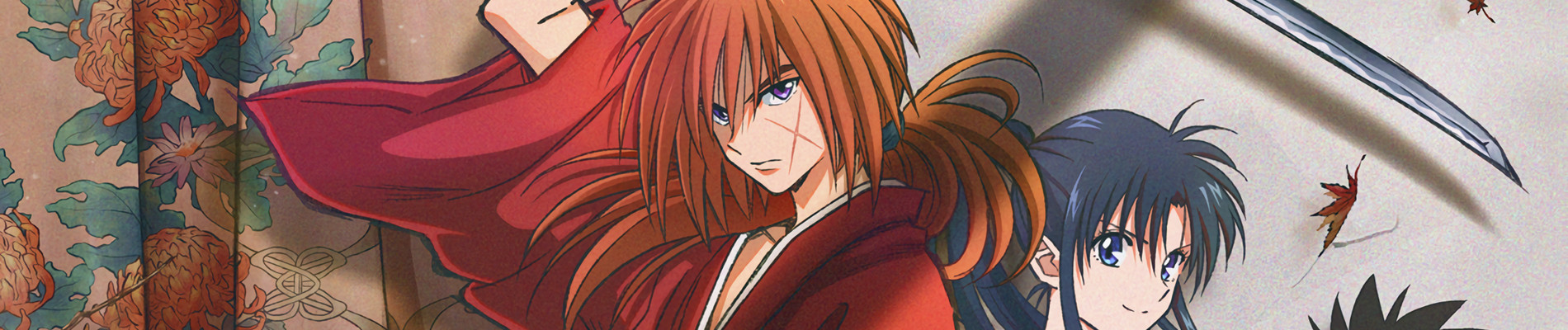
What makes this re-adaptation ache so deeply isn’t its historical setting or even its shōnen structure—it’s the gravity of redemption measured in quiet gestures: a shared meal with strangers who become family, the way Kenshin’s voice drops when he speaks of Tomoe, the deliberate slowness of his walk through Meiji-era Tokyo as if each step must atone for ten he once sprinted through in blood. This isn’t action-as-escape. It’s action as testimony. Every duel is a conversation about consequence; every scar is a footnote in a longer argument with memory. You don’t watch it to win—you watch it to witness someone carry history like a second spine.
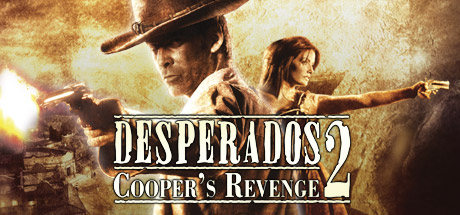
That same gravity pulses through Desperados 2: Cooper's Revenge, not in its wild west aesthetic, but in its tactical stillness. The description calls it “tactical warfare” set in the frontier—and the player review admits it’s “made during a time when everything…”—that trailing ellipsis feels telling. Like Kenshin, Cooper doesn’t rush. He waits. He observes shadows, calculates angles, weighs the cost of a single shot—not for spectacle, but because one misstep unravels everything. There’s no glory in the takedown; there’s only precision, patience, and the quiet exhaustion of men who’ve seen too much lawlessness to trust easy justice.
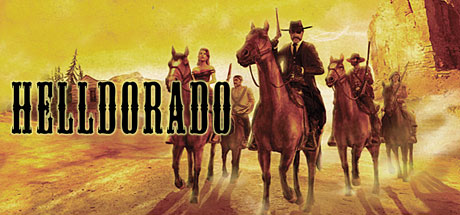
Then there’s Helldorado, described as a standalone expansion to Desperados 2, set in 1883 Santa Fe, where peace shatters with a kidnapping. The review bluntly frames it as “Desper…”, cutting off mid-thought—mirroring how Rurouni Kenshin (2023) often cuts away just after violence, leaving you with the aftermath: dust settling, a dropped hat, a child’s untouched rice bowl. Both works treat crisis not as a launchpad for escalation, but as a lens to examine loyalty, duty, and the fragile architecture of community. In Helldorado, you gather your men—not for conquest, but to hold ground. Just like Kenshin gathers Kaoru, Yahiko, Sanosuke—not as soldiers, but as anchors.
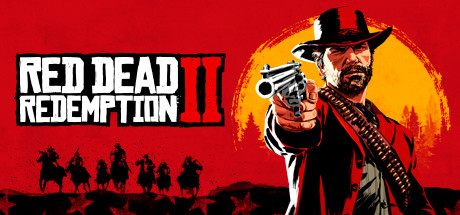
Even Red Dead Redemption 2, with its lower score but unmistakable emotional resonance, echoes this. Its description names Arthur Morgan and the Van der Linde Gang as “outlaws on the run,” hunted by agents and bounty hunters—echoing Kenshin’s own fugitive past, though refracted through a different century and continent. The player review doesn’t talk mechanics—it talks feeling: “a roller coaster of emotions,” “the greatest game of all time bro its so peak my words can’t even describe the feeling inside me right now.” That raw, untranslatable swell? It’s the same one that hits when Kenshin kneels in the dojo garden at dusk, silent, back to the camera, the wind lifting his hair—not as a hero, not as a killer, but as a man trying, daily, to live inside the space between those two truths.
These pairings aren’t for people who want swordfights or shootouts as power fantasies. They’re for the ones who pause the controller when a character looks out a window for too long—who reread a line of dialogue because it landed like a stone in the chest—who feel the heaviness of a world rebuilding itself, and recognize their own quiet struggle in that reconstruction. They’re for viewers who cry not at deaths, but at breakfasts shared; for players who spend minutes crouching behind a crate, not to ambush, but to breathe before the next choice. This is art for the chronically tender-hearted, the historically haunted, the ones who understand that the most radical act in any era isn’t drawing the blade—it’s sheathing it, again and again, and walking forward anyway.
🎮11 Games That Match the Vibe





Match Dimensions Explained
❓Frequently Asked Questions
Why does Helldorado feel so much like Rurouni Kenshin's Kyoto Arc despite being a Western?
Helldorado nails that same tense, morally gray cat-and-mouse energy—think Saito’s calm menace and the quiet dread before a showdown—but swaps katana for lever-action rifles and Kyoto’s alleys for Santa Fe’s dusty streets. Its mission-based tactical stealth (like flanking outlaws during the train-yard ambush) mirrors Kenshin’s precise, consequence-heavy duels, and the expansion even shares Desperados 2’s emphasis on environmental awareness—just like Kenshin reading wind, light, and footing before drawing.
Is there a Rurouni Kenshin game adaptation I can actually play right now?
No official Rurouni Kenshin game exists in 2024—but Helldorado and Desperados 2 are the closest functional stand-ins: both deliver that grounded, high-stakes tactical combat where one misstep means death, just like Kenshin’s no-kill rule forcing smart positioning and timing. Neither features Himura or Battōsai, but their mission structures (e.g., Helldorado’s hostage-rescue at the saloon) echo the emotional weight and precision of key Kyoto Arc set-pieces.
How do Desperados 2 and Red Dead Redemption 2 compare for Rurouni Kenshin fans who love atmosphere over open-world bloat?
Desperados 2 is the sharper fit—it’s tightly scripted, level-based, and forces you to *think* like Kenshin: observe patrol routes, exploit cover, and time your takedowns like a Hiten Mitsurugi strike. RDR2’s gorgeous but sprawling world dilutes that focus; its gunfights lack the deliberate, almost balletic tension of Desperados 2’s ‘Cooper’s Revenge’ finale, where you coordinate three characters to take down a fortified compound—very ‘Saito vs. Kenshin, rooftop, rain.’
What’s the best game like Rurouni Kenshin if I want that intense, personal-feeling dueling vibe—not big battles, just razor-sharp one-on-one tension?
Go straight to Desperados 2: its stealth-tactical duels (like silently disarming a guard with a lasso then using his own knife) replicate Kenshin’s restraint and precision better than anything else on the list—even more than Jedi Academy’s flashy lightsaber combos. You’re not mowing down hordes; you’re calculating angles, distractions, and consequences per move, just like Kenshin sizing up Udo Jin-e in that narrow alley scene.