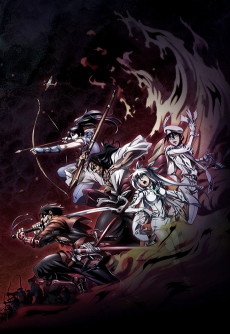
DRIFTERS
The story centers around Shimazu Toyohisa, the real-life samurai who fought in the pivotal Battle of Sekigahara. In his dying moments, Shimazu is transported to a world of magic with other famous warriors throughout history. These warriors are forced to fight each other in an endless battle.
(Source: Anime News Network)
📺Anime Details
📝Editorial Analysis
The air smells of iron and burnt rice straw. Shimazu Toyohisa staggers upright—not in the mud-choked fields of Sekigahara, but on cracked black earth beneath a bruised, starless sky. His armor is split at the ribs, blood warm and slick, yet he draws his sword anyway. Not for honor. Not for lord or land. He draws it because another warrior is already sprinting toward him, axe raised, eyes blazing with the same raw, wordless refusal to die. No fanfare. No exposition. Just the wet shink of steel meeting bone—and then the next silhouette emerging from the smoke.
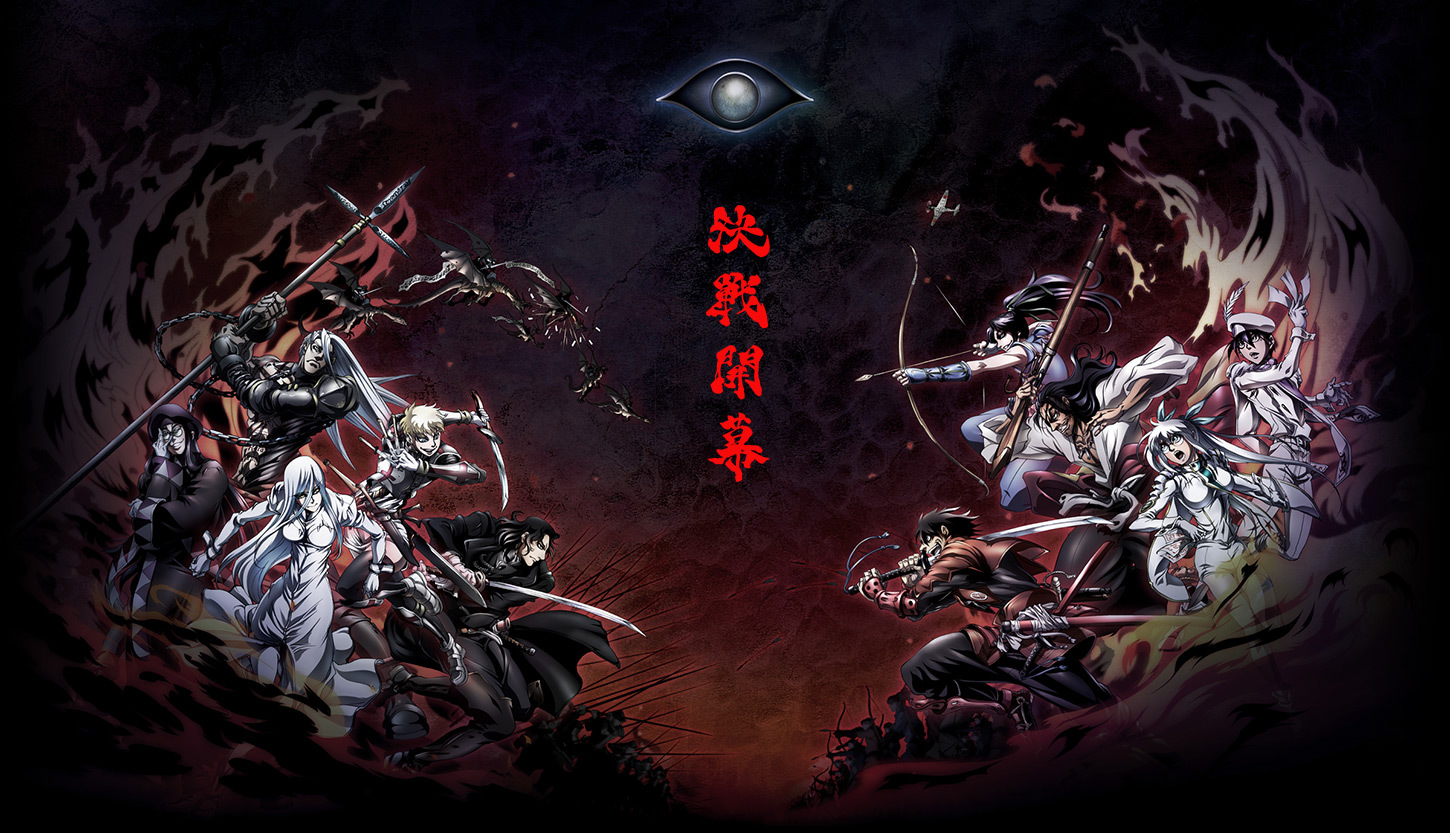
That’s the heartbeat of DRIFTERS: not fantasy as escape, but fantasy as amplification. It doesn’t soften history—it pressurizes it. The anachronism isn’t whimsy; it’s surgical. Toyohisa isn’t “transported to another world”—he’s dumped into the wound where time, ideology, and violence all bleed together. You don’t feel wonder here. You feel recognition: the grim, grinding weight of men who’ve spent their lives mastering death—only to find themselves weaponized in a war with no flags, no treaties, no end. It’s tactical, yes—but not in the clean, grid-based sense. It’s tactical like a throat slit mid-breath: intimate, irreversible, morally unmoored. The gore isn’t shock—it’s texture. The comedy isn’t relief—it’s the brittle laugh of men who’ve seen too much to pretend otherwise. This isn’t isekai as wish-fulfillment. It’s isekai as autopsy.
Which is why Red Dead Redemption 2 hits with such uncanny resonance. Its description names Arthur Morgan and the Van der Linde Gang as “outlaws on the run,” hunted by “federal agents and bounty hunters,” forced to “rob, steal, and fight their way across the rugged heartland.” That’s not setting—it’s condition. Like Toyohisa, Arthur operates in a collapsing world where codes have curdled into survival instincts. The player review calls it “a roller coaster of emotions”—but what lingers isn’t the highs. It’s the weight: the exhaustion in Arthur’s shoulders during camp scenes, the way violence leaves residue—not just on clothes, but on speech, on silence. Both works treat brutality as labor, not spectacle. And both make you feel the loneliness of competence: the quiet horror of knowing exactly how to kill someone—and doing it anyway.
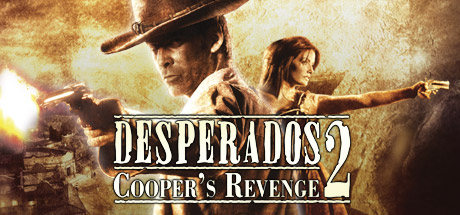
Then there’s Desperados 2: Cooper's Revenge, described as “tactical warfare” set in the “Western & Frontier” dimension—with “brand new tactical possibilities in a beautiful 3D env.” That “env” (environment) matters. Like DRIFTERS, it refuses cinematic distance. You don’t watch gunfights—you orchestrate them from rooftops and alleyways, timing a distraction, a chokehold, a well-placed bullet—because hesitation means your man dies off-screen, unseen, unceremonious. The player review admits disappointment—but notes it was “made during a time when everything…” That trailing ellipsis? That’s the feeling: the sense of being trapped in a system that’s shifting beneath you, where old skills barely keep pace with new chaos. Toyohisa doesn’t get a tutorial. Neither does Cooper. You learn by bleeding.
And Sacred Gold, tagged “Dark Fantasy, Action Spectacle, Adult & Dark Seinen,” drops you into “a shadow of evil” over Ancaria, battling “blood-thirsty orcs & lumbering ogres.” Its player review bluntly calls it “full of jank, bugs and is not very stable on modern systems.” But that jank—that unpolished, stubborn physicality—is part of its kinship with DRIFTERS. Both embrace clunk. Not as flaw, but as truth: bodies misfire, swords snag, spells fizzle, armor buckles under weight you forgot it carried. There’s no sleek power fantasy—just grime, friction, and the sheer effort of staying vertical. When Toyohisa stumbles after a parry, or when a Sacred Gold character trips mid-swing against an ogre, it’s not bad design. It’s insistence: these are bodies in space, subject to gravity, fatigue, and consequence.
This pairing isn’t for fans of clean arcs or triumphant solos. It’s for the ones who love the grind—the viewer who watches Shimazu wipe blood from his eye and thinks, Yeah, I know that taste. The player who reloads after a botched ambush in Red Dead not out of frustration, but because they need to get the rhythm right—the breath, the angle, the split-second choice that keeps everyone alive just a little longer. These are stories for people who understand that courage isn’t the absence of fear—it’s the decision to move your hand toward the hilt anyway, even when you’re not sure what god, or ghost, or algorithm is watching you do it.
🎮6 Games That Match the Vibe


Match Dimensions Explained
❓Frequently Asked Questions
Why does DRIFTERS feel so different from Red Dead Redemption 2 even though they’re both Western-themed?
Great question — it’s all about tone and pacing. DRIFTERS leans hard into stylized, fast-paced tactical skirmishes (think quick-draw duels and squad-based flanking), while RDR2 is grounded, slow-burn, and emotionally heavy — like when Arthur Morgan quietly stares at the snow in Beaver Hollow before a brutal ambush. Desperados 2 and Helldorado actually bridge that gap better: they give you RDR2’s frontier grit but with DRIFTERS’ tight, mission-driven tactics — e.g., luring outlaws into choke points near Santa Fe’s saloon in Helldorado, or coordinating Cooper’s revenge via real-time stealth takedowns.
Is there an anime or manga adaptation of DRIFTERS that explains the lore better?
Nope — unlike GUN™ (which had a full screenplay by Randall Jahnson, *The Mask of Zorro* writer) or Red Dead Redemption 2 (with its cinematic, script-driven narrative), DRIFTERS is purely a game-original concept with no official anime or manga tie-ins. The closest thing is how Sacred Gold channels that same ‘adult dark seinen’ energy — not through adaptation, but through its grim, morally ambiguous worldbuilding: think undead lords whispering lies to heroes in Ancaria’s cursed forests, much like DRIFTERS’ shadowy faction intrigue.
How does Helldorado compare to Desperados 2: Cooper's Revenge?
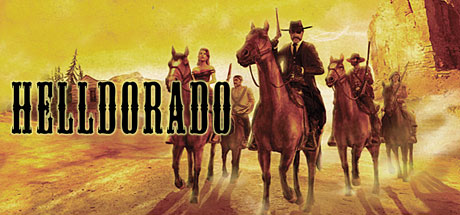
Helldorado *is* Desperados 2 — just expanded! It’s a standalone expansion set in 1883 Santa Fe, built directly on Desperados 2’s engine and mechanics, so you get the same tactical depth (e.g., using Doc’s healing syringe mid-gunfight or baiting enemies with decoys), but with new missions, characters, and that gorgeous, dusty frontier atmosphere. Player reviews even call it ‘Desperados 2, but sharper’ — especially for fans who loved Cooper’s revenge arc but wanted more outlaw showdowns in tighter, story-driven bursts.
What’s the best DRIFTERS-like game if I want something gritty, fast-paced, and less emotionally exhausting than Red Dead Redemption 2?
Go straight to GUN™ — it’s got that same adult & dark seinen edge (Colton White’s revenge plot hits hard), but with snappier, arcade-style gunplay and zero hand-holding. You’ll be vaulting over railings, disarming foes with quick-time draws, and storming forts in under five minutes — way more DRIFTERS’ rhythm than RDR2’s meditative melancholy. And yeah, it’s a cult classic for good reason: one player called it ‘better than most AAA titles released over 20 years ago,’ and they’re not wrong — especially if you crave action spectacle without the emotional whiplash.