
TRIGUN STARGAZE
Sequel season to TRIGUN STAMPEDE.
It’s been two and a half years since the Lost JuLai tragedy, which laid waste to an entire city and engulfed the whole planet in chaos. Meryl, now a senior journalist, continues her search for Vash with her new younger sidekick, Milly, and runs into Wolfwood along the way. As plant robberies begin taking place once again, they sense Millions Knives’s organization conspiring behind the scenes.
Meanwhile, Vash has taken the new name Eriks and is living in hiding in a backwater town when he gets an abrupt visit from Jessica, a young girl with an SOS from the third ship they call home. He thus decides to put an end to a long-standing feud in order to protect those dear to him.
Just as the pieces of the story begin falling back together again, the planet receives a message from the far reaches of outer space: “We are a fleet of colony ships from Earth... Those who wish may accompany us to a new frontier.” The entire population rejoices at this news. However, as if to mock their celebration, the one-winged angel returns to wreak havoc and despair. Fates collide to forge a final conclusion for the panicked planet.
(Source: Crunchyroll)
📺Anime Details
📝Editorial Analysis
The dust doesn’t settle in TRIGUN STARGAZE—it hangs, thick and golden, caught in the slant of a dying sun over cracked earth where a rusted windmill groans like a tired god. You see it in the first shot after the time skip: Meryl’s hand, steady but older, adjusting her reporter’s notepad as Milly fidgets beside her—not with childish impatience, but with the quiet weight of inheriting a world already broken. No fanfare, no music swell—just heat, silence, and the low hum of a planet still bleeding from the Lost JuLai tragedy. That’s the feeling: resumption, not restart. A life continuing despite catastrophe, not in spite of it—but through it, knotted tight with duty, memory, and the stubborn refusal to let grief calcify into numbness.

What makes TRIGUN STARGAZE’s atmosphere singular isn’t its desert or its guns or even its full CGI sheen—it’s how it holds time like a physical object. Two and a half years pass, but they’re not erased; they’re layered. Wolfwood reappears not as a relic, but as someone who’s kept moving, his coat worn thinner, his jokes sharper at the edges. Vash isn’t hiding—he’s waiting, not passively, but with the kind of vigilance that comes from knowing chaos doesn’t vanish—it just changes shape. This isn’t dystopia as spectacle; it’s dystopia as weather—inescapable, atmospheric, shaping how people speak, hesitate, reach for each other’s hands before pulling back. It makes you feel the weight of continuity, the ache of unresolved care, the quiet heroism of showing up—again and again—with your notebook, your revolver, your conscience intact.
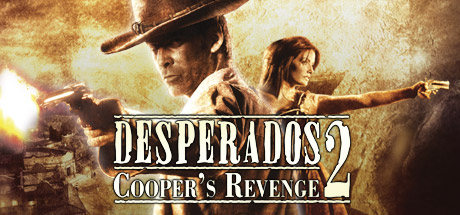
That same emotional DNA pulses in Desperados 2: Cooper's Revenge, where tactical warfare isn’t about domination—it’s about precision under pressure, about choosing who lives in a single, held breath. Its description calls it “a beautiful 3D env” where every shadow hides consequence—and like STARGAZE, it trusts you to read tension in stillness: a guard’s pause, a creaking floorboard, the way Cooper’s team moves as one nervous system. A player review notes it was made “during a time when everything…”—and that trailing ellipsis? That’s STARGAZE’s whole rhythm: the unsaid, the aftermath, the world still adjusting its spine after trauma. Then there’s Helldorado, explicitly framed as a standalone expansion to Desperados 2, set in 1883 Santa Fe, where peace is “shattered by a shocking kidnapping.” Not war—not revolution—but violation, intimate and destabilizing, echoing Millions Knives’s plant robberies: small-scale horrors that ripple outward, testing the fraying nerves of a society pretending it’s healed. The review says you can “think about it as Desper…”—and yes, you do: as a story where morality isn’t drawn in lines, but in the tremor of a finger on a trigger, just like Meryl choosing when to publish, or Wolfwood choosing when to holster.
And then there’s BioShock Infinite, whose description drops you straight into debt, consequence, and a rescue mission tangled in metaphysics—“Booker DeWitt has only one opportunity to wipe his slate clean.” That phrase—wipe his slate clean—lands like a stone in STARGAZE’s drought-scorched soil. Vash doesn’t want absolution. He wants accountability without annihilation. Like Booker, he carries history like shrapnel; like Elizabeth, he’s bound to forces larger than himself—yet insists on choice, even when time itself seems rigged against it. A player review admits bitterness about “the Bioshock Infinite we could have gotten,” but affirms: “after…”—that word again, that hinge—“it stays with you.” So does STARGAZE. Not because it answers questions, but because it lets the silence between them breathe.
This pairing sings to the viewer who watches sunrises over ruined cities and feels tenderness, not despair—the player who reloads a save not to win, but to get the gesture right: the nod, the withheld shot, the hand offered before the dust kicks up again. It’s for the ones who know heroism isn’t loud—it’s Meryl’s pen scratching across paper in a dim cantina, Milly’s eyes widening not at explosions, but at the first green shoot pushing through irradiated soil, and Vash—always Vash—standing just outside the frame, letting someone else step into the light.
🎮37 Games That Match the Vibe



























Match Dimensions Explained
❓Frequently Asked Questions
Why does Helldorado keep coming up when I search for games like TRIGUN STARGAZE?
Helldorado nails the same blend of dusty frontier tension and morally gray outlaw camaraderie you get in TRIGUN STARGAZE—think Vash’s quiet standoff moments reimagined as tense, squad-based ambushes in Santa Fe’s saloons and canyons. It’s literally built on Desperados 2’s engine (same tactical cover system, line-of-sight stealth, and character-specific abilities like Doc’s healing or Kate’s lasso), so it delivers that deliberate, cinematic Western pacing with real stakes—no random shootouts, just calculated moves like Vash disarming a gang without firing a shot.
Is there a TRIGUN STARGAZE video game adaptation?
No—there’s no official TRIGUN STARGAZE game yet, but fans often reach for Helldorado or Desperados 2 because they capture the show’s core vibe: lone-wolf idealism clashing with brutal frontier realism. You won’t find Vash or Nicholas Brown here, but Helldorado’s protagonist leads a ragtag crew through betrayal and redemption in a sun-baked, morally messy West—very much like how Stargaze frames its characters’ choices against vast, silent landscapes.
How is Red Dead Redemption 2 different from Desperados 2 for TRIGUN STARGAZE fans?
RDR2 leans into immersive storytelling and emotional weight—Arthur Morgan’s arc mirrors Vash’s internal conflict, especially in scenes where he spares enemies or questions his own code—but it’s open-world and narrative-driven, not tactical. Desperados 2, by contrast, forces you to *think* like Vash: planning multi-step takedowns, using environment and timing (like luring guards into cacti or knocking them out silently), and valuing non-lethal solutions—just like Vash’s ‘$60 billion bounty’ philosophy in action.
What’s the best TRIGUN STARGAZE-like game if I want that melancholy, time-bent atmosphere?
BioShock Infinite is your pick—it’s got that haunting, layered sense of time and memory, like Stargaze’s flashbacks to July and the weight of past choices echoing into the present. Booker DeWitt’s journey through Columbia’s fractured skies and Elizabeth’s reality-warping powers evoke the same emotional gravity as Vash confronting his own history, plus both use environmental storytelling (e.g., Columbia’s faded posters or Rapture’s decay) to deepen the mood without exposition.