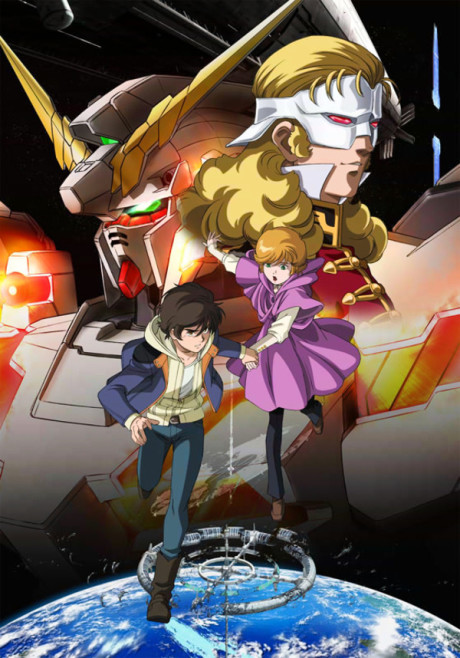
Mobile Suit Gundam UC
U.C. 0096...
The manufacturing colony Industrial 7, which is still under construction, floats at Lagrange point 1.
A youth named Banagher Links, who grew up without knowing his father, meets a mysterious girl who has stowed away on a ship bound for Industrial 7. As the white mobile suit Unicorn undergoes repeated tests and becomes the subject of diverse speculations, the hands of time begin to move.
Banagher does not yet know that he has been caught up in the conflict surrounding Laplace's Box.
What is Laplace's Box?
What secret does it contain?
The hundred-year curse of the Universal Century is about to be resolved.
(Source: Mobile Suit Gundam Unicorn Official Website)
📺Anime Details
📝Editorial Analysis
The white mobile suit Unicorn cracks open—not with a roar, but with a low, resonant hum, like a cathedral pipe vibrating in vacuum. Its psychoframe flares—not gold, not red, but blinding white, searing across the black of Lagrange Point 1 as Banagher Links screams—not in rage, not in triumph, but in recognition. Not of an enemy. Of himself. That moment isn’t spectacle; it’s rupture. A body remembering a wound it never knew it carried.
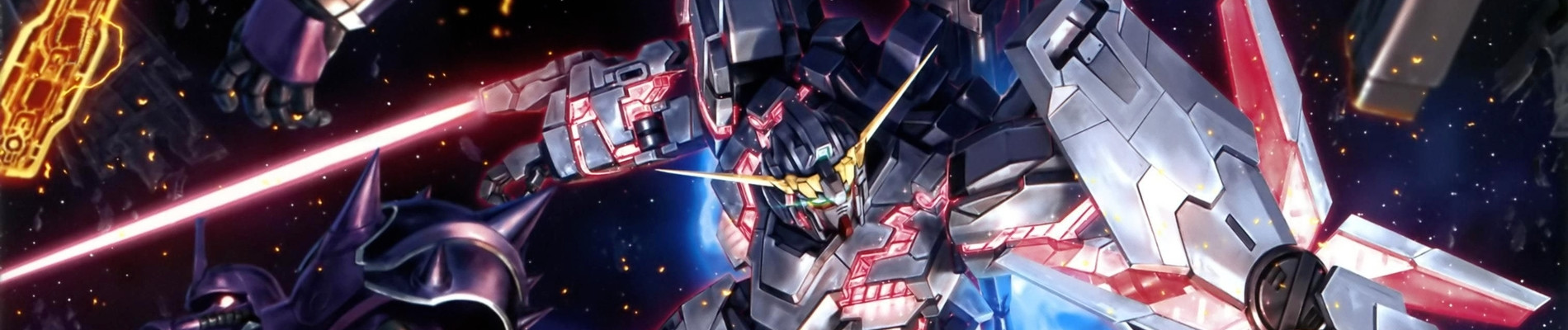
That’s the feeling Mobile Suit Gundam UC lives inside: unmoored inheritance. It doesn’t trade in heroic certainty or clean ideological lines. It’s the weight of a name you didn’t choose—Banagher Links, son of a man erased from history—and the dread that your blood might be the fuse for someone else’s war. The colony Industrial 7 hangs unfinished in space, half-built, half-dreamt, and everything about it feels provisional: the politics are layered like sedimentary rock, the military orders are whispered through encrypted channels, even the mecha breathe like living things caught between evolution and erasure. You don’t feel powerful watching it—you feel exposed. Like standing on a scaffold over deep space, holding a sword you’re not sure how to wield, while ghosts argue in your skull.
That same exposure echoes in Tribes: Ascend—not in its DLC packaging or its “mindless fun” reputation, but in how its physics force you into bodily vulnerability. Skis, jetpacks, gravity wells—all demand split-second spatial reckoning in open voids where one misjudged arc sends you tumbling into nothing. The player review calls it “mindless fun,” but what it really delivers is kinetic disorientation: the same vertigo Banagher feels when the Unicorn’s NT-D mode activates and reality itself seems to stutter. Both ask you to trust your body before your mind catches up—to move through uncertainty, not past it.
Then there’s Mr. Robot, where Asimov—a “lowly service mechanoid”—wakes aboard the Eidolon, a colony ship frozen in transit, its AI brain broken, its human cargo sleeping in stasis. The description says it’s “interstellar,” “mechanoid,” “malfunctioning.” The review notes its retro feel and “light Mega Man Battle Network type exploration.” But the emotional resonance is sharper: here is another being designed for purpose, suddenly adrift in a system that no longer computes. Asimov doesn’t rebel—he reorients. Like Banagher, he must parse fragmented logs, corrupted directives, and his own emergent awareness—not to become a hero, but to hold the line between collapse and continuity. The tragedy isn’t in grand battles—it’s in the quiet horror of realizing your function was never yours to define.
And Supreme Commander—where “three opposing forces have waged war for a thousand years” in “The Infinite War”—mirrors UC’s political exhaustion. Its scale isn’t just big; it’s geologic. You watch experimental mechs rise from factories like tectonic plates shifting, artillery arcs spanning continents, entire fleets blinking out of hyperspace like memories returning too late. The review nails it: “The scale of the battles is different even today.” Not flashy. Not frantic. Heavy. Like watching the Federation and Sleeves maneuver not as armies, but as tides—slow, inevitable, dragging individuals like Banagher and Full Frontal under without asking permission. Tactical warfare here isn’t about winning—it’s about enduring the weight of legacy, round after round, campaign after campaign, knowing the war won’t end, only change shape.
Who loves this pairing? Not the player who wants mastery. Not the viewer who craves catharsis. It’s the person who keeps rewinding that scene—the Unicorn’s first transformation—not to see the light, but to watch Banagher’s face before the flare hits. The one who lingers in Lost Planet™: Extreme Condition’s blizzards not for the Akrid fights, but for the silence between them—the way the wind scrapes ice off metal hulls like time scraping memory off bone. The one who boots up BioShock™, not for the plasmids, but for the way Rapture’s decay whispers that every utopia is just a conspiracy waiting to exhale. They’re drawn to stories where ideology wears thin, where mecha bleed light instead of oil, and where the most devastating weapon isn’t a beam rifle—it’s recognition. That look in Banagher’s eyes when he finally understands his father’s name isn’t a key. It’s a verdict. And the games that share that DNA don’t offer escape. They offer witness.
🎮36 Games That Match the Vibe




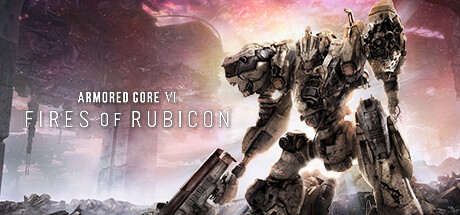














Match Dimensions Explained
❓Frequently Asked Questions
Why does Lost Planet: Extreme Condition feel like a Gundam UC game despite no mobile suits?
It nails the desperate, militarized sci-fi vibe of UC's Earth Federation vs. Zeon clashes—especially with its giant Akrid monsters standing in for Newtypes and mobile armor, and your VS (Vital Suits) echoing the grunt-level grunt work of pilots like Kai Shiden in early One Year War battles. The frozen wastelands of E.D.N. III even mirror UC’s gritty, grounded war zones like Jaburo’s underground tunnels or the harsh lunar surface near Granada.
Is there a BioShock-style political thriller with mecha that captures UC’s ideological tension?
Not exactly—but BioShock shares UC’s deep political unease and morally gray worldbuilding: think Rau Le Creuset’s philosophical monologues or the Principality of Zeon’s tragic nationalism, mirrored in BioShock’s Rapture and Andrew Ryan’s failed utopia. While it swaps mobile suits for plasmids, its atmospheric storytelling and oppressive, decaying environments hit the same somber, thought-provoking tone as UC’s darker arcs like the Laplace Incident.
How does Supreme Commander compare to Tribes: Ascend for UC fans who love large-scale fleet and battalion warfare?
Supreme Commander delivers UC’s grand strategic scope—like watching the White Base’s entire task force maneuver during the Battle of Solomon—with massive units, orbital strikes, and layered command hierarchies that evoke Admiral Kycilia Zabi’s fleet coordination. Tribes: Ascend, by contrast, is all about kinetic, high-speed skirmishes—think Amuro Ray dodging Gouf fire in the Arctic Ocean—focused on movement, momentum, and solo pilot flair over macro tactics.
What’s the best game like Mobile Suit Gundam UC if I want that lonely, melancholic space opera vibe—quiet moments between battles, like Amuro staring out the White Base viewport?
Mr. Robot is your best match: Asimov the mechanoid drifting through the silent, cavernous halls of the Eidolon ship mirrors UC’s quiet existential weight—especially scenes like Bright Noa reflecting on war’s cost or Sayla Mass remembering Side 7. Its retro-futuristic aesthetic, slow-burn exploration, and understated emotional beats (like discovering logs from colonists long gone) echo UC’s poetic stillness amid cosmic scale.