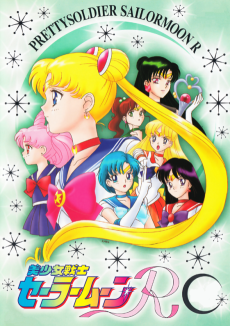
Sailor Moon R
The season is divided into two arcs.
The first arc shows Usagi and Co. having their memories restored from the first season. Their enemies are a pair of aliens, Ail and Ann, who are seeking human energy to restore their life tree. Mamoru had yet to recover his memories and he appeared as the Moonlight Knight rather than Tuxedo Kamen. This arc only lasted for 13 episodes.
The second arc introduces Chibi-Usa, a little girl from the future who is searching for the Silver Crystal. The new enemies are the Black Moon Clan, comprising of the Ayakashi sisters (Cooan, Beruche, Karaberas, and Petz), Rubeus, Safir, Esmeraude, Prince Demando, and Wiseman. They too want the Silver Crystal so that they can take over the future. The Sailor Senshi's adventure continues...
📺Anime Details
📝Editorial Analysis
The first time Mamoru appears as Moonlight Knight—silver cape flaring, voice layered with distance and sorrow, standing between Usagi and the alien Ail’s energy-draining beam—it doesn’t feel like a hero’s entrance. It feels like heartbreak wearing armor. His eyes don’t recognize her. His hand doesn’t reach for hers. He protects, but he doesn’t remember. That moment isn’t spectacle—it’s quiet devastation wrapped in glitter and moonlight.
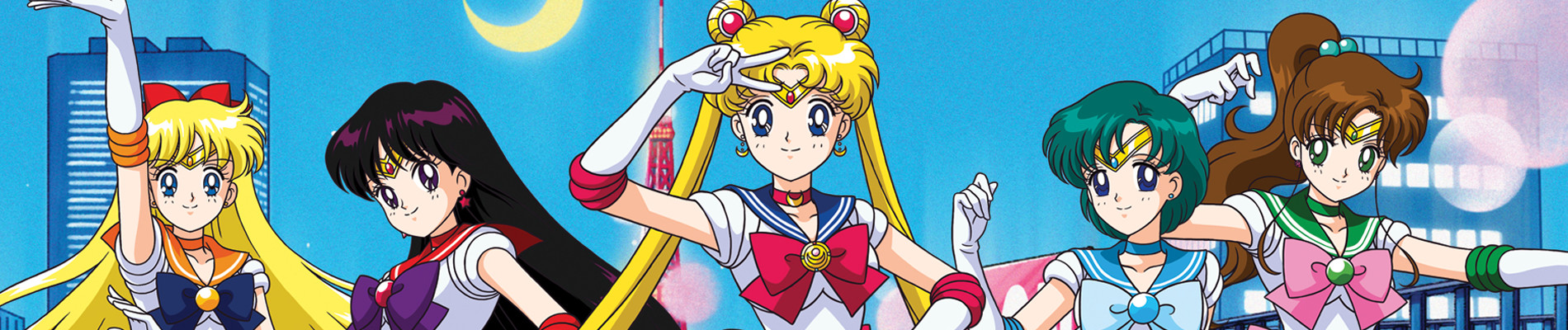
What makes Sailor Moon R ache so deeply isn’t its magic or its battles—it’s how it treats time and memory not as plot devices, but as emotional terrain. This season doesn’t just use amnesia; it lets it breathe in the silence between Usagi’s laugh and Mamoru’s hesitation, in the way Chibi-Usa clutches her tiny brooch like a lifeline to a future that hasn’t happened yet. There’s no grand exposition about why memory matters—just Usagi tracing the edge of a photo she can’t quite recall taking, or Ann whispering, “We only want to live,” while draining life from strangers. The feeling is tender urgency: love that must be rebuilt before the world unravels, trust that has to be earned twice, hope that flickers—not because it’s strong, but because it’s fragile enough to matter.
That same tender urgency pulses through BioShock Infinite. Its description names Time & Memory as core dimensions—and its player review hints at something deeper: “I know that some people are still bitter about the Bioshock Infinite we could have gotten.” That line isn’t about mechanics or missed features. It’s about what memory costs, what versions of ourselves we erase to survive, and how love becomes an act of defiance against erasure itself. Like Usagi trying to rekindle something real beneath Mamoru’s Moonlight Knight mask, Booker reaches for Elizabeth across collapsing realities—not to fix time, but to witness her, again and again, even when memory fractures.
Then there’s the Prince of Persia series—not one game, but a lineage bound by Time & Memory and Action Spectacle. Look at the descriptions: The Sands of Time centers on a prince who rewinds time after a catastrophic mistake; Warrior Within traps him in a chase with Dahaka, an immortal force born from his own past choices; The Two Thrones forces him to confront a corrupted self forged in trauma. Player reviews echo this weight: “Dahaka chase is still as goated as it was before…”—not just for difficulty, but for how viscerally it feels like being hunted by your own history. That mirrors Sailor Moon R’s first arc perfectly: Ail and Ann aren’t cartoon villains—they’re refugees clinging to a dying tree, their aggression rooted in loss, their power drawn from human vitality like Mamoru’s identity is drawn from forgotten vows. Both anime and games treat time not as a clock, but as scars that glow faintly under moonlight.
Even the romance dimension ties them—not as tropes, but as emotional gravity. The Prince of Persia (2008) reboot’s description explicitly tags Romance & Shoujo, and its player review notes “a new prince, new lands and a brand new story completely separate from the sands…”—which echoes how Sailor Moon R resets intimacy: no easy reunion, no assumed affection. Just two people learning how to hold hands without remembering how. That’s shoujo at its most mature—not about falling in love, but about choosing it, over and over, in the gaps where memory fails.
This pairing isn’t for fans of “magic girls” or “platformers.” It’s for the person who cries when a character says “I think I loved you before I knew your name,” and who replays a Dahaka chase not to win—but to feel the exhaustion of running from yourself. It’s for the one who saves a game right before a big choice, not to avoid consequences, but to sit with the weight of what’s already been lost. They don’t want escapism. They want resonance: the kind that hums in your ribs when Usagi finally whispers “Mamo-chan” and he blinks—just once—as if something ancient, soft, and true has brushed against the surface of his amnesia. That’s the shared pulse. Not spectacle. Not lore. Just tenderness, stubborn and shimmering, holding back the dark.
🎮138 Games That Match the Vibe


















Match Dimensions Explained
❓Frequently Asked Questions
Why does Sailor Moon R feel so similar to Prince of Persia: The Sands of Time?
Both lean hard into time-manipulation as core gameplay and narrative glue—Sailor Moon R’s ‘Time Stop’ attacks and the Sailor Guardians’ temporal interventions mirror the Prince’s Dagger of Time rewind mechanic, especially during tense platforming or boss fights like against the Dark Kingdom generals. Fans often cite how the Sands of Time’s ‘tactical platforming with locked directions’ (per that glowing player review) echoes R’s deliberate, rhythm-based combat pacing and scene transitions—like Usagi freezing time mid-battle to reposition before unleashing Moon Tiara Action.
Is there a Sailor Moon R anime adaptation I can watch instead of playing the game?
No—the Sailor Moon R game is *not* based on an anime adaptation; it’s a standalone SNES title loosely inspired by the R season but with original story beats, like the Black Moon Clan’s altered invasion timeline and Chibiusa’s more active role in key dungeons. Unlike BioShock Infinite (which *does* have deep narrative ties to its own ‘book-to-game’ lore), Sailor Moon R has no official anime counterpart—it’s purely a game-first experience, much like how Prince of Persia: Warrior Within exists separately from any film or cartoon.
How does Sailor Moon R compare to Prince of Persia: The Two Thrones in terms of tone and action?
Sailor Moon R is brighter and more shoujo-romance driven—think Usagi and Mamoru’s sweet rooftop confessions—while The Two Thrones leans into gritty duality (Prince vs. Dark Prince) and war-torn Babylon. But both share that high-stakes ‘Action Spectacle’ dimension: R’s multi-phase final boss fight against Wiseman inside Crystal Tokyo mirrors The Two Thrones’ palace siege sequences, where timing, environmental hazards, and split-second dodges (like the Prince’s wall-run counters) define the climax. Even the player review praising ‘childhood nostalgia’ and smooth 60fps performance applies to both.
What’s the best Sailor Moon R-like game if I want something dreamy, romantic, and full of magical girl energy?
Go straight to Prince of Persia (2008)—yes, really! Its ‘Romance & Shoujo’ dimension is baked into every interaction: the Prince’s banter with Elika feels like a classic magical girl duo dynamic (think Usagi and Ami’s supportive banter), and the lush, painterly world—with floating gardens, shimmering light effects, and slow-motion ‘graceful combat’—mirrors R’s ethereal Crystal Tokyo cutscenes. That 83 Metacritic score? It’s not just for the acrobatics—it’s for how deeply it commits to emotional sincerity and visual poetry, just like when Sailor Moon transforms under cherry blossoms.